six sigma white belt exam questions and answers pdf

Embarking on a Six Sigma journey begins with the White Belt, offering foundational knowledge in process improvement and waste elimination techniques.

This initial certification introduces you to the DMAIC methodology, preparing you to contribute effectively to improvement teams within organizations.

Resources like PDF study guides and practice exams, including those from Certiprof, are readily available to aid in your preparation.

Understanding key concepts and practicing with sample questions will build confidence for the exam and future process improvement endeavors.

What is Six Sigma?

Six Sigma is a data-driven methodology designed to eliminate defects and minimize variation in any process – from manufacturing to transactional services.

It’s a globally recognized set of tools and techniques focused on improving quality and efficiency, ultimately leading to increased customer satisfaction and profitability.

The core principle revolves around reducing variation, aiming for near-perfection, statistically represented as 3.4 defects per million opportunities.

Understanding this foundational concept is crucial, as many Six Sigma White Belt exam questions assess your grasp of its core tenets.

Resources like practice exams and study guides, particularly those offering Six Sigma White Belt exam questions and answers in PDF format, emphasize this principle.

The methodology isn’t just about statistics; it’s a holistic approach to problem-solving, requiring a commitment to continuous improvement.

Exam preparation should focus on understanding how Six Sigma differs from traditional quality control methods and its impact on business outcomes.

Familiarizing yourself with the terminology and the overall philosophy will set a strong foundation for further Six Sigma certifications.

The Role of a White Belt

A Six Sigma White Belt serves as a foundational team member, participating in process improvement projects under the guidance of higher-level belts – Green, Black, and Master Black Belts.

Their primary role involves understanding the basic concepts of Six Sigma and actively supporting improvement initiatives within their respective areas.

White Belts contribute by identifying potential problems, collecting data, and assisting with simple process mapping exercises.

Exam preparation, utilizing resources like Six Sigma White Belt exam questions and answers in PDF format, focuses on recognizing these core responsibilities.

They are the eyes and ears of the improvement process, providing valuable insights from the front lines of operations.

While not leading projects independently, White Belts are essential for fostering a culture of continuous improvement throughout the organization.

Understanding the DMAIC methodology is key, as White Belts participate in each phase, albeit in a supporting capacity.

Their role is to champion the principles of Six Sigma and contribute to a more efficient and effective workplace.

Benefits of Obtaining a White Belt Certification

Achieving Six Sigma White Belt certification offers numerous advantages, initiating a career path focused on process optimization and efficiency gains.

It demonstrates a commitment to quality and continuous improvement, enhancing your professional profile and marketability.

The certification provides a foundational understanding of Lean Six Sigma principles, enabling you to contribute meaningfully to project teams.

Utilizing resources like Six Sigma White Belt exam questions and answers in PDF format solidifies your knowledge and boosts exam confidence;

White Belt certification fosters a problem-solving mindset, equipping you with tools to identify and address process inefficiencies.

It opens doors to further Six Sigma training, such as Green and Black Belt certifications, expanding your expertise.

The certification is often a prerequisite for participation in larger Six Sigma initiatives within organizations.

Ultimately, it empowers you to drive positive change and contribute to a more streamlined and productive work environment.

Understanding Key Six Sigma Concepts

Grasping core principles like DMAIC is vital, and practicing with Six Sigma White Belt exam questions and answers PDF builds proficiency.

DMAIC Methodology Overview

DMAIC, the heart of Six Sigma, is an acronym representing the five phases: Define, Measure, Analyze, Improve, and Control. Understanding this structured approach is crucial, and utilizing Six Sigma White Belt exam questions and answers PDF resources can significantly enhance comprehension.

The Define phase focuses on clearly articulating the problem or opportunity. Next, the Measure phase involves collecting relevant data to establish a baseline. Subsequently, the Analyze phase delves into identifying the root causes of the issue.

Following analysis, the Improve phase implements solutions to address those root causes. Finally, the Control phase establishes mechanisms to sustain the improvements achieved.

Practice questions, often found in PDF study guides, will test your ability to apply these phases to real-world scenarios, solidifying your understanding of the DMAIC process and preparing you for certification success.

Define Phase – Identifying the Problem

The Define phase, the initial step in DMAIC, centers on clearly articulating the problem, project goals, and customer requirements. Utilizing Six Sigma White Belt exam questions and answers PDF materials will reinforce the importance of a well-defined problem statement.

Key elements include defining the project scope, identifying stakeholders, and establishing clear, measurable objectives. Tools like Voice of the Customer (VOC) are employed to understand customer needs and expectations.

A crucial aspect is creating a Project Charter, which formally authorizes the project and outlines its key parameters.

Exam questions frequently assess your ability to differentiate between symptoms and root causes, and to formulate a concise, impactful problem statement. Practice with sample questions from PDF resources will hone these skills, ensuring you can effectively define the problem before proceeding to subsequent phases.

Measure Phase – Data Collection

The Measure phase focuses on gathering reliable data to establish a baseline understanding of the current process performance. Six Sigma White Belt exam questions and answers PDF resources emphasize the importance of accurate and relevant data collection techniques.

This involves defining key metrics, developing a data collection plan, and ensuring data integrity. Common methods include check sheets, process mapping, and data logging.

Understanding different types of data – discrete, continuous, attribute – is crucial, as is recognizing potential sources of error and bias.

Exam questions often test your ability to select appropriate data collection methods and interpret basic statistical concepts. Utilizing practice questions from PDF study guides will solidify your understanding of measurement system analysis and data validation, preparing you to accurately quantify the current process performance.

Analyze Phase – Root Cause Analysis

The Analyze phase delves into identifying the root causes of the problem defined in the earlier phases. Six Sigma White Belt exam questions and answers PDF materials frequently assess your understanding of root cause analysis tools.

Techniques like the 5 Whys, Fishbone diagrams (Ishikawa diagrams), and Pareto charts are commonly used to pinpoint the underlying issues. These tools help move beyond superficial symptoms to address the core problems impacting process performance.

Exam questions often present scenarios requiring you to apply these tools to determine the most likely root causes.

Practice with PDF resources will enhance your ability to differentiate between correlation and causation, and to effectively analyze data to uncover the fundamental reasons for process variation and defects, ultimately leading to targeted improvement solutions.

Common Six Sigma White Belt Exam Questions

Exam preparation often involves reviewing PDF resources containing multiple-choice, true/false, and scenario-based questions to assess your understanding of core concepts.

Statistical Tools in Six Sigma

Understanding basic statistical tools is crucial for a Six Sigma White Belt, as these form the foundation for data-driven decision-making and process improvement. Exam preparation materials, often found in PDF format, frequently test your knowledge of these fundamentals.

Key areas include recognizing the purpose of statistical analysis, differentiating between descriptive and inferential statistics – a common question type – and grasping the concept of sampling.

You’ll need to understand how data is used to identify trends, measure process performance, and ultimately, reduce variation.

Practice questions often involve interpreting simple charts and graphs, and applying statistical thinking to real-world scenarios. Resources like Certiprof’s exam materials provide examples of these question types.

Familiarity with these tools will empower you to contribute meaningfully to process improvement initiatives and successfully navigate the White Belt certification exam.

Understanding Variation and Standard Deviation

A core concept in Six Sigma is minimizing variation within processes, and the White Belt exam will assess your understanding of this principle. PDF study guides emphasize the importance of recognizing sources of variation and their impact on output quality.

Standard deviation, a key statistical measure, quantifies this variation; practice questions frequently ask you to interpret its meaning and significance. You’ll need to grasp how a lower standard deviation indicates a more consistent and predictable process.

Exam preparation should include understanding the relationship between variation, process control, and defect rates.

Resources like Certiprof’s materials often present scenarios requiring you to apply your knowledge of standard deviation to real-world situations.

Mastering these concepts is vital for identifying areas for improvement and contributing to a more efficient and reliable process.

Process Mapping and Flowcharts

Visualizing processes is crucial in Six Sigma, and the White Belt exam will likely test your ability to interpret and create basic process maps and flowcharts. PDF study guides often include examples of these tools and their applications.

Understanding standard flowchart symbols is essential; practice questions may ask you to identify the meaning of different shapes and their representation of process steps, decisions, and inputs/outputs.

Process mapping helps identify bottlenecks, redundancies, and potential areas for improvement, forming a foundation for the DMAIC methodology.

Certiprof exam resources frequently feature questions requiring you to analyze a given flowchart and pinpoint inefficiencies or areas of waste.

Familiarity with these techniques allows White Belts to actively participate in process improvement initiatives and contribute to streamlined workflows.

Waste Identification (Muda)

A core principle of Six Sigma is eliminating waste – known as Muda in Japanese. White Belt exam preparation, particularly using PDF resources, emphasizes recognizing the seven forms of waste: defects, overproduction, waiting, non-utilized talent, transportation, inventory, motion, and extra-processing.

Exam questions often present scenarios where you must identify the type of waste occurring within a given process. Understanding these categories is vital for effective process improvement.

Practice questions may ask you to analyze a process description and pinpoint specific examples of Muda, demonstrating your ability to apply the concepts.

Certiprof materials frequently include questions focused on waste identification, testing your comprehension of each waste type and its impact on efficiency.

Recognizing and eliminating waste is fundamental to achieving process optimization and improving overall business performance.

Types of Six Sigma Exam Questions

Expect a mix of multiple-choice, true/false, and scenario-based questions when preparing with PDF study guides and practice exams for certification.

These formats assess your understanding of core concepts and ability to apply them to real-world process improvement situations.

Multiple Choice Questions (MCQ) Format

Multiple Choice Questions (MCQs) are a prevalent component of the Six Sigma White Belt certification exam, frequently found within PDF study guides and practice materials. These questions typically present a scenario or a definition, followed by four potential answers, requiring you to select the most accurate option.

Preparation involves familiarizing yourself with key terminology and concepts, such as the DMAIC phases, waste identification (Muda), and basic statistical principles. Example questions might ask you to define inferential statistics or identify the correct step in the Define phase of DMAIC.

Effective MCQ strategy includes carefully reading each question and all answer choices before selecting your response. Eliminate obviously incorrect answers to narrow down your options. Resources like Certiprof offer valuable practice with this question format, helping you build confidence and improve your speed and accuracy. Mastering MCQs is crucial for success.

True/False Questions

True/False questions are another common format encountered on the Six Sigma White Belt certification exam, often included in practice exams and PDF study guides. These questions present a statement requiring you to determine its accuracy – whether it is definitively true or demonstrably false.

Success with True/False questions hinges on a thorough understanding of Six Sigma principles and terminology. Statements may test your knowledge of DMAIC phases, waste reduction concepts, or the definition of key statistical terms. A single incorrect word can render a statement false, so careful reading is essential.

When preparing, focus on solidifying your grasp of fundamental concepts. Resources like Certiprof provide practice with this format, allowing you to refine your analytical skills. Remember to justify your answer to yourself – why is the statement true or false? This reinforces learning and improves exam performance.

Scenario-Based Questions

Scenario-based questions present real-world situations requiring you to apply Six Sigma principles, a common element in White Belt certification exams and practice materials found in PDF formats. These questions assess your ability to translate theoretical knowledge into practical problem-solving.

Expect descriptions of processes with identified issues, followed by multiple-choice options detailing potential solutions or next steps. Successfully answering these requires identifying the core problem, recognizing relevant Six Sigma tools, and selecting the most appropriate course of action.

Preparation involves not just memorizing definitions, but understanding how and when to apply them. Practice with sample scenarios, often available through resources like Certiprof, is crucial. Carefully analyze each situation, considering the DMAIC phases and potential waste reduction opportunities.

Resources for Exam Preparation

Numerous online courses, PDF study guides, and practice exams are available to help you succeed. Certiprof offers valuable resources for mastering Six Sigma concepts.

Free Online Courses and Training Materials

Numerous platforms offer complimentary Six Sigma White Belt training, providing accessible pathways to foundational knowledge. GitHub hosts a curated list of free certifications, including Six Sigma White Belt programs, readily available for self-paced learning.

These resources often incorporate practice questions and quizzes, mirroring the format of the actual certification exam. Exploring these materials allows candidates to familiarize themselves with core concepts like DMAIC, waste identification (Muda), and basic statistical tools.

While a dedicated “Six Sigma White Belt exam questions and answers PDF” might not be universally available for free, leveraging these courses builds a strong base. Supplementing this with freely accessible study guides and practice tests found through search engines will further enhance preparation. Remember to focus on understanding the principles rather than solely memorizing answers.

PDF Study Guides and Practice Exams

Locating a comprehensive “Six Sigma White Belt exam questions and answers PDF” can significantly aid your preparation. Several websites offer downloadable study guides covering key concepts, the DMAIC methodology, and fundamental statistical principles.

These PDFs often include practice questions, designed to simulate the actual certification exam format, including multiple-choice and true/false questions. Certiprof, a recognized certification provider, may offer sample questions or study materials in PDF format.

Utilizing these resources allows for focused revision and identification of knowledge gaps. Remember to prioritize understanding the underlying concepts rather than simply memorizing answers. Combining PDF study guides with online practice exams provides a well-rounded approach to exam preparation, boosting confidence and maximizing your chances of success.

Certiprof Exam Resources

Certiprof stands as a prominent provider of Lean Six Sigma certifications, including the White Belt. Their website is a valuable hub for exam-related resources, potentially offering sample questions and detailed exam information. While a direct “Six Sigma White Belt exam questions and answers PDF” might not be freely available, Certiprof provides learning objectives and outlines the exam’s scope.

Exploring their official materials is crucial for understanding the specific content covered in the assessment. Look for practice quizzes or study guides designed to familiarize you with the question format and difficulty level. Leveraging Certiprof’s resources ensures your preparation aligns with their certification standards.

Remember to check for any updates or changes to the exam syllabus on their official website. Combining Certiprof’s guidance with other study materials will create a robust preparation strategy.

Exam Strategies and Tips

Practice with sample questions, manage your time effectively, and carefully review answers before submitting. Understanding keywords is also vitally important for success!

Time Management During the Exam

Effective time allocation is crucial for success on the Six Sigma White Belt exam. Begin by quickly scanning all questions to gauge their difficulty and length. Prioritize questions you find easier to answer first, building confidence and securing points.

Avoid spending excessive time on any single question; if you’re stuck, make an educated guess and flag it for review later. Keep a close watch on the remaining time throughout the exam. Allocate sufficient time for reviewing flagged questions and ensuring all questions are answered.

Remember, the exam assesses foundational knowledge, so avoid overthinking. Practice exams, often available in PDF format, will help you refine your pacing and identify areas where you may need to improve your speed. A balanced approach – answering quickly and accurately – is key to maximizing your score.

Understanding Question Keywords

Six Sigma White Belt exam questions frequently employ specific keywords that signal the type of answer required. Pay close attention to words like “define,” “measure,” “analyze,” “improve,” and “control,” as they relate directly to the DMAIC methodology.

Keywords such as “best,” “most,” “least,” or “except” drastically alter the question’s intent, demanding careful reading. Recognize terms like “standard deviation,” “variation,” and “waste (Muda)” as core concepts. Practice identifying these keywords within sample questions, often found in PDF study guides.

Deconstructing the question by underlining keywords will help you pinpoint the core issue being addressed. Focus on what the question is asking you to do – identify, explain, or apply a concept. Mastering keyword recognition is a powerful strategy for accurately answering questions and maximizing your score.

Reviewing Answers Before Submission

Allocate sufficient time at the end of the Six Sigma White Belt exam specifically for reviewing your answers. Don’t rush this crucial step! Even seemingly straightforward questions can benefit from a second look. Re-read each question to ensure your selected answer directly addresses the prompt.

Pay attention to negative keywords like “not” or “except,” which are easily overlooked. Verify your calculations if any questions involved numerical data or statistical concepts. Utilize practice exams (often available as PDF downloads) to simulate exam conditions and refine your review process.

Trust your initial instincts, but don’t hesitate to change an answer if you identify a clear error. A thorough review can significantly improve your overall score and demonstrate a solid understanding of Six Sigma principles.


Continue Reading

trio band creator manual

Trio Band Creator Manual: A Comprehensive Guide

Navigating the dynamic world of music requires a focused approach‚ especially within a trio format. This manual provides essential guidance‚ addressing technical hurdles and creative strategies.

Recent online activity‚ as of March 23‚ 2026‚ indicates potential network traffic issues impacting access to resources like YouTube‚ highlighting the need for reliable connectivity.

Understanding these challenges is crucial for modern musicians‚ ensuring seamless collaboration and performance‚ despite potential digital roadblocks encountered during band formation.

Understanding the Trio Band Concept

The trio format represents a unique intersection of musical possibilities‚ demanding a nuanced understanding of balance and interplay. Unlike larger ensembles‚ a trio thrives on the individual contribution of each member‚ creating a sound where every note carries significant weight. This necessitates exceptional communication and a shared musical vision.

Recent observations‚ dated March 23‚ 2026‚ reveal potential disruptions in online access‚ exemplified by challenges accessing platforms like YouTube. This underscores the importance of offline collaboration and robust planning‚ particularly when establishing a band’s foundational principles.

A successful trio isn’t simply three musicians playing together; it’s a cohesive unit where each instrument complements and elevates the others. This requires careful consideration of instrumentation‚ arrangement‚ and a willingness to adapt and experiment. The inherent limitations of a smaller group can be a catalyst for creativity‚ forcing musicians to explore innovative approaches to songwriting and performance.

Ultimately‚ the trio concept is about maximizing impact with minimal resources.

Defining Roles Within a Trio

Clearly defined roles are paramount for a functioning trio‚ preventing overlap and fostering individual ownership. While flexibility is valuable‚ establishing primary responsibilities – such as songwriting lead‚ arrangement coordinator‚ or logistical manager – streamlines the creative process. This doesn’t imply rigidity‚ but rather a framework for efficient collaboration.

Considering the reported network issues as of March 23‚ 2026‚ impacting access to online resources‚ a designated ‘tech manager’ within the trio becomes increasingly vital. This individual can oversee online promotion‚ file sharing‚ and troubleshooting technical difficulties.

Beyond technical aspects‚ roles can encompass musical direction‚ lyrical content‚ or even stage presence. Open communication is crucial during this process‚ ensuring each member feels valued and their strengths are utilized effectively. A successful trio operates on mutual respect and a shared understanding of each member’s contributions.

Ultimately‚ well-defined roles empower each musician to excel.

Instrument Selection for a Trio

The core of a trio’s sound hinges on thoughtful instrument selection‚ balancing tonal range and rhythmic capabilities. While countless combinations exist‚ consider the desired genre and overall aesthetic. A classic power trio – guitar‚ bass‚ and drums – offers versatility and punch‚ suitable for rock‚ blues‚ and jazz-fusion.

However‚ exploring alternatives can yield unique results. A keyboard‚ guitar‚ and vocals setup provides harmonic richness and melodic flexibility‚ ideal for pop‚ indie‚ or singer-songwriter styles. Remember the reported network issues from March 23‚ 2026‚ potentially hindering online research; rely on practical experimentation.

Don’t be afraid to deviate from convention. A violin‚ cello‚ and percussion trio could create a captivating chamber-pop sound‚ while a saxophone‚ piano‚ and drums combination lends itself to jazz or funk. Prioritize instruments that complement each other and allow for dynamic interplay.

The goal is sonic synergy.

Guitar‚ Bass‚ and Drums: A Classic Combination

This configuration represents a cornerstone of popular music‚ offering a powerful and versatile sonic palette. The guitar provides harmonic and melodic content‚ capable of both rhythm and lead roles. The bass anchors the sound‚ establishing the harmonic foundation and groove. Drums drive the rhythm‚ adding energy and dynamic variation.

This trio excels in genres like rock‚ blues‚ and jazz-fusion‚ allowing for improvisation and extended instrumental passages. Consider the potential for network disruptions‚ as noted on March 23‚ 2026‚ when accessing online resources for inspiration or tutorials.

Effective interplay is key. The guitar and bass should lock in rhythmically‚ while the drums provide a supportive yet driving force. Experiment with different guitar tones and bass voicings to create a unique sonic signature. This setup’s strength lies in its simplicity and raw energy.

Keyboard‚ Guitar‚ and Vocals: Versatility and Harmony

This trio setup unlocks a broad spectrum of musical possibilities‚ blending harmonic richness with melodic clarity. The keyboard provides lush textures‚ chordal support‚ and the ability to emulate various instruments. The guitar adds rhythmic drive and soloing potential‚ while vocals deliver lyrical content and emotional expression.

This combination shines in genres like pop‚ indie‚ and singer-songwriter styles‚ offering a dynamic range suitable for intimate settings or larger venues. Be mindful of potential online access issues‚ as reported on March 23‚ 2026‚ when researching song arrangements or vocal techniques.

Arrangement is crucial. The keyboard can fill out the sonic space‚ while the guitar provides countermelodies and rhythmic accents; Vocals should be clear and emotive‚ complementing the instrumental textures. This trio excels at creating layered and nuanced soundscapes.

Unique Trio Configurations: Exploring Alternatives

Beyond the conventional‚ numerous trio combinations offer distinct sonic palettes. Consider a violin‚ cello‚ and piano for a classical or folk-inspired sound‚ or a saxophone‚ double bass‚ and drums for a jazz-infused vibe. A trumpet‚ trombone‚ and guitar could forge a unique brass-driven ensemble.

The key is to identify instruments that complement each other’s strengths and cover a wide frequency range. Remember that online resources‚ as of March 23‚ 2026‚ may experience temporary access issues due to network traffic‚ impacting research.

Experimentation is vital. Don’t be afraid to blend unexpected instruments; A ukulele‚ cajón‚ and vocals could create a lighthearted‚ percussive sound. Prioritize arrangements that showcase each instrument’s unique character and contribute to a cohesive whole.

Songwriting for a Trio

Crafting compelling songs for a trio demands a nuanced understanding of instrumental interplay. Unlike larger ensembles‚ each instrument carries significant weight‚ requiring careful consideration of arrangement and dynamics. Focus on creating space for each member to shine‚ avoiding sonic clutter.

Remember that accessing online resources‚ as indicated on March 23‚ 2026‚ might be intermittently disrupted due to network traffic. This underscores the importance of developing strong foundational songwriting skills independent of external tools.

Prioritize melodies that complement the trio’s instrumentation. Explore harmonic possibilities that leverage the unique timbral qualities of each instrument. Consider writing sections that feature individual instruments prominently‚ followed by full ensemble passages.

Arranging Songs for Three Instruments

Effective arrangement is paramount when working with a trio. The limited instrumentation necessitates a strategic approach to voicing and texture. Avoid overly complex arrangements that muddy the sound; simplicity and clarity are key. Think in terms of interlocking parts‚ where each instrument contributes a vital element to the overall sonic tapestry.

Be mindful of potential disruptions in online access‚ as reported on March 23‚ 2026‚ which could hinder collaborative arrangement processes. Prioritize offline brainstorming and sketching of ideas.

Consider using counterpoint to create harmonic interest. Explore different rhythmic patterns to add depth and movement. Utilize dynamics to build tension and release. Remember to leave room for improvisation and individual expression within the arrangement.

Creating Dynamic Arrangements

A truly captivating trio arrangement isn’t static; it breathes and evolves. Dynamic arrangements utilize contrasting sections – quiet verses building to powerful choruses‚ stripped-down bridges offering respite before a final surge. Think about textural changes: adding or removing instruments‚ altering voicings‚ and introducing rhythmic variations.

Recognize that accessing online resources for inspiration‚ as of March 23‚ 2026‚ might be temporarily affected by network anomalies. Rely on your collective musical intuition.

Employ techniques like swells‚ fades‚ and sudden stops to create dramatic impact. Utilize rests strategically to emphasize certain phrases. Consider incorporating instrumental breaks or solos to showcase individual musicianship. A well-crafted dynamic arc keeps the listener engaged and invested in the musical journey.

Balancing Instrument Frequencies

Achieving a clear and impactful trio sound hinges on careful frequency management. Each instrument occupies a unique sonic space; avoid muddiness by ensuring they don’t clash. The bass guitar typically handles the low frequencies (below 250Hz)‚ providing the foundational groove. Guitars occupy the mid-range (250Hz – 4kHz)‚ delivering harmonic richness and definition.

Be mindful that online access‚ as reported on March 23‚ 2026‚ may experience intermittent disruptions‚ potentially hindering real-time collaboration on mixing.

Drums cover a broad spectrum‚ but careful EQ can carve out space for the kick and snare. Use high-pass filters to remove unnecessary low-end rumble from guitars and vocals. Notching out specific frequencies can eliminate unwanted resonances. Prioritize clarity and separation‚ allowing each instrument to shine within the overall mix.

Rehearsal Strategies for Trios

Effective trio rehearsals demand focused preparation and efficient use of time. Begin each session with a clear agenda‚ outlining songs to work on and specific goals. Prioritize challenging sections‚ breaking them down into smaller‚ manageable parts. Encourage individual practice beforehand to maximize rehearsal productivity.

Considering recent reports from March 23‚ 2026‚ regarding potential network issues‚ it’s wise to have offline backups of charts and recordings for uninterrupted practice.

Record rehearsals to identify areas for improvement. Constructive criticism is vital‚ delivered respectfully and focused on musicality. Experiment with different arrangements and dynamics. End each session with a review of progress and a plan for the next rehearsal‚ fostering a collaborative and productive environment.

Effective Communication During Rehearsals

Open and honest communication is the cornerstone of a successful trio. Establish a safe space where each member feels comfortable sharing ideas and concerns without judgment. Active listening is crucial – truly hear what your bandmates are saying‚ both verbally and nonverbally.

Acknowledging the reported network traffic issues as of March 23‚ 2026‚ pre-rehearsal communication via reliable channels (phone‚ in-person) can confirm logistics and avoid wasted time.

Clearly articulate musical ideas‚ using precise language and avoiding ambiguity. Discuss arrangements‚ dynamics‚ and transitions thoroughly. Address conflicts constructively‚ focusing on solutions rather than blame. Regular check-ins during rehearsals ensure everyone is on the same page‚ fostering a cohesive and collaborative musical experience.

Developing a Unique Trio Sound

Crafting a distinctive sound requires exploration and experimentation. Begin by identifying your trio’s core genre‚ but don’t be afraid to blend influences from diverse musical styles. Analyze bands you admire‚ dissecting their sonic elements‚ but avoid direct imitation.

Considering the reported online disruptions around March 23‚ 2026‚ utilize offline listening sessions to analyze music and discuss potential sonic directions‚ minimizing reliance on potentially unstable internet connections.

Experiment with unconventional instrumentation‚ effects pedals‚ and vocal harmonies. Embrace improvisation and encourage each member to contribute unique ideas. Focus on creating dynamic arrangements that highlight the strengths of each instrument‚ resulting in a cohesive and recognizable trio identity.

Identifying Your Trio’s Genre

Defining your genre is the foundational step in shaping your musical identity. Consider the collective musical backgrounds and preferences of each member. Explore broad categories like rock‚ jazz‚ blues‚ folk‚ or pop‚ then delve into subgenres for greater specificity – indie rock‚ bebop‚ delta blues‚ progressive folk‚ or synth-pop‚ for example.

Acknowledging the reported network issues around March 23‚ 2026‚ prioritize in-person brainstorming sessions‚ minimizing reliance on online genre research that might be intermittently accessible.

Don’t limit yourselves to a single genre; hybridity can be a strength. However‚ a core genre provides a framework for songwriting‚ arrangement‚ and audience expectations. Authenticity is key – choose a genre that genuinely resonates with your trio’s musical vision and allows for creative expression.

Incorporating Influences

Acknowledging and integrating musical influences is vital for developing a unique sound. Each member should identify artists and bands that inspire their playing and songwriting. Discuss these influences openly‚ analyzing what specifically resonates – harmonic structures‚ rhythmic patterns‚ lyrical themes‚ or overall aesthetic.

Considering the reported network disruptions around March 23‚ 2026‚ compile a shared playlist offline of influential tracks‚ ensuring accessibility even with limited internet connectivity.

Avoid direct imitation; instead‚ use influences as building blocks. Experiment with blending different styles‚ creating unexpected combinations. Subtly incorporate elements of your heroes into your own compositions‚ transforming them into something fresh and original. This process fosters growth and prevents stagnation.

Experimenting with Soundscapes

Beyond traditional instrumentation‚ explore creating immersive soundscapes. Utilize effects pedals‚ looping stations‚ and unconventional techniques to expand your sonic palette. Consider incorporating ambient textures‚ found sounds‚ or electronic elements to add depth and atmosphere to your music.

Recognizing potential online access issues‚ as noted on March 23‚ 2026‚ prioritize downloading sound libraries and software instruments for offline use. This ensures uninterrupted experimentation during rehearsals and recording sessions.

Don’t be afraid to venture outside your comfort zones. Try unusual tunings‚ extended techniques‚ or unconventional song structures. Embrace improvisation and allow for spontaneous moments to shape your sound. The goal is to create a sonic world that is uniquely your own‚ pushing boundaries and captivating listeners.

Technical Considerations for Trio Performance

A successful trio performance hinges on meticulous technical preparation. Prioritize high-quality instrument cables‚ reliable amplification‚ and a well-maintained PA system. Consider the acoustics of the venue and adjust your setup accordingly to minimize feedback and ensure optimal sound clarity.

Acknowledging potential network disruptions‚ as reported on March 23‚ 2026‚ back up all digital setlists‚ patches‚ and backing tracks locally. Avoid relying solely on cloud-based solutions during live performances.

Careful attention to gain staging is crucial. Ensure each instrument’s signal is properly balanced to avoid clipping or unwanted noise. Invest in quality microphones tailored to each instrument and learn proper mic placement techniques. Thorough soundcheck is paramount for a polished and professional presentation.

Microphone Techniques for Each Instrument

Selecting the right microphone and employing proper technique dramatically impacts your trio’s sound. For guitar amps‚ a Shure SM57 positioned slightly off-center on the speaker cone delivers a robust tone. Bass amps benefit from an AKG D112‚ capturing low-end frequencies effectively.

Drum miking requires a multi-microphone setup: a kick drum mic (like an AKG D112)‚ snare drum mic (SM57)‚ and overhead condensers for cymbals. Experiment with placement to achieve a balanced kit sound.

Considering the reported network issues on March 23‚ 2026‚ ensure all microphone cables are in excellent condition. Vocal microphones (like an SM58) should be positioned to minimize plosives and sibilance. Regularly test all microphones before each performance to avoid unexpected technical difficulties.

Mixing and Mastering for Trio Recordings

Achieving a polished sound requires careful mixing and mastering. Start by balancing the levels of each instrument – guitar‚ bass‚ and drums – ensuring clarity and separation. Utilize EQ to carve out space for each frequency range‚ preventing muddiness.

Compression is vital for controlling dynamics‚ adding punch to the drums and smoothing out vocals. Reverb and delay can create depth and atmosphere‚ but use them sparingly to avoid a washed-out sound.

Given the reported network anomalies on March 23‚ 2026‚ back up your recordings frequently! Mastering involves subtle adjustments to overall loudness and tonal balance. Consider professional mastering services for optimal results‚ or utilize mastering plugins with caution.

Stage Setup and Monitoring

A well-organized stage setup is crucial for a professional performance. Position instruments strategically for optimal sound projection and visual appeal. Ensure sufficient space for movement and interaction between band members.

Monitoring is paramount for accurate performance. Each musician needs a clear and balanced mix in their monitor wedges or in-ear monitors. Prioritize vocals and the instrument they are actively playing.

Considering the reported network issues as of March 23‚ 2026‚ have backup cables and equipment readily available. Address potential feedback issues by adjusting monitor levels and speaker placement. A clean stage minimizes noise and enhances the overall performance experience.

Promoting Your Trio

Effective promotion is vital for reaching a wider audience. Leverage social media platforms – create engaging content‚ share performance videos‚ and interact with fans. A consistent online presence builds recognition and fosters a loyal following.

Considering the reported network traffic issues on March 23‚ 2026‚ diversify your promotional efforts. Don’t rely solely on online platforms; explore local media outlets‚ community events‚ and collaborations with other musicians.

High-quality recordings and professional photos are essential. Develop a press kit with your band’s bio‚ music samples‚ and contact information. Networking with venue owners and event organizers can lead to valuable performance opportunities.

Building an Online Presence

Establishing a strong online presence is paramount in today’s music landscape. Create a professional website showcasing your trio’s music‚ bio‚ upcoming gigs‚ and contact information. Utilize platforms like YouTube‚ Spotify‚ and Apple Music to distribute your recordings widely.

Acknowledging the reported network issues as of March 23‚ 2026‚ ensure your website is mobile-friendly and loads quickly‚ even with potential bandwidth limitations. Regularly update your social media profiles with engaging content – videos‚ photos‚ and behind-the-scenes glimpses.

Interact with your fans‚ respond to comments‚ and build a community. Consider running online contests or live streams to increase engagement. Consistent online activity boosts visibility and attracts new listeners.

Networking with Other Musicians

Cultivating relationships with fellow musicians is invaluable for a trio. Attend local concerts‚ open mics‚ and music festivals to connect with potential collaborators and learn from others. Join online music communities and forums to expand your network beyond your immediate location.

Recognizing the potential for network disruptions‚ as noted on March 23‚ 2026‚ prioritize in-person interactions whenever possible. Exchange contact information and offer support to other bands. Collaboration can lead to shared gigs‚ cross-promotion‚ and creative inspiration.

Don’t be afraid to reach out to musicians you admire. A simple message expressing your appreciation can open doors to mentorship or future opportunities. Building a strong network fosters growth and expands your reach within the music scene.

Booking Gigs and Performances

Securing performances is vital for a trio’s growth and exposure. Start by targeting smaller venues like coffee shops‚ bars‚ and restaurants that cater to live music. Create a professional electronic press kit (EPK) including your band’s bio‚ high-quality photos‚ music samples‚ and stage plot.

Be mindful of potential online access issues‚ as reported on March 23‚ 2026‚ when submitting digital materials. Have a backup plan for delivering your EPK via email or physical media. Network with venue owners and bookers‚ attending their events and building rapport.

Follow up politely after submitting your EPK. Persistence and professionalism are key. Consider utilizing online booking platforms‚ but always verify the venue’s legitimacy before committing to a performance.

Legal Aspects of Forming a Band

Establishing a solid legal foundation is crucial for any musical trio. Begin with a comprehensive band agreement outlining ownership of band name‚ logos‚ and original compositions; This document should detail revenue sharing‚ decision-making processes‚ and procedures for member departure or disputes.

Copyright protection is essential for your original music. Register your songs with the appropriate performing rights organizations (PROs) like ASCAP‚ BMI‚ or SESAC to collect royalties. Be aware of music licensing requirements when performing covers.

Given reported network issues on March 23‚ 2026‚ maintain physical copies of all legal documents. Consult with an entertainment lawyer to ensure compliance with all applicable laws and regulations‚ safeguarding your trio’s interests.

Copyright and Music Licensing

Protecting your musical creations begins with understanding copyright law. As a trio‚ all original compositions are automatically copyrighted upon creation‚ but registering with the U.S. Copyright Office provides legal advantages in case of infringement. This establishes a public record of your ownership.

Music licensing is vital when performing or recording songs not your own. You’ll need licenses from both the copyright holder of the composition (publisher) and the copyright holder of the sound recording (record label). PROs like ASCAP and BMI collect performance royalties.

Recent reports from March 23‚ 2026‚ highlight potential online access issues; therefore‚ maintain offline records of all licensing agreements. Ensure compliance to avoid legal repercussions and support the music industry’s ecosystem.

Band Agreements and Contracts

A comprehensive band agreement is crucial for any trio‚ outlining each member’s roles‚ responsibilities‚ and financial contributions. This document should detail decision-making processes‚ songwriting credits‚ and how income and expenses will be shared. It prevents disputes and fosters a healthy working relationship.

Contracts are essential when engaging with venues‚ promoters‚ or recording studios. Carefully review all terms before signing‚ paying attention to clauses regarding payment‚ cancellation policies‚ and ownership of recordings. Legal counsel is advisable.

Considering recent reports (March 23‚ 2026) of potential network disruptions‚ maintain physical copies of all agreements alongside digital backups. Proactive legal preparation safeguards your trio’s interests and future success.

Financial Management for Trios

Effective financial management is vital for a trio’s sustainability. Establish a dedicated band bank account to separate personal and business finances. Track all income and expenses meticulously‚ utilizing accounting software or spreadsheets. Budgeting for recording costs‚ equipment‚ marketing‚ and travel is essential.

Consider the implications of fluctuating income streams. Diversify revenue through gigs‚ merchandise sales‚ online streaming‚ and potentially music licensing. Understand tax obligations as a business entity and consult with a financial advisor.

Given recent online security concerns (March 23‚ 2026)‚ prioritize secure online banking practices and regularly review financial statements. Prudent financial planning ensures long-term stability and allows your trio to thrive creatively.

Continue Reading

datador manual

Datador Manual, like the CDPM M ⎯ 220V from Cetro Máquinas, offers an agile and easy solution for product dating, embodying innovation for transformation.

What is a Manual Dater?

A Manual Dater, often referred to as a Datador Manual, is a standalone device designed for imprinting dates onto products or packaging. Models like the CDPM M ⏤ 220V exemplify this, offering a straightforward method for marking items. Unlike automated systems, it requires direct operator control for each impression.

These devices are crucial for traceability and inventory management, providing a simple yet effective dating solution where high-volume, continuous automation isn’t necessary.

The Purpose of a Datador Manual

The primary purpose of a Datador Manual is to efficiently and easily date products, ensuring traceability and adherence to regulatory requirements. Devices like the Cetro Máquinas CDPM M ⎯ 220V are specifically designed for this task, offering “Inovação para Transformar” through simple operation;

It facilitates batch control, expiration tracking, and provides consumers with essential product information, enhancing transparency and building trust. It’s ideal for smaller operations or specific dating needs.

Types of Manual Daters Available

Various Datador Manual models exist, including the CDPM M ⏤ 220V. Options differ in voltage (220V being common) and specific features to suit diverse needs.

CDPM M ⏤ 220V Datador Manual: A Specific Model

The Datador Manual CDPM M ⎯ 220V, produced by Cetro Máquinas, stands out as a prime example of efficient product dating equipment. It’s specifically designed for businesses seeking a straightforward and reliable method to imprint dates onto their products. This model prioritizes agility and ease of use, making it a valuable asset in various production environments.

Its 220V power requirement makes it suitable for regions with this standard voltage. Cetro Máquinas positions this datador as a solution embodying “Inovação para Transformar” – innovation for transformation – highlighting its contribution to streamlined processes.

Other Voltage Options and Models

While the CDPM M ⎯ 220V is a prominent model, manufacturers like Cetro Máquinas often provide Datador Manual options catering to diverse electrical standards. This includes models operating on different voltages to suit international markets and specific facility requirements. Exploring available models reveals variations in printing capabilities, build materials, and overall design.

Further research into the manufacturer’s catalog is crucial to identify alternative voltage options and specialized daters tailored to unique product dating needs, ensuring compatibility and optimal performance within a given operational context.

Key Features and Benefits

Datador Manual devices provide agility and ease of use for product dating, representing a cost-effective innovation that transforms operational efficiency and product traceability.

Agility and Ease of Use

The Datador Manual excels in providing a swift and uncomplicated method for applying date markings to products. Cetro Máquinas highlights this feature, emphasizing its ideal suitability for businesses seeking a streamlined dating process. Its manual operation eliminates complex setups, allowing for immediate use and quick adaptation to varying production line speeds. This simplicity translates to reduced training time for operators and minimal disruption to existing workflows, boosting overall productivity and ensuring efficient product labeling.

Innovation for Product Dating

Cetro Máquinas positions the Datador Manual as a transformative innovation in product dating. While seemingly simple, this device represents a focused solution for businesses needing reliable and direct control over date coding. It bypasses the complexities of automated systems, offering a cost-effective alternative without sacrificing essential functionality. This targeted innovation allows for precise application of dates, contributing to improved traceability and adherence to regulatory requirements, ultimately enhancing product quality and consumer confidence.

How a Manual Dater Works

The Datador Manual utilizes a printing mechanism, requiring careful consideration of ink and ribbon quality for clear imprints on various product surfaces.

The Printing Mechanism Explained

The core of a Datador Manual’s functionality lies in its straightforward printing mechanism. Typically, these devices employ a thermal transfer method. Pressure applied during operation presses the inked ribbon against the product’s surface, transferring the date imprint. This process is manually initiated with each product, offering direct control over each marking; The simplicity of this design contributes to the dater’s reliability and ease of maintenance, making it a practical solution for various packaging needs. It’s a robust, yet uncomplicated system.

Ink and Ribbon Considerations

For optimal performance of your Datador Manual, selecting the correct ink ribbon is crucial. Ribbons are typically wax-based or wax-resin blends, chosen based on the substrate material. Regular inspection ensures consistent print quality; faded or inconsistent markings indicate ribbon replacement is needed. Proper storage, away from direct sunlight and heat, extends ribbon life. Using compatible ribbons prevents damage to the printing mechanism and guarantees clear, durable date imprints on your products, maintaining legibility and traceability.

Applications of Manual Daters

Datador Manual machines are widely used across diverse industries for product dating, ideal for applications requiring simple, direct imprinting on various packaging materials.

Industries Utilizing Manual Dating

Numerous sectors benefit from the simplicity and cost-effectiveness of Datador Manual systems. The food and beverage industry frequently employs these daters for batch coding on packaging, ensuring freshness and traceability. Pharmaceutical companies utilize them for expiry dates on medications.

Additionally, cosmetic, chemical, and agricultural product manufacturers rely on manual daters for clear and concise date imprinting. Small-scale production facilities and businesses prioritizing affordability particularly favor these devices, streamlining their operational processes without substantial investment.

Suitable Products for Manual Dating

Datador Manual systems excel at dating products with relatively flat, non-porous surfaces. This includes plastic packaging like bottles and containers, flexible pouches, and certain types of cardboard boxes. They are ideal for items requiring simple “best before,” “manufacture,” or batch coding.

Products like bottled beverages, packaged snacks, cosmetic containers, and small pharmaceutical boxes are perfectly suited for this method. However, highly textured or uneven surfaces may present challenges for clear imprinting, making automatic solutions more appropriate.

Maintenance and Care

Regular Datador Manual cleaning is crucial for optimal performance. Addressing common issues promptly, like ink flow or ribbon jams, ensures longevity and consistent dating results.

Cleaning Procedures

Datador Manual upkeep requires routine cleaning to maintain precision. Begin by disconnecting the power source for safety. Gently wipe the exterior with a soft, dry cloth to remove dust and debris. For the printing head, use a lint-free cloth lightly dampened with isopropyl alcohol – avoid excessive moisture. Inspect and clean the ribbon path regularly, removing any accumulated residue. Ensure all components are completely dry before reconnecting and resuming operation. Consistent cleaning prevents malfunctions and extends the dater’s lifespan, guaranteeing accurate and reliable product dating.

Troubleshooting Common Issues

If your Datador Manual isn’t printing clearly, first check the ribbon – ensure it’s correctly installed and not depleted. Faint impressions suggest low ink or a worn ribbon; replace as needed. For inconsistent printing, clean the printing head with isopropyl alcohol. If the mechanism jams, disconnect power and carefully remove any obstructions. Electrical issues with 220V models require professional attention. Regular maintenance minimizes these problems, ensuring consistent and reliable product dating performance.

Comparison with Automatic Daters

Manual daters offer a lower initial cost, but automatic systems provide greater speed and efficiency for high-volume production environments, impacting overall output.

Manual vs. Automatic: Cost Analysis

Manual daters, such as the CDPM M ⎯ 220V, represent a significantly lower upfront investment compared to fully automated dating systems. The initial expenditure for a manual device is considerably less, making it accessible for smaller businesses or those with limited budgets. However, a comprehensive cost analysis must also factor in long-term operational expenses.

Automatic daters, while expensive initially, often reduce labor costs and minimize errors, potentially yielding savings over time. The choice depends on production volume and the value placed on automation versus manual operation.

Manual vs. Automatic: Speed and Efficiency

Manual daters, while cost-effective, inherently operate at a slower pace than automatic systems. The CDPM M ⎯ 220V requires a human operator for each dating cycle, limiting throughput. Efficiency is directly tied to operator skill and fatigue.

Automatic daters excel in high-volume production environments, consistently applying dates at a rapid rate with minimal intervention. They offer superior efficiency and reduced risk of human error, crucial for large-scale operations demanding consistent speed.

Safety Precautions

Manual daters, especially 220V models, require strict adherence to operational and electrical safety guidelines to prevent hazards and ensure user well-being.

Operational Safety Guidelines

Prior to operating a manual dater, ensure a stable and clear workspace, free from obstructions. Always disconnect the power source before performing any maintenance or adjustments. Never operate the device with damaged parts, and consistently inspect the printing mechanism. Avoid reaching into the machine during operation to prevent accidental injury. Proper training is crucial for safe and efficient use, understanding all functionalities and limitations of the equipment. Regular checks contribute to a secure working environment.

Electrical Safety Considerations (220V Models)

Manual daters operating on 220V require strict adherence to electrical safety protocols. Ensure proper grounding to prevent electric shock, and utilize surge protectors to safeguard against voltage fluctuations; Never operate the device with frayed or damaged power cords. Qualified personnel should handle all electrical repairs and inspections. Always disconnect the power before cleaning or servicing. Confirm voltage compatibility before use, and avoid operating in damp environments to minimize risk.

Understanding “AS” in Database Queries (Related Concept)

The keyword “AS” aliases table names (e.g., FROM table AS t1), enhancing readability; older SQL often omits it, but modern tutorials frequently include it.

The Use of “AS” for Aliasing

In database queries, “AS” introduces an alias, a temporary name given to a table or column. This practice, exemplified by SELECT FROM table AS t1, significantly improves query readability, especially with complex joins or lengthy table names. While functionally optional – older DBAs often omit “AS” – its inclusion is now considered best practice for clarity and maintainability. It doesn’t alter the query’s outcome but enhances understanding for developers and those reviewing the SQL code, making collaboration smoother and reducing potential errors.

Historical Trends in SQL Syntax

Historically, early SQL implementations often functioned perfectly well without the “AS” keyword for aliasing. Experienced DBAs, accustomed to these older systems, frequently omitted it from their queries. However, as SQL evolved and query complexity increased, the need for enhanced readability became apparent. Modern tutorials and coding standards now overwhelmingly advocate for the consistent use of “AS”, reflecting a shift towards more explicit and self-documenting code. This trend prioritizes clarity for broader accessibility and maintainability.

“AS” in Comparative Sentences (Related Concept)

The structure “as…as” denotes equality, like “The Atlantic is not as big as the Pacific.” “So…as” implies negation or a question.

“As…as” for Equality

The “as…as” construction is fundamental for expressing equality in comparisons. It signifies that two elements share a similar characteristic or degree. For instance, a statement like “Jack is as tall as his brother” indicates they possess equivalent height.

This structure requires the first “as” to function as an adverb, while the second acts as a conjunction. Modifiers, such as “twice” or “half,” precede the initial “as” to alter the comparative degree. Understanding this pattern is crucial for accurate sentence construction and clear communication.

“So;..as” for Negation or Questions

The construction “so…as” differs significantly from “as…as,” primarily appearing in negative sentences and interrogatives. It conveys a degree of inequality, suggesting one element is not equivalent to another. An example is, “The Atlantic Ocean is not so big as the Pacific Ocean.”

This structure implies a comparison where one side lacks the characteristic to the same extent. It’s crucial to remember that “so…as” doesn’t denote similarity but rather a difference in magnitude or quality, often expressing a lesser degree.

The Word “Look” as a Verb (Related Concept)

“Look” functions as a linking verb, describing appearance; for instance, “He looks the same.” It can also be transitive, taking a direct object, demonstrating versatility.

“Look” as a Linking Verb

When employed as a linking verb, “look” doesn’t express action but connects the subject to a descriptive word or phrase detailing its state or appearance. For example, “He looks the same” doesn’t show him performing an action; instead, it describes his current visual state.

This usage often involves sensory descriptions—how something appears, sounds, smells, or feels. The structure typically follows “subject + look + adjective.” Understanding this function is crucial for correct sentence construction and interpreting meaning, even when discussing seemingly unrelated topics like a Datador Manual’s appearance.

“Look the same” ⎯ Sentence Structure

The phrase “look the same” follows a specific sentence structure: subject + look (linking verb) + adjective phrase. The subject performs no action; “look” connects it to the description “the same.” Often, the object being described is implied, as in “He looks the same,” meaning he appears unchanged.

This structure emphasizes a state of visual similarity. Even when considering a Datador Manual, one might say, “The new unit looks the same as the old one,” highlighting identical external features despite potential internal improvements.

A Datador Manual provides a cost-effective and straightforward dating solution, offering agility for businesses, despite the rise of automated technologies and evolving dating needs.

Why Choose a Manual Dater?

Opting for a manual dater, such as the CDPM M ⎯ 220V, presents a compelling choice for businesses prioritizing simplicity and affordability. These daters excel in scenarios demanding quick, on-demand product marking without the substantial investment of automated systems.

They are particularly beneficial for smaller operations or those with fluctuating production volumes. Manual daters offer direct control over the dating process, minimizing setup complexities and maximizing operational flexibility.
Ultimately, they represent a practical solution for efficient product identification.

Future Trends in Dating Technology

While automated systems gain prominence, manual daters like the CDPM M ⎯ 220V will likely evolve with enhanced ergonomics and material compatibility. Expect innovations in ink formulations for improved adhesion and legibility across diverse surfaces.

Integration with basic data tracking via mobile apps could bridge the gap between manual operation and digital inventory management. Furthermore, sustainable materials in dater construction and eco-friendly ink options will become increasingly important, reflecting broader industry trends.

Continue Reading

guard thermometer manual pdf

Guard Thermometer Manual PDF: A Comprehensive Guide

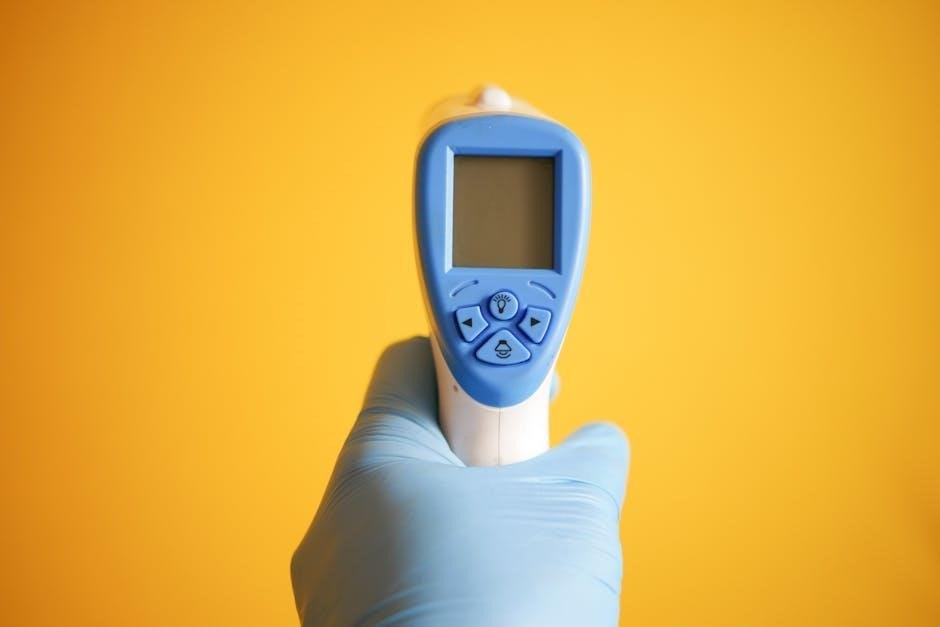
This guide details infrared thermometer operation‚ safety‚ features‚ and troubleshooting. It covers package verification‚ indicator meanings‚ and battery replacement. Explore measurement techniques‚ error codes‚ and warranty details‚ referencing manuals from M. Feingersh & Co. Ltd and Generation Guard Pty Ltd.

Understanding Infrared Thermometers

Infrared thermometers‚ like the models detailed in available manuals (M. Feingersh & Co. Ltd‚ Generation Guard Pty Ltd)‚ are non-contact devices detecting thermal radiation. Unlike traditional thermometers requiring physical contact‚ these measure temperature from a distance‚ crucial for hygiene and safety. They quantify the infrared energy emitted by an object‚ converting it into a temperature reading displayed on the device.

These devices are invaluable in scenarios where contact measurement is impractical or risky‚ such as assessing body temperature (forehead or ear – see specific manual instructions) or monitoring machinery. Understanding the principles of infrared radiation and emissivity – the efficiency with which a surface emits infrared energy – is key to accurate readings. Manuals emphasize proper technique and environmental factors impacting results.

Guard thermometers‚ specifically‚ often incorporate features for enhanced accuracy and reliability. The provided documentation highlights the importance of understanding the device’s limitations and adhering to safety guidelines for optimal performance and dependable temperature assessment.

Safety Precautions for Use

Prior to use‚ carefully review the safety information detailed in your Guard thermometer’s manual (referencing documents from M. Feingersh & Co. Ltd and Generation Guard Pty Ltd); These devices are intended for non-invasive temperature screening and should not be used as a substitute for professional medical diagnosis. Avoid pointing the thermometer at eyes or directly into ears.

Ensure the device is clean and maintained according to the manual’s instructions. Do not use the thermometer in environments with extreme temperatures or humidity. Keep it away from flammable materials and liquids. The accuracy of readings can be affected by external factors; therefore‚ follow recommended measurement distances and techniques;

Always supervise use around children. Do not attempt to disassemble or modify the thermometer. If the device malfunctions‚ discontinue use and consult the troubleshooting section of the manual or contact customer support. Proper handling and adherence to safety guidelines are crucial for accurate and safe operation.

Key Features of Guard Thermometers

Guard thermometers‚ as detailed in manuals from manufacturers like M. Feingersh & Co. Ltd and Generation Guard Pty Ltd‚ boast several key features. These typically include non-contact infrared measurement‚ providing a hygienic and convenient method for temperature screening. Many models offer both forehead and ear measurement modes‚ enhancing versatility.

A prominent feature is the rapid response time‚ delivering readings within seconds. Digital displays clearly present temperature values‚ often with selectable units (°C or °F). Backlit screens improve visibility in low-light conditions. Most devices incorporate audible fever indicators‚ alerting users to potentially elevated temperatures.

Advanced models may include memory storage for previous readings‚ facilitating trend tracking. Automatic shut-off functionality conserves battery life. Some incorporate features related to Virtualization Based Security (VBS) and Steam Guard‚ though these are less common in basic thermometer functionality.

Intended Use and Applications

Guard thermometers‚ as outlined in user manuals‚ are primarily intended for non-invasive body temperature measurement. They find widespread application in screening for elevated body temperature in various settings‚ including homes‚ schools‚ workplaces‚ and public areas. These devices are particularly useful for initial triage‚ helping to identify individuals who may require further medical evaluation.

Beyond human temperature screening‚ these thermometers can be utilized for surface temperature measurements. This includes assessing the temperature of objects‚ liquids‚ or environments. Applications extend to monitoring equipment‚ verifying food temperatures‚ and ensuring optimal conditions in industrial processes.

However‚ it’s crucial to remember these are screening tools‚ not diagnostic devices. Accurate readings depend on proper technique and environmental factors. Refer to the manual for specific guidance on intended use and limitations‚ especially concerning VBS or Steam Guard related functionalities which are not core to thermometer operation.

Package Contents Verification

Upon receiving your Guard thermometer‚ carefully verify the package contents against the included list. A standard package‚ as detailed in manuals from manufacturers like M. Feingersh & Co. Ltd and Generation Guard Pty Ltd‚ should contain the infrared thermometer unit itself. Additionally‚ expect to find a user manual – crucial for understanding operation and safety precautions.

Most packages also include batteries‚ typically AAA or AA‚ required to power the device. Confirm the correct battery type and quantity are present. Some models may include a carrying case for storage and protection during transport. Check for any included accessories‚ such as lens covers or probe covers‚ depending on the specific model;

If any items are missing or appear damaged‚ immediately contact the seller or manufacturer’s support team. Do not attempt to operate the thermometer with missing components. Retain all packaging materials for potential returns or warranty claims. This verification step ensures you have a fully functional and complete product‚ ready for accurate temperature measurements.

Indicator Descriptions and Meanings

Understanding the indicator symbols on your Guard thermometer is vital for accurate interpretation of readings. Manuals from companies like M. Feingersh & Co. Ltd detail specific icons and their corresponding meanings. A common indicator is a low battery symbol‚ alerting you to replace the batteries to maintain accurate measurements.

Error messages are often displayed as specific codes or symbols‚ indicating potential issues with the device or measurement process. Refer to the troubleshooting section of the manual to decipher these codes. A “Hi” or “Lo” indicator signifies readings outside the thermometer’s measurement range‚ requiring investigation.

Some models feature a scan indicator‚ showing when the device is actively measuring temperature. A memory indicator signifies stored readings‚ allowing for review of previous measurements. Pay close attention to any flashing indicators‚ as these often signal a specific condition or require user intervention. Familiarizing yourself with these indicators ensures proper device operation and reliable results.

Operating Instructions: Step-by-Step Guide

To begin‚ ensure fresh batteries are correctly installed‚ referencing the battery installation section of your Guard thermometer’s manual (like those from M. Feingersh & Co. Ltd). Power on the device using the designated button. Allow the thermometer to initialize – this may take a few seconds‚ indicated by a self-test sequence.

Aim the thermometer at the desired measurement location‚ maintaining the recommended distance specified in the manual. Press the measurement button to initiate the reading. Hold the button until the indicator signals completion. The temperature will then be displayed on the screen.

For forehead measurements‚ follow the specific instructions detailed in the manual‚ ensuring proper positioning. For ear measurements‚ use a hygienic probe cover. Review the display for any error codes or warnings. After use‚ power off the device to conserve battery life. Always consult the full manual for detailed guidance and safety precautions.

Measurement Techniques: Forehead vs. Ear

Forehead measurements‚ as detailed in manuals like the GM-400EF‚ require aiming the thermometer at the center of the forehead‚ maintaining a recommended distance (typically 1-3cm). Ensure no hair‚ sweat‚ or cosmetics interfere with the reading. This non-invasive method is suitable for broad screening.

Ear measurements‚ conversely‚ necessitate using a disposable probe cover for hygiene. Gently insert the probe into the ear canal‚ ensuring a secure seal. Pull the ear slightly upward and backward (adults) or downward and backward (children) to straighten the ear canal. This technique‚ found in user guides‚ provides a core body temperature reading.

Accuracy varies between methods. Ear measurements are generally faster but require proper technique. Forehead readings are convenient but may be influenced by external factors. Always consult your thermometer’s manual for specific instructions and limitations regarding each technique.

Display Readings and Units of Measurement

Guard thermometers typically display temperature readings in both Celsius (°C) and Fahrenheit (°F). User manuals‚ such as those from Dr.Morepen MT 111 DigiClassic‚ detail how to switch between units using a dedicated button or settings menu. The display often features a backlight for visibility in low-light conditions.

Readings are presented numerically‚ often with decimal precision. Many models incorporate visual indicators – like color-coded displays or icons – to signify temperature ranges (e.g.‚ normal‚ fever). These indicators provide a quick assessment of the measured temperature.

Understanding the display is crucial for accurate interpretation. Pay attention to any error codes or symbols displayed‚ as these indicate potential issues. Refer to the manual’s troubleshooting section for explanations of these indicators. Ensure the display is clear and unobstructed for optimal readability.

Troubleshooting Common Issues

If your guard thermometer displays inaccurate readings‚ first verify proper battery installation and ensure the lens is clean. Refer to the user manual – like those for GM-400EF – for cleaning instructions. Common issues include low battery power‚ affecting accuracy‚ and improper technique during measurement.

Error codes‚ detailed in the manual‚ indicate specific problems. For example‚ a “Lo” or “Hi” reading suggests the temperature is outside the measurement range. If the device fails to power on‚ check the battery compartment for corrosion or damage.

Virtualization-Based Security (Device Guard) conflicts can sometimes cause issues with connected devices; disabling it may resolve connectivity problems. If problems persist‚ consult the warranty information for support contact details. Always prioritize safety and avoid self-repair beyond basic troubleshooting steps.

Battery Installation and Replacement

To install batteries‚ locate the battery compartment‚ typically on the thermometer’s handle or back‚ as detailed in manuals from manufacturers like M. Feingersh & Co. Ltd. Ensure correct polarity (+ and -) when inserting the batteries‚ usually AAA or AA size. Refer to the specific model’s user guide (e.g.‚ for the MT 111 DigiClassic) for exact battery type requirements.

When replacing batteries‚ always use new batteries of the same type. Do not mix old and new batteries‚ or different battery types. A low battery indicator on the display signals the need for replacement. Dispose of used batteries responsibly‚ following local regulations.

Proper battery function is crucial for accurate temperature readings. Weak batteries can lead to inaccurate measurements or device malfunction. Regularly check battery levels to maintain optimal performance and reliability.

Cleaning and Maintenance Procedures

Regular cleaning is essential for maintaining the accuracy and hygiene of your guard thermometer‚ as outlined in manuals from companies like Generation Guard Pty Ltd. After each use‚ gently wipe the thermometer’s probe with a soft cloth lightly dampened with isopropyl alcohol (70% is recommended). Avoid harsh chemicals or abrasive cleaners‚ as these can damage the sensor.

For the thermometer body‚ use a similar dampened cloth. Ensure no liquid enters the battery compartment or internal components. Do not immerse the thermometer in water or any other liquid. Store the thermometer in a clean‚ dry place‚ away from direct sunlight and extreme temperatures.

Periodic inspection of the device for physical damage is also recommended. If damage is detected‚ discontinue use and consult the warranty information or contact support.

Technical Specifications and Accuracy

Guard thermometers‚ as detailed in manuals from M. Feingersh & Co. Ltd and Generation Guard Pty Ltd‚ typically measure temperature ranges from 32°C to 42.2°C (89.6°F to 108°F). Accuracy is generally ±0.2°C (±0.4°F) within the normal body temperature range‚ though this can vary based on environmental factors and proper usage.

Key specifications include a measurement distance of 1-5cm for forehead measurements and a response time of approximately 0.5 seconds. The devices often utilize infrared technology with a spectral range of 3-14μm. Power requirements are typically two AAA batteries‚ offering several thousand readings per set.

Accuracy can be affected by factors like ambient temperature‚ humidity‚ and skin surface conditions. Always refer to the specific model’s manual for detailed specifications and limitations.

Error Codes and Their Interpretations

Guard thermometer manuals‚ like those from M. Feingersh & Co. Ltd and Generation Guard Pty Ltd‚ often display error codes to indicate malfunctions. A common error‚ “Lo‚” signifies low battery power‚ requiring immediate replacement for accurate readings. “Hi” indicates a temperature exceeding the measurement range‚ suggesting a potential device issue or an unusually high temperature.

Other potential codes may include “Err‚” a general error indicating a sensor malfunction or internal problem. Some models might display codes related to improper operation‚ such as measuring on a moving subject. Referencing the specific model’s manual is crucial for accurate interpretation.

If an error persists after troubleshooting (battery replacement‚ proper usage)‚ contact the manufacturer’s support for assistance. Ignoring error codes can lead to inaccurate temperature readings and potentially incorrect medical assessments.

Virtualization Based Security & Device Guard Considerations

While seemingly unrelated to a guard thermometer’s functionality‚ Virtualization Based Security (VBS) and Device Guard can impact computer systems used to access thermometer data or software. Specifically‚ enabling VBS might cause compatibility issues with certain virtualization software‚ as noted in online discussions regarding disabling Device Guard for virtual machine operation.

This is relevant if the thermometer’s software requires virtualization or if data is analyzed on a virtual machine. Disabling VBS/Device Guard‚ through Group Policy (Computer Configuration > Administrative Templates > System > Device Guard)‚ may be necessary for smooth operation. However‚ this reduces system security.

Users should carefully weigh the security implications before disabling these features. The core function of the thermometer isn’t affected‚ but data handling on the connected computer might be. Consult IT professionals for guidance on balancing security and compatibility.

Steam Guard Functionality & Account Protection

The connection between a guard thermometer and Steam Guard appears indirect‚ yet highlights broader digital security considerations. Steam Guard‚ a two-factor authentication system for Steam accounts‚ exemplifies robust account protection – a principle applicable to any device generating or transmitting health data.

Although a thermometer doesn’t directly interact with Steam‚ the underlying concept of securing access is crucial. If the software used to analyze thermometer readings requires a Steam account for licensing or updates‚ enabling Steam Guard is vital. This prevents unauthorized access to both the software and‚ potentially‚ the collected health information.

Consider the broader digital ecosystem. Protecting your Steam account‚ and any associated software‚ contributes to a more secure environment for handling sensitive data. Employing strong passwords and two-factor authentication‚ like Steam Guard‚ is a best practice for all online accounts.

Shielding and Cable Protection (Related to Components)

Regarding guard thermometers‚ shielding primarily concerns internal electronic components and cable integrity. The device’s accuracy relies on sensitive sensors and circuitry susceptible to electromagnetic interference (EMI). Effective shielding‚ potentially utilizing materials like those found in the referenced “55A”‚ minimizes signal disruption.

Cable protection is equally vital‚ particularly for any external probes or connectors. Robust cable construction prevents damage from bending‚ twisting‚ or accidental pulling‚ ensuring consistent data transmission. The “shield” terminology extends to cable shielding‚ protecting signals from external noise.

While a guard thermometer’s manual PDF may not explicitly detail shielding materials‚ understanding the principle is crucial for maintenance. Inspect cables regularly for wear and tear‚ and avoid exposing internal components to moisture or physical stress. Proper care extends the device’s lifespan and maintains measurement accuracy.

Warranty Information and Support Contact

Guard thermometer warranties typically cover manufacturing defects for a defined period‚ often one to two years from the purchase date. Review your specific product’s manual PDF – like those from M. Feingersh & Co. Ltd or Generation Guard Pty Ltd – for precise terms and conditions. Coverage may exclude damage from misuse‚ accidents‚ or unauthorized repairs.

To initiate a warranty claim‚ retain your proof of purchase and contact the vendor or manufacturer directly. Generation Guard Pty Ltd‚ as a distributor‚ provides a point of contact for Australian customers. For other regions‚ consult the manual for relevant contact details.

Technical support is often available via phone‚ email‚ or online resources. Refer to the manual for troubleshooting guides and FAQs before seeking assistance. Prompt communication with support can resolve issues efficiently and ensure your thermometer functions optimally throughout its warranty period.

Continue Reading