bobbie goods coloring book pdf free download

Welcome to the vibrant world of Bobbie Goods Coloring Book, a creative escape designed for relaxation and self-expression. This digital treasure offers stunning artwork, diverse themes, and a therapeutic outlet for adults and children alike. Perfect for unwinding, it combines intricate designs with inspiring patterns, fostering creativity and mindfulness in every stroke. Dive into its colorful universe and let your imagination shine!

Overview of the Coloring Book

Bobbie Goods Coloring Book is a charming, artistically crafted resource designed to inspire creativity and calmness. It features a wide array of unique, hand-drawn designs and themes, catering to diverse interests. From intricate patterns to whimsical illustrations, this book is tailored for both adults and children seeking a therapeutic outlet. Its digital format makes it easily accessible, allowing users to print or color digitally. Perfect for relaxation, self-expression, or as a fun activity, Bobbie Goods Coloring Book offers something for everyone, fostering mindfulness and artistic exploration. Its versatility and appealing visuals make it a popular choice among coloring enthusiasts worldwide.

Importance of Coloring Books for Relaxation and Creativity

Coloring books like Bobbie Goods offer a therapeutic escape, promoting relaxation and creativity. The repetitive motion of coloring can reduce stress and anxiety, fostering mindfulness. It provides an outlet for self-expression, allowing individuals to explore their artistic side without pressure. This activity is particularly beneficial for adults seeking to unwind and reconnect with their creative selves. By focusing on intricate patterns, users can achieve a meditative state, improving mental clarity and emotional well-being. Coloring books are not just for children; they serve as a universal tool for relaxation and personal growth, making them a popular choice in today’s fast-paced world.

Where to Find Bobbie Goods Coloring Book PDF for Free

Bobby Goods Coloring Book PDF can be found on various free download platforms and websites offering creative resources. Users can search for it online to access the file.

Legitimate Sources for Downloading Free PDFs

Legitimate sources for downloading free PDFs of the Bobbie Goods Coloring Book include websites like Crayola, Monday Mandala, HP Printables, Castle Arts, and Freepik. These platforms offer a wide range of creative resources, including coloring pages and books; Users can search for “Bobbie Goods Coloring Book PDF” on these sites to find high-quality downloads. Additionally, some online communities and forums share free resources, but it’s important to verify the credibility of the source to ensure safety and compliance with copyright laws. Always check for official or trusted websites to avoid unauthorized or low-quality downloads.

Popular Websites Offering Free Coloring Book Downloads

Discover free coloring book downloads on websites like Crayola, Monday Mandala, HP Printables, Castle Arts, and Freepik. These platforms offer a variety of themes, from intricate patterns to whimsical designs. Users can search for “Bobbie Goods Coloring Book PDF” on these sites to find high-quality downloads. Crayola provides vibrant, kid-friendly options, while Freepik caters to adults with artistic designs. Always verify the credibility of sources to ensure safe and legal downloads. These websites are great for accessing creative resources without compromising on quality or variety, making them ideal for both casual and dedicated coloring enthusiasts.

Features of the Bobbie Goods Coloring Book

Bobbie Goods Coloring Book offers unique, handcrafted designs with diverse themes, from nature to abstract patterns. Its high-quality artwork and variety of styles cater to all skill levels, fostering creativity and relaxation through coloring.

Unique Design and Artwork

Bobbie Goods Coloring Book captivates with its distinctive, hand-drawn designs. Each page features intricate details, blending cultural motifs with modern elements, creating visually appealing and thought-provoking imagery. The artwork’s originality encourages users to explore their creativity, making every coloring session a unique experience. The designs are crafted to inspire mindfulness, allowing users to unwind while bringing vibrant colors to life. This book stands out for its artistic variety and fresh style, offering something new for every user to discover and enjoy.

Variety of Themes and Patterns

Bobbie Goods Coloring Book offers a diverse range of themes and patterns, catering to all preferences. From nature-inspired landscapes to abstract geometric designs, the book provides endless creative possibilities. Cultural motifs, floral arrangements, and whimsical characters are just a few of the many options available. Seasonal themes, such as spring blooms or winter snowflakes, add a fresh touch. Each design is carefully crafted to inspire imagination, ensuring there’s something for every skill level and interest. This variety makes the book a versatile tool for self-expression, allowing users to explore different artistic styles and moods in a single collection.

How to Download the Coloring Book

To download the Bobbie Goods Coloring Book, visit trusted websites offering free PDFs. Search for the title, select the download option, and follow the prompts to save the file securely.

Step-by-Step Guide to Downloading the PDF

Visit a reputable website offering free downloads, such as Crayola or Freepik. 2. Use the search bar to find “Bobbie Goods Coloring Book PDF.” 3. Select the desired file from the results. 4. Click the “Download” button. 5. Choose the PDF format. 6. Wait for the download to complete. 7. Open and enjoy your coloring book. Ensure the site is trustworthy to avoid malware. Always verify the file’s quality and safety before downloading to protect your device;

Tips for Finding the Best Quality Download

Ensure a high-quality download by selecting files with clear, high-resolution images. Use trusted websites like Crayola or Freepik to avoid low-quality or malicious content. Read user reviews to confirm the PDF’s quality. Verify the file format is PDF for compatibility. Use specific keywords like “high-quality” or “printable” in your search. Check the file size to ensure detailed artwork. Avoid sites with pop-ups or suspicious links. Prioritize downloads from official sources or well-rated platforms to guarantee safety and clarity. These steps ensure a seamless and enjoyable coloring experience with crisp, vibrant designs.

Benefits of Using Digital Coloring Books

Digital coloring books offer unmatched convenience, accessibility, and eco-friendliness. They save space, reduce paper waste, and allow printing only desired pages. Accessible on multiple devices, they provide endless creative freedom anytime, anywhere.

Convenience and Accessibility

Digital coloring books like the Bobbie Goods Coloring Book offer unparalleled convenience and accessibility. They can be downloaded instantly and accessed on various devices, such as tablets, smartphones, or laptops, making them perfect for on-the-go creativity. With a free PDF download, users can print specific pages or work digitally, eliminating the need for physical storage. This flexibility allows artists to enjoy their hobby anywhere, anytime, without the hassle of carrying bulky books. The digital format also supports zoom features and undo options, enhancing the overall coloring experience. This accessibility makes it ideal for both casual colorists and serious artists seeking convenience.

Eco-Friendly Alternative to Physical Copies

Opting for the Bobbie Goods Coloring Book in PDF format is an eco-conscious choice, reducing the environmental impact of printing and shipping physical books. By choosing a digital version, users conserve paper, ink, and energy, aligning with sustainable practices. The free download eliminates the need for deforestation and minimizes carbon footprint from transportation. This eco-friendly alternative promotes greener habits while providing the same creative benefits. It’s a responsible option for environmentally aware individuals who enjoy coloring without compromising their values. Embrace digital coloring and contribute to a more sustainable future, all while exploring your artistic side with Bobbie Goods’ vibrant designs.

Legal Considerations for Free Downloads

Ensure compliance with copyright laws when downloading the Bobbie Goods Coloring Book PDF. Verify the source’s legitimacy to avoid infringement. Respect intellectual property rights always.

Understanding Copyright and Usage Rights

Downloading the Bobbie Goods Coloring Book PDF for free requires understanding copyright laws. The book is protected under intellectual property rights, meaning its creator, Bobbie Goods, holds exclusive rights. Unless explicitly stated, free downloads may infringe on these rights. Always verify if the source has permission to distribute the book. Using copyrighted material without authorization can lead to legal consequences. Respect the creator’s rights by ensuring any download or use complies with licensing terms. If unsure, opt for legitimate sources or consider purchasing the book to support the artist and avoid potential legal issues.

Ensuring Compliance with Intellectual Property Laws

To ensure compliance with intellectual property laws, always verify the legitimacy of the source when downloading the Bobbie Goods Coloring Book PDF. Copyright protects the creator’s rights, and unauthorized distribution is illegal. Look for official websites or platforms authorized by Bobbie Goods to offer free downloads. If unsure, purchasing the book directly from the creator or authorized retailers is the safest option. Respect intellectual property by avoiding pirated copies, as this supports the artist and adheres to legal standards. Proper licensing ensures ethical use and avoids potential legal repercussions.

Final Thoughts on the Bobbie Goods Coloring Book

The Bobbie Goods Coloring Book is a gem for anyone seeking relaxation and creative expression. Its unique artwork and diverse themes cater to all skill levels, making it a universal treasure. Whether you’re an adult looking to unwind or a child exploring your creativity, this book offers endless possibilities. The availability of a free PDF download ensures accessibility, allowing everyone to enjoy its vibrant designs without cost. Embrace the therapeutic benefits of coloring and dive into the captivating world of Bobbie Goods, where art and mindfulness converge seamlessly.

Encouragement to Explore and Enjoy the Book

Embark on a creative journey with the Bobbie Goods Coloring Book, where every page invites imagination and serenity. Whether you’re a seasoned artist or a curious beginner, this book’s diverse themes and stunning designs promise endless hours of enjoyment. The convenience of a free PDF download makes it accessible to all, allowing you to unwind and express yourself whenever inspiration strikes. So, grab your colors, dive into its vibrant world, and let the joy of coloring bring you peace and fulfillment. Your artistic adventure awaits—start exploring and make every page a masterpiece!


Continue Reading

pdf 2 pedal

The PDF-2 is a parametric distortion filter pedal, successor to the acclaimed PDF-1, offering enhanced features like dual-channel operation, expression pedal input, and increased gain for versatile tonal shaping.

Overview of the PDF-2 Pedal

The PDF-2 is a versatile, parametric distortion filter pedal designed to deliver unmatched tonal control. Building on the legacy of its predecessor, the PDF-1, it features dual-channel operation, an expression pedal input, and a reduced noise floor. This pedal offers a wide range of tonal possibilities, from smooth overdrives to aggressive distortions, and includes advanced features like a parametric EQ and foot-switchable clean/dirty channels. Its compact design and robust construction make it ideal for both studio and live performances.

Importance of the PDF-2 in Music Gear

The PDF-2 is a groundbreaking tool in music gear, offering unparalleled versatility and tonal control. Its parametric EQ and dual-channel design enable musicians to craft unique sounds, from subtle overdrives to extreme distortions. The reduced noise floor and expression pedal compatibility make it ideal for studio and live use. Its adaptability across instruments like guitars, bass, and synths solidifies its role as an essential piece of gear for modern musicians seeking precision and creativity in their sound.

Features of the PDF-2 Pedal

The PDF-2 offers dual-channel operation, parametric EQ, expression pedal input, and a volume compensation circuit. It delivers enhanced gain and a reduced noise floor compared to its predecessor.

Key Features and Upgrades from the PDF-1

The PDF-2 introduces dual-channel operation, allowing seamless switching between clean and dirty channels. It features increased gain compared to the PDF-1, enhanced tonal sculpting via parametric EQ, and an expression pedal input for dynamic frequency control. Additionally, the pedal boasts a reduced noise floor, addressing a key user request, and includes a volume compensation circuit to maintain consistent tone across settings. These upgrades make the PDF-2 a more versatile and powerful tool for musicians.

Expression Pedal Functionality and Versatility

The PDF-2 features an expression pedal input, compatible with the Stone Deaf EP-1, enabling real-time control of frequency sweeps and tonal shifts. This functionality allows for dynamic wah and phaser effects, enhancing versatility. Musicians can seamlessly transition between clean and distorted tones or manipulate frequencies on the fly, making it ideal for both live performances and studio recordings. The expression pedal adds a new dimension of expressiveness to the pedal’s already robust feature set.

Dual-Channel Operation

The PDF-2 offers dual-channel functionality, providing clean and dirty channels for diverse tonal needs. The clean channel delivers crisp boosts, while the dirty channel unleashes rich distortion.

Clean Channel Capabilities

The PDF-2’s clean channel offers a pristine, uncolored boost, perfect for enhancing midrange frequencies while maintaining tonal clarity. It’s highly versatile, allowing players to sculpt their sound with precision, from subtle boosts to sharp mid spikes. This channel is ideal for shaping tones without adding distortion, making it suitable for a wide range of instruments, including guitars, basses, and synths. Its clarity and precision make it a favorite for musicians seeking clean, defined tones.

Dirty Channel and Distortion Options

The PDF-2’s dirty channel delivers a wide range of distortion, from smooth overdrive to aggressive, gritty tones. With increased gain compared to the PDF-1, it offers greater versatility for creating bold, dynamic sounds. The foot-switchable design allows seamless transitions between clean and distorted tones, while the parametric EQ enables precise frequency sculpting. This channel is perfect for musicians seeking powerful, customizable distortion that can adapt to various musical styles and playing techniques.

Tonal Versatility and Customization

The PDF-2 offers exceptional tonal flexibility, featuring a parametric EQ for precise frequency control and expression pedal functionality for dynamic wah and phaser effects, ensuring unlimited sonic possibilities.

Parametric EQ and Frequency Control

The PDF-2 features a highly adjustable parametric EQ, allowing precise control over frequency and gain, enabling players to sculpt their tone with unparalleled accuracy. The expression pedal expands versatility, offering dynamic frequency sweeps for wah and phaser effects. This setup allows for everything from subtle midrange adjustments to extreme tonal shifts, providing endless customization options for musicians seeking unique and expressive sounds.

Wah and Phaser Effects via Expression Pedal

The PDF-2 unlocks dynamic wah and phaser effects, controlled effortlessly via the expression pedal. Players can achieve smooth, expressive transitions between clean and dirty channels, creating rich, nuanced tones. This feature enhances versatility, allowing for real-time manipulation of frequency sweeps and tonal shifts, making it ideal for live performances and studio creativity. Compatible with the Stone Deaf EP-1 expression pedal, it ensures seamless integration into any musician’s rig.

Noise Reduction and Signal Quality

The PDF-2 features a significantly improved noise floor compared to its predecessor, ensuring ultra-quiet operation. Its advanced circuitry maintains pristine signal quality, delivering clear, distortion-free tones.

Improved Noise Floor from PDF-1

The PDF-2 boasts a significantly reduced noise floor compared to the PDF-1, delivering ultra-quiet operation. This improvement ensures pristine signal quality, making it ideal for professional musicians seeking clarity in live performances and studio recordings. The enhanced noise reduction allows for distortion-free tones, even at high gain settings, providing a polished sound that meets the demands of modern music production and touring artists. This upgrade addresses user feedback, solidifying the pedal’s reputation as a reliable, high-fidelity distortion tool.

Volume Compensation Circuit

The PDF-2 features a built-in volume compensation circuit, ensuring consistent output levels when adjusting parameters like bandwidth, Q, and frequency. This circuit prevents volume drops or spikes, maintaining a balanced sound even during extensive tonal tweaking. It’s particularly useful for live performances, where seamless transitions between settings are crucial. This feature, integrated into the Height function, allows for precise real-time adjustments without compromising overall volume, enhancing the pedal’s reliability and professional-grade performance.

Benefits for Various Musicians

The PDF-2 caters to a wide range of musicians, offering versatile tone-shaping for guitar, bass, synths, and more. Its dual-channel design and expression capabilities make it ideal for live performers and studio artists alike.

Use Across Different Instruments

The PDF-2 is remarkably versatile, suitable for various instruments including electric and acoustic guitars, bass, synths, and even drums. Its parametric EQ allows precise tone sculpting, while the dual-channel operation ensures it adapts seamlessly to different musical contexts. Whether enhancing midrange frequencies for synths or adding distortion to basslines, the PDF-2 delivers a wide range of tonal possibilities, making it a valuable tool for multi-instrumentalists and producers.

Live Performance and Touring Benefits

The PDF-2 excels in live settings, offering reliable performance and versatility for touring musicians. Its dual-channel operation and expression pedal functionality allow seamless tone transitions, while the reduced noise floor ensures clarity even in high-volume environments. The pedal’s robust construction and bombproof enclosure make it durable for rigorous touring schedules, providing consistent and professional-grade sound reproduction across diverse stages and performances.

Setup and Integration Tips

The PDF-2 integrates seamlessly into any pedalboard. Optimal placement in the signal chain ensures versatile tone shaping. Pair it with the Stone Deaf EP-1 expression pedal for enhanced control.

Expression Pedal Setup

The PDF-2 seamlessly integrates with the Stone Deaf EP-1 expression pedal, enabling real-time control over frequency sweeps, wah, and phaser effects. Connect the EP-1 to the expression input for dynamic tonal adjustments. This setup allows for precise manipulation of frequencies and effects during performances, enhancing creativity and versatility. The expression pedal functionality ensures smooth transitions between tones, making it ideal for live use and intricate soundscapes.

Optimal Placement in Signal Chain

The PDF-2 excels when placed early in the signal chain to shape the base tone or later to refine specific frequencies. Its parametric EQ and distortion capabilities make it ideal for boosting midrange in fuzz pedals or adding clarity to overdrives. Experiment with placement to enhance dynamics and maintain a balanced output. The volume compensation circuit ensures consistent levels, allowing seamless integration into any rig for optimal tonal performance.

Comparison with the PDF-1

The PDF-2 surpasses the PDF-1 with more gain, dual-channel operation, and a quieter noise floor, offering enhanced versatility for modern musicians.

Differences in Features and Performance

The PDF-2 offers significant upgrades over the PDF-1, including increased gain, dual-channel operation, and an expression pedal input for enhanced tonal control. It also features a quieter noise floor, improved parametric EQ functionality, and a volume compensation circuit for consistent output. These advancements make the PDF-2 more versatile and user-friendly, catering to a wider range of musical styles and performance needs compared to its predecessor.

Upgrading from PDF-1 to PDF-2

Upgrading to the PDF-2 from the PDF-1 brings significant improvements, including increased gain, dual-channel operation, and an expression pedal input. The PDF-2 also features a quieter noise floor and enhanced parametric EQ functionality. Additionally, a volume compensation circuit ensures consistent output levels, making it easier to integrate into any setup. These upgrades make the PDF-2 a more versatile and powerful tool for musicians seeking advanced tonal control and performance capabilities.

The PDF-2 pedal stands as a powerful, versatile tool for musicians, offering enhanced features like dual-channel operation and expression pedal control, making it a valuable addition to any setup.

Final Thoughts on the PDF-2 Pedal

The PDF-2 pedal is a testament to innovative design, offering unparalleled versatility with its dual-channel operation, parametric EQ, and expression pedal functionality. Its reduced noise floor and enhanced gain make it a reliable choice for both studio and live performances. Musicians across genres will appreciate its ability to craft unique tones, from subtle boosts to extreme distortions. With its robust build and user-friendly features, the PDF-2 is an essential addition to any pedalboard, catering to a wide range of musical needs.

Recommendation for Musicians

The PDF-2 pedal is highly recommended for musicians seeking versatility and precision in tone shaping. Its dual-channel operation, parametric EQ, and expression pedal functionality make it ideal for guitarists, bassists, and synth players. Whether crafting subtle overdrives or extreme distortions, the PDF-2 delivers. Its reduced noise floor and robust build also make it a reliable choice for touring artists. A must-have for any musician looking to elevate their sound with unmatched customization and durability.

Continue Reading

dorian yates blood and guts pdf

Dorian Yates, known as “The Shadow,” is a six-time Mr. Olympia winner and legendary bodybuilder. His iconic Blood and Guts program revolutionized high-intensity training, inspiring generations of athletes worldwide.

1.1 Early Life and Career

Dorian Yates, born on April 19, 1962, in Staffordshire, England, grew up on a small farm, fostering a strong work ethic. His journey into bodybuilding began at 21 when he joined a local gym. Yates quickly excelled, winning the British Championship in 1986, which launched his professional career. His dedication and natural talent set the foundation for his future success in the bodybuilding world.

1.2 Rise to Fame in Bodybuilding

Dorian Yates’ rise to fame began with his British Championship win in 1986. He quickly climbed the ranks, earning fifteen professional victories in seventeen contests. His six consecutive Mr. Olympia titles from 1992 to 1997 solidified his legacy. Known for his intense training and unmatched physique, Yates became a symbol of excellence, inspiring countless bodybuilders with his Blood and Guts philosophy, which emphasized high-intensity workouts and mental toughness. His dominance reshaped the sport.

Overview of Blood and Guts Program

The Blood and Guts program, created by Dorian Yates, is a high-intensity training guide emphasizing compound exercises, mental toughness, and strategic recovery for maximum muscle growth and strength.

2.1 Key Features and Philosophy

The Blood and Guts program centers on high-intensity training (HIT), focusing on brief, intense workouts with minimal volume. It emphasizes compound exercises like squats and deadlifts to build maximum muscle. Yates’ philosophy prioritizes maximum effort in each set, often to failure, with minimal rest between sets. Mental toughness and consistency are stressed, reflecting Yates’ no-compromise approach to achieving physique excellence. The program is designed for intermediate to advanced lifters seeking significant strength and hypertrophy gains.

2.2 Structure and Objectives

The Blood and Guts program is structured as a 12-week plan, split into four days of training per week. Each session focuses on specific muscle groups, with a clear emphasis on compound exercises. The program aims to maximize strength and hypertrophy through intense, focused workouts. Designed for intermediate to advanced lifters, it targets men seeking significant muscle growth. The structure includes warm-up sets and one all-out working set per exercise, ensuring maximum intensity and efficiency.

Training Philosophy

Dorian Yates’ training philosophy revolves around High-Intensity Training (HIT), emphasizing brief, intense workouts to push muscles to their limits, fostering maximum growth and strength efficiently.

3.1 High-Intensity Training (HIT)

Dorian Yates’ High-Intensity Training (HIT) is a cornerstone of his Blood and Guts program. HIT involves short, intense workouts with minimal rest, focusing on maximum effort in each set. This approach, inspired by Arthur Jones and Mike Mentzer, pushes muscles to their limits, promoting significant hypertrophy and strength gains. HIT’s effectiveness lies in its ability to stimulate muscle growth without excessive volume, making it a favorite among advanced lifters seeking efficiency and results. Yates’ intense sessions are legendary, often leaving him at the edge of physical exhaustion.

3.2 Exercise Selection and Techniques

Dorian Yates’ Blood and Guts program emphasizes compound exercises like bench presses, rows, and squats to target major muscle groups; He prioritized controlled movements, avoiding momentum to maximize muscle engagement. Techniques like partial reps and forced reps were used to extend sets and intensify workouts. Yates also incorporated specialized exercises, such as the Yates Row, to focus on specific areas like the upper back. This approach ensured efficient muscle development and aligned with his high-intensity training philosophy.

3.3 Rest and Recovery Strategies

Rest and recovery are crucial in Dorian Yates’ Blood and Guts program. He emphasized rest days to allow muscles to heal and grow, scheduling rest on days 3, 5, and 7. Yates prioritized recovery, particularly for weaker body parts like chest and biceps, by inserting rest days before and after those workouts. This strategic approach ensured optimal performance and muscle growth, aligning with his training philosophy of intensity and efficiency. Proper recovery was non-negotiable in his regimen.

Workout Split and Schedule

Dorian Yates’ Blood and Guts program features a 4-day workout split, targeting major muscle groups once weekly. Rest days on days 3, 5, and 7 allow recovery, with weaker muscle groups like chest and biceps placed between rest days for optimal performance and growth.

4.1 Training Frequency and Muscle Groups

Dorian Yates’ Blood and Guts program involves training each major muscle group once weekly. His split focuses on targeting specific areas with high intensity, allowing ample recovery time. The schedule includes shoulders and triceps, back and rear delts, chest and biceps, and legs. This structured approach ensures balanced development while maximizing strength and hypertrophy. Yates’ method avoids overtraining, emphasizing quality over quantity with each session. His consistency and focus on recovery contributed to his legendary physique and success.

4.2 Weekly Workout Schedule

Dorian Yates’ Blood and Guts program follows a 4-day workout schedule, targeting specific muscle groups each day. The routine includes shoulders and triceps on Day 1, back and rear delts on Day 2, chest and biceps on Day 3, and legs on Day 4. Each session is designed for high-intensity, low-volume training, lasting 60-90 minutes. Rest days are incorporated to allow recovery and muscle growth, ensuring optimal results. This structured approach emphasizes consistency and intensity to achieve significant hypertrophy and strength gains.

Nutrition and Supplementation

Dorian Yates’ Blood and Guts program emphasizes a high-protein diet, calorie surplus, and essential supplements like protein shakes and creatine to fuel muscle recovery and growth.

5.1 Diet Plan for Muscle Growth

Dorian Yates’ Blood and Guts diet plan emphasizes a high-protein intake, with a focus on whole foods like lean meats, fish, and complex carbohydrates. He advocates for a calorie surplus to support muscle growth, while maintaining a balanced macronutrient ratio. Yates stresses the importance of meal consistency and timing, ensuring adequate nourishment for intense workouts. His approach avoids excessive sugar and processed foods, prioritizing nutrient-dense meals to optimize recovery and hypertrophy; This diet plan remains a cornerstone of his Blood and Guts philosophy.

5.2 Role of Supplements

In the Blood and Guts program, supplements play a supportive role in enhancing muscle growth and recovery. Dorian Yates advocates for essential supplements like whey protein, creatine, and BCAAs to meet daily nutritional demands; These aids help maximize workout intensity and recovery, aligning with his high-intensity training philosophy. While supplements are beneficial, Yates emphasizes that they should complement, not replace, a well-structured diet. His approach ensures athletes optimize their physique without relying solely on supplementation.

Mental and Motivational Strategies

Dorian Yates emphasizes mental toughness and unwavering dedication as cornerstones of success. His philosophy centers on overcoming psychological barriers and maintaining relentless focus to achieve peak performance.

6.1 Mindset for Success

Dorian Yates attributes his success to a resilient and disciplined mindset. He believes mental strength is as crucial as physical effort, emphasizing the importance of setting clear goals and maintaining unwavering focus; Yates’ philosophy centers on overcoming challenges and staying committed, even when progress seems slow. His approach encourages embracing discomfort and pushing limits, fostering a mental fortitude that complements his intense training methods. This mindset was pivotal in his rise to bodybuilding prominence.

6.2 Overcoming Challenges

Dorian Yates faced significant challenges, including intense competition and career-threatening injuries. Despite these obstacles, he maintained a relentless work ethic and mental toughness. Yates often spoke about using setbacks as motivation, adapting his training to accommodate injuries while staying focused on long-term goals. His ability to overcome adversity solidified his legacy as a resilient champion, inspiring others to embrace challenges as opportunities for growth and perseverance in their own journeys.

Legacy and Impact

Dorian Yates is a bodybuilding legend, renowned for his six Mr. Olympia titles and revolutionary Blood and Guts program. His high-intensity training philosophy continues to inspire modern athletes, solidifying his enduring influence on the sport and fitness culture worldwide.

7.1 Influence on Modern Bodybuilding

Dorian Yates’ Blood and Guts program has profoundly shaped modern bodybuilding, popularizing high-intensity training (HIT) and emphasizing maximum effort in workouts. His approach, focusing on compound exercises and recovery, has influenced contemporary training methodologies. Many athletes and trainers adopt his principles, contributing to the evolution of bodybuilding techniques. Yates’ legacy continues to inspire new generations, making his impact on the sport timeless and unparalleled. His influence remains a cornerstone of modern training philosophies.

7.2 Continued Relevance Today

Dorian Yates’ Blood and Guts remains highly relevant in today’s fitness landscape, with its principles of high-intensity training and recovery widely adopted. Athletes and trainers continue to draw inspiration from his methods, which emphasize maximum effort and efficiency. The program’s focus on compound exercises and mental toughness resonates with modern lifters seeking effective and sustainable results. As a result, Yates’ legacy endures, making his approach a timeless blueprint for achieving exceptional physique and strength. His influence is as strong now as it was during his competition days.

Blood and Guts PDF Guide

The Blood and Guts PDF is a comprehensive guide detailing Dorian Yates’ training philosophy, workout routines, and nutrition strategies. It offers insights into his high-intensity methods.

8.1 Content and Structure

The Blood and Guts PDF meticulously outlines Dorian Yates’ high-intensity training principles, workout splits, and recovery strategies. It includes detailed exercise routines, nutrition advice, and mental preparation tips. The guide is structured into chapters, covering training philosophy, workout schedules, and supplementation, providing a holistic approach to bodybuilding. Each section is concise, offering practical guidance for athletes aiming to adopt Yates’ legendary methods.

8.2 Availability and Usage

The Blood and Guts PDF is widely available online, accessible through various fitness websites and platforms. Fans and athletes can download it for free or purchase it from official sources. The guide is popular among bodybuilders seeking to implement Yates’ high-intensity training methods. Its clear structure and detailed instructions make it a practical resource for those aiming to adopt his legendary workout approach.

Results and Effectiveness

The Blood and Guts program has proven highly effective, delivering significant muscle growth and strength gains. Its popularity endures as a testament to its results-driven approach.

9.1 Success Stories and Testimonials

The Blood and Guts program has garnered widespread acclaim, with numerous testimonials praising its effectiveness. Many users credit it with significant muscle growth and strength gains. Dorian Yatess six Mr. Olympia titles serve as a testament to the programs success. Athletes and bodybuilders worldwide have adopted his training philosophy, further solidifying its reputation as a legendary approach to bodybuilding. Its popularity endures as a go-to guide for achieving elite-level physiques.

9.2 ScientificBacking

9.2 Scientific Backing

The Blood and Guts program aligns with principles of high-intensity training (HIT), supported by research on muscle hypertrophy and strength gains. Studies endorse HIT for maximizing muscle fiber recruitment and metabolic stress, key factors in growth. The programs focus on compound exercises and progressive overload is scientifically validated as effective for building muscle. While individual results vary, the programs adherence to evidence-based training methods underscores its credibility and effectiveness in achieving muscle growth and strength.

Limitations and Criticisms

The Blood and Guts program is criticized for its extreme intensity, which may not suit all fitness levels. Limited nutrition guidance and reliance on specialized equipment are notable drawbacks.

10.1 Potential Drawbacks

The Blood and Guts program’s intense nature may lead to overtraining and injury for inexperienced users. Its focus on high-intensity training can be overwhelming for those new to weightlifting, potentially causing burnout or physical strain. Additionally, the program’s lack of detailed nutrition advice leaves users to figure out meal plans on their own, which can hinder progress for those unfamiliar with proper dietary strategies for muscle growth. This makes it less accessible to beginners seeking a comprehensive guide.

10.2 Critiques and Controversies

The Blood and Guts program has faced criticism for its extreme intensity, with some arguing it may neglect proper recovery and volume for muscle growth. Critics also point out that the program’s focus on high-intensity training (HIT) might not suit all fitness levels, potentially leading to overtraining or injury. Additionally, the lack of detailed nutrition guidance has sparked debate, as proper dietary planning is crucial for achieving the program’s goals, and its absence could hinder results for many users.

Dorian Yates’ Blood and Guts program remains a cornerstone of bodybuilding, emphasizing high-intensity training and mental resilience. While debates surround its suitability for all athletes, its impact on modern training is undeniable. The program’s focus on compound exercises and recovery has inspired countless lifters, leaving a lasting legacy in the fitness world. Its principles continue to evolve, ensuring relevance for new generations seeking muscle growth and strength.

Continue Reading

imm 1444 pdf

The IMM 1444 PDF is a critical document for individuals applying for criminal rehabilitation under Canadian immigration laws. It enables applicants to demonstrate their eligibility for rehabilitation, providing detailed personal information, offense history, and evidence of rehabilitation efforts. This form is essential for those seeking to overcome inadmissibility due to past criminal offenses and is a key step in the immigration process.

Overview of the IMM 1444 Form

The IMM 1444 form is a PDF document used for applications related to criminal rehabilitation. It is a multi-section form designed to collect detailed personal information, offense history, and evidence of rehabilitation. The form is relatively short but requires extensive supporting documentation. It is essential for individuals seeking to overcome inadmissibility to Canada due to criminal records. The form must be completed accurately to ensure proper processing by Immigration, Refugees and Citizenship Canada (IRCC).

Purpose of the Application for Criminal Rehabilitation

The purpose of the IMM 1444 application is to allow individuals with criminal records to demonstrate their rehabilitation and eligibility for entry to Canada. This form helps assess whether an applicant’s past offenses no longer pose a risk. It is a legal pathway to overcome inadmissibility, ensuring applicants can provide sufficient evidence of their reformation and commitment to lawful behavior. This process is vital for those seeking immigration or temporary residency in Canada.

Eligibility Criteria for Criminal Rehabilitation

Eligibility for criminal rehabilitation under IMM 1444 depends on factors like the nature of the offense, time since conviction, and evidence of rehabilitation efforts. Applicants must demonstrate they no longer pose a risk.

Who Can Apply for Criminal Rehabilitation

Individuals with past criminal convictions may apply for criminal rehabilitation using IMM 1444. This includes those seeking entry to Canada or already residing there. Applicants must meet specific eligibility criteria, such as completing their sentence and demonstrating rehabilitation. The process is designed for those who have overcome past offenses and wish to have their criminal inadmissibility waived. It’s a pathway to regaining eligibility for Canadian immigration benefits.

Time Frame for Eligibility After Offense

Applicants must wait a specified period after completing their sentence to apply for criminal rehabilitation. For summary offenses, a five-year waiting period applies, while indictable offenses require a ten-year wait. The rehabilitation period begins after all sentences, fines, and probation have been completed. Applicants must demonstrate that they have been rehabilitated and are unlikely to reoffend. Proper documentation and evidence of a stable, law-abiding lifestyle are essential for a successful application.

Structure of the IMM 1444 Form

The IMM 1444 form is divided into clear sections, including personal information, details of offenses, and evidence of rehabilitation. It is designed to guide applicants systematically.

Sections Included in the Form

The IMM 1444 form includes several key sections to ensure comprehensive documentation. Personal information is required, such as name, date of birth, and contact details. A detailed account of past offenses is mandatory, including dates, nature of crimes, and court outcomes. The form also asks for evidence of rehabilitation, such as letters of reference or proof of community service. Additionally, applicants must provide a personal statement explaining their actions and demonstrating remorse. This structured approach ensures clarity and thoroughness.

Information Required for Completion

The IMM 1444 form requires detailed personal information, including full name, date of birth, and contact details. Applicants must provide a comprehensive account of past offenses, such as dates, locations, and court outcomes. Evidence of rehabilitation, like letters of reference or community service records, is mandatory. Additionally, employment history since the age of 18 and legal documents, such as police clearances, must be included. Accurate and detailed information is essential for a successful application.

Downloading and Accessing the IMM 1444 PDF

The IMM 1444 PDF can be downloaded from the official Government of Canada website. Ensure to access it via a computer for proper viewing and downloading.

Official Sources for Downloading the Form

The IMM 1444 PDF is available for download on the official Government of Canada website. Visit Canada.ca and navigate to the immigration section to access the form. Ensure you download it from the official source to avoid any discrepancies or scams. The form is provided free of charge and is regularly updated to reflect current immigration policies. Always verify the source to ensure you are using the most recent and authentic version of the document.

Compatibility with Different Devices and Browsers

The IMM 1444 PDF is compatible with most modern web browsers, including Chrome, Firefox, and Safari. It is recommended to download and save the form on a computer for optimal functionality. While the form may open on tablets or mobile devices, completing it on a desktop ensures a seamless experience. Adobe Acrobat Reader is typically required to view and edit the PDF effectively, ensuring all features are accessible. Always use an updated version of the PDF viewer for the best results.

Steps to Fill Out the IMM 1444 Form

To complete the IMM 1444 form, download it from the official Canadian government website and save it to your computer. Open the PDF using Adobe Acrobat Reader or a compatible viewer. Carefully fill in all required fields, ensuring accuracy in personal details, offense history, and rehabilitation evidence. Complete each section systematically and review the form before submission to avoid errors.

Personal Information Section

The personal information section of the IMM 1444 form requires applicants to provide their full name, date of birth, place of birth, and contact details. This section also asks for citizenship information, passport details, and current residential address. Applicants must ensure all data is accurate and up-to-date, as any discrepancies can delay the processing of their criminal rehabilitation application; This section is foundational for establishing the applicant’s identity and immigration history.

Details of Past Offenses and Rehabilitation

This section requires detailed descriptions of past offenses, including dates, locations, and sentences imposed. Applicants must provide a comprehensive account of their criminal history and subsequent rehabilitation efforts. Evidence of rehabilitation may include counseling, employment history, or community involvement. The form assesses the applicant’s transformation and commitment to lawful behavior, ensuring compliance with Canada’s legal and moral standards for immigration eligibility. This section is critical for demonstrating remorse and rehabilitation progress.

Required Documents for Submission

Mandatory documents include police certificates, court records, proof of employment, counseling records, and character references. These documents support the applicant’s rehabilitation claim.

Mandatory Attachments and Supporting Evidence

The IMM 1444 application requires specific documents to support the rehabilitation claim. Mandatory attachments include police certificates from all countries where the applicant has lived, court documents detailing the offense and sentence, and proof of employment or education since the conviction. Additional evidence, such as counseling records, character references, and a detailed rehabilitation statement, must be provided to demonstrate personal growth and commitment to lawful behavior. All documents must be certified or notarized, and non-English documents require official translations. This comprehensive evidence is crucial for a successful application.

Verification Process by IRCC

The IRCC thoroughly verifies all information provided in the IMM 1444 application. This includes checking police certificates, court documents, and evidence of rehabilitation. IRCC may also conduct additional background checks or request further documentation to validate the applicant’s claims. Any discrepancies or incomplete information can lead to delays or rejection of the application. The verification process ensures the accuracy of the submitted details and assesses the applicant’s eligibility for criminal rehabilitation under Canadian immigration policies.

Submission Guidelines for IMM 1444

The completed IMM 1444 form must be submitted to Canadian immigration authorities through official channels. Applicants should ensure all sections are accurately filled and required documents are attached.

Where and How to Submit the Application

The completed IMM 1444 form, along with all required documents, must be submitted to the appropriate Canadian immigration office. Applicants should mail the application to the designated address or submit it online via the IRCC portal, depending on the instructions provided. Ensure the form is signed and accompanied by the document checklist and supporting evidence. Applicants must verify the submission method and address based on their location and application type. Always check processing times and fees before submitting.

Processing Times and Fees

The processing time for IMM 1444 applications varies depending on the complexity of the case and the workload of the IRCC. Fees are required for criminal rehabilitation applications and are non-refundable, even if the application is refused. Applicants must pay the specified fees for immigration services, which are outlined in the IMM 5310 form. Ensure to check the official IRCC website for the most up-to-date fee structure and processing timelines before submitting your application.

Understanding the Processing Times

Processing times for IMM 1444 applications vary based on case complexity and IRCC workload. Applicants should check the official IRCC website for the latest updates and timelines.

Factors Influencing Processing Duration

The processing time for IMM 1444 applications is influenced by the complexity of the case, the completeness of the submitted documentation, and the workload of IRCC. Applications with extensive criminal histories or requiring additional scrutiny may take longer to process. Ensuring all required documents are submitted accurately and promptly can help expedite the process. Additionally, the volume of applications received by IRCC at any given time can impact overall processing duration.

Tracking the Status of Your Application

Applicants can track the status of their IMM 1444 application through IRCC’s online portal or by contacting the designated visa office. Regularly checking the IRCC website for updates is recommended. Additionally, applicants may receive email notifications regarding their application’s progress. It is essential to retain all correspondence and submission receipts for reference. Tracking helps ensure timely follow-up and maintains transparency throughout the rehabilitation process.

Role of a Representative in IMM 1444 Application

A representative can assist with the IMM 1444 application using Form IMM 5476, providing guidance and ensuring accurate and timely submission for rehabilitation.

When to Use a Representative

Applicants may use a representative to assist with the IMM 1444 application, especially if they require guidance in understanding legal requirements or navigating complex processes. A representative can provide professional advice, ensuring the application is completed accurately and submitted on time. This is particularly beneficial for individuals with limited knowledge of immigration procedures or those with intricate legal situations. Form IMM 5476 must be included to authorize the representative’s involvement.

Form IMM 5476 for Representative Use

The IMM 5476 form is required when a representative is appointed to assist with the IMM 1444 application. This form authorizes the representative to act on the applicant’s behalf, ensuring legal compliance and proper communication with IRCC. It must be signed by both the applicant and the representative, confirming the scope of their authority. This step ensures transparency and accountability, streamlining the application process for all parties involved.

Importance of the IMM 1444 in Canadian Immigration

The IMM 1444 form is vital for individuals with criminal histories seeking entry to Canada. It allows applicants to demonstrate rehabilitation and overcome inadmissibility, ensuring fair assessment of their eligibility for immigration or temporary residency. Successful completion facilitates visa approval and reintegration into Canadian society, emphasizing the applicant’s commitment to lawful behavior.

Impact on Immigration and Visa Applications

The IMM 1444 form plays a critical role in immigration and visa processes for individuals with criminal histories. A successfully completed application demonstrates rehabilitation, enabling applicants to overcome inadmissibility and secure approval for Canadian immigration or temporary residency. Failure to submit a thorough and accurate application may result in delays or rejection, emphasizing the form’s significance in determining eligibility for immigration benefits. Proper completion ensures fair assessment of an applicant’s suitability.

Benefits of Successfully Completing the Application

Successfully completing the IMM 1444 application allows individuals with criminal histories to overcome inadmissibility and gain approval for Canadian immigration or temporary residency. It demonstrates rehabilitation, enabling applicants to enter or remain in Canada legally. A positive outcome ensures a smoother immigration process, providing opportunities for long-term residency and eventual citizenship. This application is a vital step toward re-establishing a clean record and achieving immigration goals.

Continue Reading

books of bible summary of each book pdf

The Bible contains 66 books, divided into the Old and New Testaments, each offering unique themes and lessons. PDF summaries provide concise overviews, highlighting key themes and lessons for spiritual growth.

Overview of the Bible’s Structure

The Bible is divided into two main sections: the Old Testament and the New Testament. The Old Testament contains 39 books, including the Pentateuch, historical books, wisdom literature, and prophetic writings. The New Testament comprises 27 books, featuring the Gospels, epistles, and the Book of Revelation; Each section is further divided into categories that reflect their content and purpose. The Old Testament focuses on the history of the Israelites, God’s covenant, and prophetic messages, while the New Testament centers on the life of Jesus Christ, the early church, and teachings for Christian living. PDF summaries of each book provide a concise overview, making it easier to understand the structure and themes of the entire Bible.

Importance of Understanding Each Book

Understanding each book of the Bible is essential for grasping its overall message and spiritual significance. Each book, whether in the Old or New Testament, offers unique insights into God’s character, humanity’s relationship with Him, and moral guidance. The variety of genres, from history to prophecy, provides a rich tapestry of teachings. By exploring each book individually, readers can appreciate its specific themes and how they contribute to the Bible’s overarching narrative. PDF summaries of each book serve as valuable tools, offering concise overviews that highlight key themes, lessons, and narratives. This deeper understanding fosters spiritual growth and a stronger connection to God’s Word.

The Old Testament

The Old Testament comprises 39 books, spanning from creation to the pre-Christian era, divided into the Pentateuch, historical narratives, wisdom literature, and prophetic writings.

The Pentateuch: The First Five Books

The Pentateuch, comprising Genesis, Exodus, Leviticus, Numbers, and Deuteronomy, forms the foundational core of the Bible. These books, traditionally attributed to Moses, narrate the creation of the world, the early history of humanity, and the formation of the Israelites as God’s chosen people. Genesis introduces key themes like creation, sin, and redemption, while Exodus recounts the Israelites’ deliverance from slavery and the giving of the Law. Leviticus and Numbers focus on worship, rituals, and the wilderness journey, respectively. Deuteronomy serves as a recap of Israel’s history and a call to faithfulness. PDF summaries of these books provide concise overviews, highlighting their theological significance and themes, aiding readers in understanding their role in the broader biblical narrative.

Historical Books: From Joshua to Esther

The historical books, spanning from Joshua to Esther, chronicle Israel’s journey from conquest to exile and restoration. Joshua details the capture of Canaan, while Judges reveals cycles of sin, judgment, and redemption. Ruth offers a personal story of loyalty and redemption within this period. Samuel narrates the transition from judges to monarchy, with key figures like Saul and David. Kings and Chronicles trace the monarchy’s rise, division, and eventual exile, with Chronicles focusing on Judah’s restoration. Ezra and Nehemiah recount the post-exilic rebuilding of Jerusalem. Esther shares the story of Jewish survival in Persia, emphasizing divine providence. These books provide a rich tapestry of Israel’s history, highlighting God’s active role in shaping His people’s destiny.

Wisdom Literature: Job, Psalms, Proverbs, Ecclesiastes, and Song of Solomon

Wisdom Literature offers timeless insights into human experiences and divine truths. The Book of Job explores profound questions about suffering and faith through Job’s trials and dialogues. The Psalms, a collection of 150 poetic songs, express a wide range of emotions, from praise and thanksgiving to lament and repentance. Proverbs provides practical wisdom on ethics, morality, and decision-making, emphasizing the fear of the Lord as the foundation of knowledge. Ecclesiastes reflects on life’s vanities and the search for meaning, concluding that true fulfillment lies in fearing God and enjoying His gifts. The Song of Solomon captures the beauty of romantic love through poetic imagery, often interpreted as a metaphor for God’s love for His people. Together, these books guide readers in navigating life’s complexities with wisdom and faith.

Major Prophets: Isaiah, Jeremiah, Lamentations, Ezekiel, and Daniel

The Major Prophets are a collection of books that emphasize God’s judgment, mercy, and redemptive plan. Isaiah prophesies about the Messiah and restoration of Israel, while Jeremiah calls for repentance and laments the fall of Jerusalem. Lamentations, traditionally attributed to Jeremiah, expresses grief over Jerusalem’s destruction. Ezekiel’s visions, including the valley of dry bones, symbolize Israel’s spiritual revival. Daniel’s apocalyptic visions reveal God’s sovereignty over history and the ultimate triumph of His kingdom. These books provide profound insights into God’s character and His plan for humanity, serving as a foundation for understanding divine justice and redemption.

Minor Prophets: Hosea to Malachi

The Minor Prophets, spanning from Hosea to Malachi, are twelve books that collectively emphasize repentance, divine judgment, and hope for restoration. Each prophet addresses specific issues, such as idolatry, social injustice, and spiritual apathy, calling Israel and Judah to return to God. Hosea highlights God’s faithful love despite Israel’s unfaithfulness, while Joel emphasizes the day of the Lord and the need for repentance. Amos stresses justice and righteousness, and Jonah illustrates God’s mercy toward all nations. These books provide practical wisdom and insights into God’s character, offering a balanced view of His justice and mercy, and serving as a call to live faithfully according to His will.

The New Testament

The New Testament consists of 27 books, detailing the life of Jesus Christ, the acts of His disciples, and letters to early Christian communities. PDF summaries provide concise overviews of each book, highlighting key themes, events, and teachings that shaped Christianity.

The Gospels: Matthew, Mark, Luke, and John

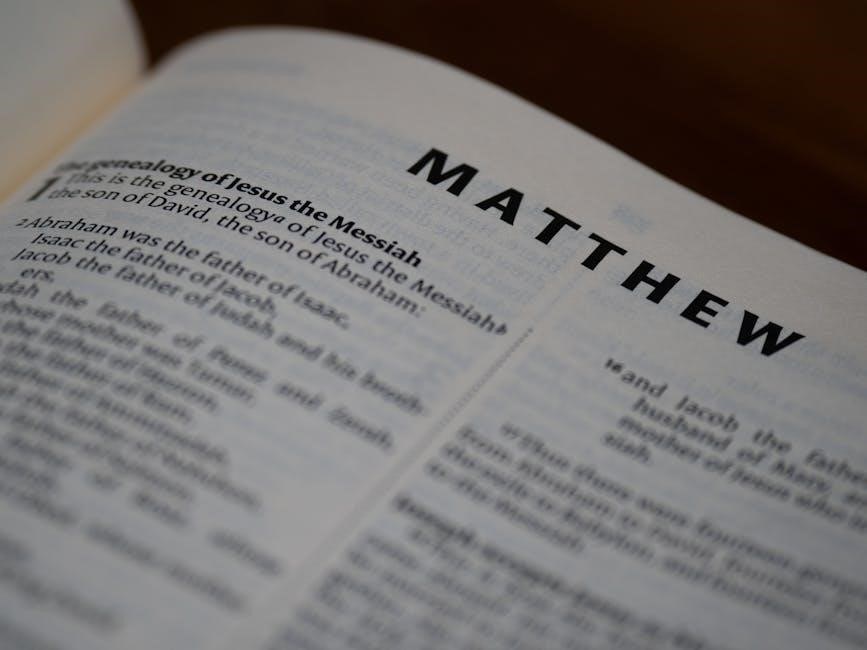
The Gospels of Matthew, Mark, Luke, and John narrate the life, teachings, death, and resurrection of Jesus Christ. Each Gospel provides a unique perspective: Matthew emphasizes Jesus as the Messiah, Mark focuses on His actions and service, Luke highlights His compassion and humanity, and John explores His divine nature. PDF summaries of each Gospel offer detailed insights into their distinct themes, key events, and theological significance. These summaries aid readers in understanding the mission and message of Jesus, making them essential resources for Bible study and spiritual growth.

The Epistles: Paul’s Letters and General Epistles

The Epistles, including Paul’s letters and the General Epistles, are foundational for Christian doctrine and practice. Paul’s letters, such as Romans, Corinthians, and Philippians, address theological truths and practical guidance for early churches. The General Epistles, written by other apostles like James, Peter, and Jude, emphasize faith, endurance, and moral living. PDF summaries of these books provide concise overviews, highlighting key themes like grace, salvation, and the importance of living a holy life. These resources help readers grasp the timeless wisdom and spiritual principles found in the Epistles, making them invaluable for personal study and deeper understanding of the New Testament.

The Book of Revelation

The Book of Revelation, authored by John, is the final book of the Bible, offering a prophetic vision of the end times. It contains apocalyptic imagery, symbols, and messages to early Christian churches. Themes include God’s ultimate triumph over evil, the return of Jesus, and the establishment of a new heaven and earth. PDF summaries highlight key events, such as the seven seals, trumpets, and bowls of judgment, as well as the vision of the New Jerusalem. This book serves as a source of hope and encouragement, reminding believers of God’s sovereignty and eternal plan. Its complex imagery and meanings are often explored in-depth in study resources for clearer understanding.

Key Themes and Lessons

The Bible explores themes like faith, redemption, justice, and love, with lessons on forgiveness, obedience, and God’s sovereignty. Each book offers unique insights for spiritual growth and understanding.

Major Themes Across the Bible

The Bible presents overarching themes that unify its narrative, including God’s sovereignty, humanity’s sinfulness, and redemption through faith. Love, justice, and mercy are central, with forgiveness and obedience emphasized as key responses to God’s grace. These themes are interwoven throughout both Testaments, from creation in Genesis to the ultimate redemption in Revelation. The Old Testament highlights God’s covenant with Israel, while the New Testament focuses on Jesus Christ’s life, death, and resurrection as the fulfillment of God’s plan. Together, these themes provide a cohesive message of God’s love and humanity’s need for salvation, offering guidance for spiritual growth and understanding.

Lessons from Each Book

Each book of the Bible offers unique lessons, from historical accounts teaching perseverance and faith to wisdom literature providing practical guidance for life. The Gospels highlight Jesus’ teachings on love and redemption, while epistles address community building and moral living. Old Testament prophets emphasize justice and repentance, and the Book of Revelation underscores God’s ultimate plan. These lessons, available in PDF summaries, help readers apply biblical truths to their lives, fostering spiritual growth and a deeper understanding of God’s character. By studying each book, individuals can gain insights into overcoming challenges, nurturing relationships, and aligning their lives with divine purposes.

Authors of the Bible Books

The Bible’s books were written by diverse authors, including prophets, kings, and apostles like Moses, David, and Paul. Some books have unknown or disputed authors, but their teachings remain foundational to faith. PDF summaries offer insights into their contributions and historical contexts, enriching understanding of biblical texts.

Known Authors and Their Contributions

The Bible’s books were written by diverse authors, each contributing unique perspectives and teachings. Moses, traditionally credited with the Pentateuch, laid the foundation of Israel’s history and laws. David, Solomon, and other poets crafted Psalms and Proverbs, offering wisdom and spiritual insight. Prophets like Isaiah and Jeremiah delivered God’s messages, while apostles such as Paul and Peter wrote epistles guiding early Christian communities. Luke, a historian, chronicled Jesus’ life and the church’s expansion in Acts. John, both an apostle and evangelist, authored the Gospel of John and Revelation. Their works, summarized in PDF resources, provide deep insights into their contributions and historical contexts, enriching understanding of biblical texts and their relevance today.

Books with Unknown or Disputed Authorship

Several books of the Bible have unknown or disputed authors, sparking theological and scholarly debates. For instance, the Book of Revelation is traditionally attributed to John the Apostle, though some scholars question this. Similarly, the Book of Hebrews is often linked to Paul, but his authorship is disputed. The Book of Enoch, while not part of the canonical Bible, is traditionally ascribed to Enoch but was likely compiled over time. Even canonical books like 1 and 2 Peter and Jude have debated authorship. Despite uncertainties, these works remain vital for spiritual growth and historical context. PDF summaries highlight their themes and lessons, aiding readers in understanding their significance without focusing solely on authorship debates.

Resources for Further Study

PDF summaries and study guides provide in-depth analysis of each Bible book, offering insights into themes, narratives, and lessons for deeper understanding and spiritual growth.

PDF Summaries of Each Book

PDF summaries offer concise overviews of each Bible book, highlighting key themes, lessons, and narratives. These resources provide a quick reference for understanding the content and significance of each book, from Genesis to Revelation. Designed for easy access, they enable readers to grasp the main ideas without extensive study. Many summaries include visual guides, verse-by-verse breakdowns, and educational materials, making them ideal for both personal and group study. They are particularly useful for teaching children and new believers, simplifying complex biblical concepts. These PDFs are widely available online, catering to diverse learning styles and preferences, ensuring deeper engagement with Scripture for all readers.

Study Guides and Educational Materials

Study guides and educational materials complement Bible study by providing in-depth analysis and interactive resources. These tools cater to various learning styles, offering verse-by-verse breakdowns, visual guides, and simplified explanations. Resources like “The Dig for Kids” make studying Bible books accessible for children, while detailed study notes for books like Mark offer visual aids for adults. Many materials are designed to be interactive, helping learners engage deeply with Scripture. Available online and in PDF formats, these resources are ideal for personal or group study, ensuring a comprehensive understanding of each book’s themes and lessons. They serve as invaluable aids for educators and learners alike, enriching the study experience.

Continue Reading

da jesus book pdf

“Da Jesus Book PDF” is a comprehensive guide exploring the life, teachings, and significance of Jesus Christ. Based on the Gospels, it delves into key themes like redemption, forgiveness, and divine love, offering a deeper understanding of Jesus’ ministry and its impact on humanity. This free resource is ideal for spiritual seekers and scholars alike, providing insights into the biblical narrative and its relevance today.

Overview of the Book’s Significance

“Da Jesus Book PDF” is a transformative resource that explores the life and teachings of Jesus Christ, offering deep spiritual insights. It synthesizes the Gospels, presenting Jesus as the central figure of Christianity, emphasizing His love, forgiveness, and redemption. The book highlights Jesus’ presence in every part of the Bible, from Old Testament prophecies to New Testament fulfillment. Its significance lies in its ability to connect readers with the essence of Jesus’ ministry, providing a clear and accessible understanding of His message. This free PDF is a invaluable tool for spiritual growth, making Jesus’ teachings relevant to modern life.

Key Themes and Messages in the Book

“Da Jesus Book PDF” emphasizes love, forgiveness, and redemption as central themes. It explores Jesus’ parables and teachings, highlighting their timeless relevance. The book underscores Jesus’ role as both the Messiah and a personal savior, offering readers spiritual transformation. Through His ministry, the book illustrates how faith and compassion can overcome life’s challenges. It also delves into the harmony of Jesus’ life across the Gospels, providing a unified narrative of His divine mission. These themes inspire readers to embrace a deeper relationship with Jesus, fostering hope and guidance in their personal journeys.

Jesus in Every Book of the Bible

Jesus is present in every book of the Bible, from Genesis to Revelation, symbolizing redemption and divine love through various representations, fulfilling God’s plan.

Representation of Jesus in the Old Testament

Jesús is subtly yet profoundly represented throughout the Old Testament, symbolizing redemption and divine love. In Genesis, He is the Seed of the woman, destined to crush evil. Exodus portrays Him as the Passover Lamb, sacrificing Himself for humanity’s sins. Numbers depict Him as the Pillar of Cloud and Fire, guiding His people. Deuteronomy foretells Him as a Prophet like Moses, while Joshua shows Him as the Commander of the Lord’s army. These representations highlight His role as Savior, Redeemer, and divine leader, preparing humanity for His eventual arrival.

Jesus as the Central Figure in the New Testament

Jesús is the central figure of the New Testament, portrayed as the Messiah and Son of God. The Gospels—Matthew, Mark, Luke, and John—detail His life, teachings, miracles, and ultimate sacrifice. His ministry emphasizes love, forgiveness, and the Kingdom of God, with parables like the Prodigal Son and the Good Samaritan illustrating His message. The New Testament highlights His divine nature through miracles, such as healing the blind and raising the dead, and His compassionate interactions with outcasts and sinners. The Crucifixion and Resurrection are pivotal, showcasing His redemptive love and victory over sin, solidifying His role as humanity’s Savior.

Major Teachings of Jesus

Jesus emphasized love, forgiveness, and the Kingdom of God. His teachings included the Golden Rule, parables, and commandments to love God and neighbor, guiding moral and spiritual living.

The Parables and Their Meanings

Jesus’ parables are central to His teachings, offering profound spiritual truths through relatable stories. The Prodigal Son illustrates God’s unconditional forgiveness, while the Good Samaritan emphasizes love for all people. The Parable of the Talents teaches stewardship and faithfulness, and the Sower explains how hearts respond to God’s Word. These stories, found in the Gospels, reveal Jesus’ wisdom and compassion, providing timeless lessons on morality, grace, and the Kingdom of God. They remain vital for understanding His message and applying it to daily life.

Jesus’ Teachings on Love and Forgiveness

Jesus’ teachings on love and forgiveness are at the heart of His ministry, emphasizing compassion and mercy. He taught to “love your neighbor as yourself” and even extended this to include loving enemies. The Golden Rule, “do unto others as you would have them do unto you,” reflects His emphasis on kindness and humility. Jesus also stressed the importance of forgiveness, teaching that it is essential for spiritual freedom and reconciliation with God. His words and actions, such as forgiving those who crucified Him, demonstrate the transformative power of unconditional love and forgiveness.

The Life of Jesus Christ

“Da Jesus Book PDF” details Jesus’ life, from His divine mission to His interactions with followers, emphasizing His teachings, miracles, and profound impact on humanity’s spiritual journey.

Key Events in Jesus’ Ministry

Jesus’ ministry was marked by transformative events that showcased His divine purpose. His baptism by John in the Jordan River symbolized the beginning of His public ministry. The Sermon on the Mount highlighted His teachings on love, forgiveness, and the kingdom of God. Miracles, such as turning water into wine and healing the blind, demonstrated His power and compassion. The Last Supper with His disciples established the sacrament of communion. His crucifixion and resurrection fulfilled ancient prophecies, offering salvation to humanity. These events, documented in the Gospels, form the cornerstone of Christian faith and continue to inspire followers worldwide.

The Crucifixion and Resurrection

The crucifixion of Jesus was a pivotal event in human history, symbolizing His ultimate sacrifice for humanity’s sins. He endured immense physical and spiritual suffering on the cross, fulfilling ancient prophecies. His death represented the atonement for mankind’s transgressions, offering redemption through faith. The resurrection, three days later, was a miraculous triumph over death, confirming Jesus’ divine nature and the promise of eternal life. This event is the cornerstone of Christian belief, inspiring hope and transforming lives. The crucifixion and resurrection are profoundly explored in “Da Jesus Book PDF,” providing deep spiritual insight and renewal for believers worldwide.

Downloading “Da Jesus Book PDF”

Accessing “Da Jesus Book PDF” is straightforward. Visit trusted Christian resource websites or platforms offering free religious texts. Ensure the source is reliable for a safe download.
You can also search for the book on popular eBook platforms or religious forums. Always verify the authenticity of the content before downloading. This resource is widely available, making it easy to obtain and share with others interested in deepening their faith and understanding of Jesus’ teachings.

Where to Find the Book Online

To find “Da Jesus Book PDF,” visit trusted religious websites or eBook platforms. Popular options include Amazon, Google Books, or Christian resource sites.
Additionally, religious forums and communities often share links to free downloads. Use search engines to locate the PDF, ensuring the source is reputable.
Many sites offer free access to spiritual texts, making it easy to discover and download “Da Jesus Book PDF” for personal study or sharing with others. Always verify the authenticity of the content before downloading.

How to Access the PDF Version

To access “Da Jesus Book PDF,” visit trusted websites like Google Books, Amazon, or Christian resource platforms. Use search terms like “Da Jesus Book free PDF” to locate the file.
Ensure the source is reputable to avoid unauthorized versions. Some sites may require registration or offer direct downloads.
Verify the file’s authenticity and safety before downloading. Once found, click the download link to save the PDF for offline reading or sharing. This method ensures easy access to the book’s teachings and insights.

“Da Jesus Book PDF” concludes by emphasizing the profound significance of Jesus’ life and teachings, offering timeless wisdom for spiritual growth and inspiration to all readers.

The Impact of Jesus’ Teachings Today

Jesus’ teachings continue to inspire millions globally, emphasizing love, forgiveness, and compassion. His lessons on humility, service, and kindness remain foundational for personal and societal transformation. The call to “love your neighbor” resonates in modern social justice movements, while His parables offer timeless wisdom for ethical living. Through “Da Jesus Book PDF,” readers discover how Jesus’ message transcends time, guiding individuals and communities toward empathy and reconciliation. His teachings not only shape spiritual growth but also influence efforts to address global challenges, proving their enduring relevance in a changing world.

Final Thoughts on the Book’s Relevance

“Da Jesus Book PDF” remains a timeless resource, bridging ancient truths with modern relevance. Its accessible format allows readers to engage deeply with Jesus’ life and teachings, fostering spiritual growth and personal reflection. The book’s emphasis on love, forgiveness, and redemption resonates universally, offering guidance for navigating life’s challenges. By presenting Jesus’ story in a clear and relatable manner, it continues to inspire diverse audiences, from scholars to everyday seekers. This book not only honors the legacy of Jesus but also serves as a powerful tool for fostering compassion, unity, and hope in today’s world.

Continue Reading

metric pipe thread chart pdf

Metric pipe thread charts are essential tools for identifying and specifying thread dimensions, ensuring compatibility and safety in piping systems. They provide precise measurements and compliance with international standards, aiding engineers and manufacturers in selecting the correct threads for various applications.

1.1 What is a Metric Pipe Thread Chart?

A metric pipe thread chart is a detailed guide outlining thread dimensions, pitches, and standards for metric pipe connections. It specifies nominal diameter, pitch, and thread angles, ensuring compatibility and safety in piping systems. The chart aligns with international standards like ISO and DIN, providing engineers with precise measurements for thread identification and manufacturing processes.

1.2 Importance of Using Metric Pipe Thread Charts

Metric pipe thread charts are crucial for ensuring safety, compatibility, and precision in piping systems. They provide standardized measurements, preventing assembly errors and leaks. By adhering to ISO and DIN standards, these charts enable global compatibility, simplify engineering processes, and ensure reliable performance in hydraulic, pneumatic, and industrial applications, making them indispensable for manufacturers and engineers worldwide.

Understanding the Structure of a Metric Pipe Thread Chart

Metric pipe thread charts organize threads by diameter and pitch, detailing major and minor dimensions, thread angles, and lengths, ensuring clarity and usability for engineers and manufacturers.

2.1 Organization by Diameter and Pitch

Metric pipe thread charts are organized by diameter and pitch, with sizes like M12x1.75, where 12mm is the nominal diameter and 1.75mm is the pitch. This structure allows users to quickly identify threads by their external diameter and the distance between threads, ensuring compatibility and simplifying the selection process for engineering applications. The charts list key dimensions, including major and minor diameters, thread angles, and lengths, providing a comprehensive reference for precise thread specifications and standards compliance.

2.2 Key Dimensions Included in the Chart

Metric pipe thread charts detail essential dimensions such as major and minor diameters, pitch, and thread length. These measurements ensure accurate thread identification and compatibility. The major diameter is the largest thread measurement, while the minor diameter is the smallest. Pitch, the distance between threads, is critical for ensuring proper mating of parts. Additionally, thread angles and lengths are specified to guarantee precise fits and reliable connections in piping systems.

Metric Pipe Thread Standards

Metric pipe thread standards are defined by ISO and DIN specifications, ensuring consistency and interchangeability in global engineering and manufacturing applications.

3.1 ISO Standards for Metric Threads

ISO standards for metric threads provide internationally recognized specifications, ensuring consistency in thread dimensions, pitch, and tolerances. These standards are widely adopted, facilitating global compatibility and simplifying design processes across industries. They cover both coarse and fine pitches, offering a comprehensive framework for engineers to ensure precision and reliability in manufacturing and assembly.

3.2 DIN Standards for Metric Threads

DIN standards for metric threads are widely used in European industries, providing detailed specifications for thread dimensions, pitch, and tolerances. They complement ISO standards, ensuring interchangeability and manufacturing quality. DIN standards cover coarse and fine pitches, offering a reliable framework for engineers to design and assemble components efficiently, while adhering to strict European engineering practices.

How to Identify the Correct Metric Pipe Thread

Measure the thread pitch and diameter using a thread gauge or calipers, then reference the metric pipe thread chart to ensure accurate identification and compatibility.

4.1 Measuring Thread Pitch and Diameter

To accurately identify metric threads, measure the pitch using a thread gauge or calipers in millimeters. Determine the pitch by counting the distance between consecutive threads. Next, measure the major diameter of the male thread or minor diameter of the female thread. Record these values and cross-reference them with a metric pipe thread chart to ensure precise identification and compatibility.

4.2 Using a Thread Gauge for Accurate Identification

A thread gauge ensures precise identification of metric pipe threads by aligning the thread with the gauge’s edges. This tool helps verify the pitch, diameter, and thread angle, preventing mismatches. By cross-referencing measurements with a metric pipe thread chart, engineers can confirm compatibility and ensure system integrity, maintaining safety and performance in hydraulic, pneumatic, and industrial applications.

Applications of Metric Pipe Threads

Metric pipe threads are widely used in hydraulic, pneumatic systems, automotive, and aerospace industries. They ensure leak-free connections, durability, and compatibility, making them essential for diverse engineering applications.

5.1 Use in Hydraulic and Pneumatic Systems

Metric pipe threads are crucial in hydraulic and pneumatic systems, ensuring tight, leak-resistant connections. Their precise dimensions and standardization prevent fluid leakage, maintaining system efficiency and safety. In high-pressure applications, these threads enhance reliability and performance, making them indispensable for industrial fluid systems.

5.2 Common Applications in Automotive and Aerospace

Metric pipe threads are widely used in automotive and aerospace industries for their precision and reliability. In vehicles, they ensure secure connections in fuel systems and braking components. In aerospace, they are critical for high-pressure hydraulic systems and fluid transfer, requiring exacting standards to withstand extreme conditions and maintain safety.

Common Metric Pipe Thread Sizes

Metric pipe threads range from M6 to M48, with standard sizes like M12x1.75 and M20x1.5. Both fine and coarse pitches are available, catering to diverse industrial needs.

6.1 Standard Sizes and Their Specifications

Standard metric pipe thread sizes range from M6 to M48, with specific diameters and pitches. For instance, M12x1.75 indicates a 12mm diameter with a 1.75mm pitch, while M20x1.5 has a 20mm diameter and 1.5mm pitch. These sizes are widely used in hydraulic and pneumatic systems, ensuring compatibility and safety. Charts provide detailed specs for each size, aiding in precise selection and installation.

6.2 Fine and Coarse Pitch Variations

Metric pipe threads are available in fine and coarse pitch variations. Coarse pitch threads, like M12x1.75, are commonly used for general applications, while fine pitch threads, such as M12x1.50, offer tighter tolerances for precise fits. These variations cater to specific engineering needs, ensuring optimal performance in diverse environments, from automotive to aerospace, while maintaining compatibility and strength in critical systems.

Metric vs. Other Pipe Thread Systems

Metric threads differ from NPT and BSP systems, using millimeters for pitch, while others use threads per inch. Metric threads adhere to ISO/DIN standards, ensuring global compatibility and precision.

7.1 Comparison with NPT (National Pipe Taper) Threads

Metric threads differ significantly from NPT threads. While metric threads use a consistent pitch measured in millimeters, NPT threads are tapered and measured in threads per inch. This difference affects compatibility, as NPT threads create a seal through compression, whereas metric threads rely on precise diametrical fits. This distinction is crucial for ensuring proper sealing and functionality in piping systems, making cross-compatibility challenging without adapters.

7.2 Differences from BSP (British Standard Pipe) Threads

Metric threads differ from BSP threads in terms of thread angle and measurement. BSP threads, now standardized under ISO, use a 55-degree thread angle and nominal sizes based on inches, while metric threads utilize a 60-degree angle and millimeter measurements. These differences impact compatibility and functionality, requiring specific adapters for integration in piping systems to ensure proper sealing and performance.

Troubleshooting Common Metric Thread Issues

Common issues include worn threads, measurement inaccuracies, and compatibility problems. Using thread gauges ensures accurate identification, while replacing damaged threads prevents leaks and ensures proper sealing.

8.1 Resolving Compatibility Problems

Compatibility issues often arise from mismatched thread sizes or types. Using a metric pipe thread chart ensures correct pairing by cross-referencing diameter and pitch. Measure threads accurately with gauges and verify against the chart to avoid mismatches. Cross-checking with ISO and DIN standards also helps prevent errors, ensuring seamless integration in hydraulic, pneumatic, and industrial systems.

8.2 Addressing Measurement Inaccuracies

Accurate measurements are crucial for thread identification. Use a thread gauge or caliper to ensure precision, as worn or damaged threads can lead to incorrect readings. Always verify measurements against the metric pipe thread chart to confirm pitch and diameter. Cross-referencing with ISO and DIN standards further minimizes errors, ensuring reliable results for engineering and manufacturing applications.

The Importance of Using a Metric Pipe Thread Chart

Metric pipe thread charts ensure safety and compatibility in piping systems by providing precise specifications. They streamline engineering processes, aiding manufacturers in adhering to international standards and preventing errors.

9.1 Ensuring Safety and Compatibility in Piping Systems

Metric pipe thread charts are crucial for ensuring safety and compatibility in piping systems. By providing precise measurements and specifications, they help prevent leaks, failures, and system breaches. Accurate thread identification ensures mechanical integrity, while compliance with international standards facilitates seamless integration of components from diverse manufacturers, reducing risks in industrial applications.

9.2 Streamlining Engineering and Manufacturing Processes

Metric pipe thread charts streamline engineering and manufacturing by providing standardized specifications for thread dimensions, pitches, and tolerances. This ensures consistency across designs, reducing errors and production delays. Engineers can quickly identify and implement the correct thread sizes, enhancing efficiency and collaboration. Standardized charts also simplify component interchangeability, enabling faster prototyping and production while maintaining precision and reliability in manufacturing workflows.

How to Download a Metric Pipe Thread Chart PDF

Visit reputable engineering websites or manufacturer portals, search for “Metric Pipe Thread Chart PDF,” and download from trusted sources like ISO or DIN standard repositories for precise measurements.

10.1 Reliable Sources for Download

Reputable sources include official ISO and DIN websites, engineering portals like Brennan Inc., and trusted manufacturers offering precise metric thread charts. Ensure downloads are from verified platforms to maintain accuracy and compliance with international standards, avoiding unreliable or unverified sites that may provide incorrect specifications essential for engineering and manufacturing applications.

10.2 Tips for Using the PDF Effectively

For effective use, zoom in on detailed tables and cross-reference measurements with thread gauges. Print the chart for offline access and laminate it for durability. Regularly update the PDF to ensure adherence to the latest standards, and use digital tools to search and highlight specific thread specifications, enhancing efficiency in identifying and selecting the correct metric pipe threads for projects.

Continue Reading

la la land sheet music piano pdf

La La Land’s sheet music offers a magical gateway to its captivating soundtrack, featuring iconic pieces like “City of Stars” and “Mia & Sebastian’s Theme,” perfect for pianists of all levels.

1.1 Overview of the Movie and Its Music

La La Land is a modern musical masterpiece directed by Damien Chazelle, starring Emma Stone and Ryan Gosling. Its enchanting soundtrack, composed by Justin Hurwitz with lyrics by Benj Pasek and Justin Paul, blends jazz with contemporary styles, creating a nostalgic yet fresh vibe. The film’s music, including “City of Stars” and “Mia & Sebastian’s Theme,” received widespread acclaim, winning the Academy Award for Best Original Score, and has become a cultural phenomenon, inspiring pianists worldwide to play its iconic pieces.

1.2 Importance of Sheet Music in La La Land

Sheet music from La La Land has become a vital tool for musicians and fans, allowing them to recreate the film’s iconic melodies. It bridges the gap between the movie’s emotional depth and personal performance, enabling pianists to connect with the story’s essence. The availability of sheets ensures the music’s legacy endures, fostering creativity and appreciation for its timeless compositions.

Popular Songs from La La Land

La La Land features iconic tracks like “City of Stars,” “Mia & Sebastian’s Theme,” and “Another Day of Sun,” whose sheet music is widely sought after by pianists.

2.1 “City of Stars”

“City of Stars” is one of the most iconic songs from La La Land, composed by Justin Hurwitz with lyrics by Benj Pasek and Justin Paul. Its enchanting melody has made it a favorite among pianists, with sheet music widely available in PDF format. The piece captures the film’s romantic and dreamy essence, offering a beautiful challenge for musicians of all skill levels to interpret and perform.

2.2 “Mia & Sebastian’s Theme”

“Mia & Sebastian’s Theme” is a heartfelt composition by Justin Hurwitz, central to La La Land’s emotional journey. The sheet music, available in PDF, beautifully captures their relationship’s essence. Suitable for piano solo, it offers a mix of melancholy and hope, making it a popular choice for pianists seeking to connect with the film’s romantic and artistic spirit through music.

2.3 “Another Day of Sun”

“Another Day of Sun” is the dynamic opening number from La La Land, setting the film’s lively and aspirational tone. Its sheet music, available in PDF, features arrangements for piano that range from simple melodies to complex harmonies, catering to pianists of all skill levels. This piece encapsulates the movie’s spirit of hope and energy, making it a delightful and rewarding piece to play and experience for music enthusiasts.

Where to Find La La Land Sheet Music

La La Land sheet music is widely available on official platforms like Musicnotes, Musescore, and Free-Scores, offering both paid and free PDF downloads for piano enthusiasts.

3.1 Official Sources

Official sources like Musicnotes and Musescore provide authentic La La Land sheet music, ensuring quality and accuracy. These platforms offer a variety of arrangements, from piano solos to vocal scores, in PDF format. Purchasing from these sites supports creators and guarantees legal compliance, making them the best choice for musicians seeking reliable sheet music.

3.2 Free Download Platforms

Free platforms like FreeScores.com and SheetMusic-Free.com offer downloadable PDFs of La La Land sheet music. These sites provide access to popular pieces such as “City of Stars” and “Mia & Sebastian’s Theme” for piano. While convenient, ensure that downloads comply with copyright laws and support creators when possible for ethical use of these resources.

How to Download La La Land Sheet Music

To download La La Land sheet music, visit official or trusted platforms like MuseScore or FreeScores.com. Select your desired piece, choose the format, and save as PDF for easy access and printing.

4.1 Step-by-Step Guide

Visit a trusted platform like MuseScore or FreeScores.com. 2. Search for “La La Land sheet music” using specific song titles like “City of Stars” or “Mia & Sebastian’s Theme.” 3. Select your preferred arrangement and format (PDF is common). 4. Follow the site’s download instructions, ensuring compatibility with your device. 5. Print or save the sheet music for practice or performance.

4.2 Required Software for Viewing and Printing

To view and print La La Land sheet music, use a PDF viewer like Adobe Acrobat or Foxit Reader. For editing or converting files, PDFelement or Smallpdf are recommended. Some platforms, like MuseScore, offer built-in tools for playback and customization. Ensure your software supports PDF and MIDI formats for seamless functionality and optimal sheet music experience.

Sheet Music Arrangements

La La Land sheet music offers versatile arrangements, including piano solos, duets, and ensemble versions. These adaptations cater to pianists of all skill levels, ensuring a magical performance experience.

5.1 Piano Solo Arrangements

Piano solo arrangements of La La Land’s music, such as “City of Stars” and “Mia & Sebastian’s Theme,” capture the film’s emotional essence. These solos are crafted to resonate deeply, offering both beginner-friendly melodies and more complex interpretations for advanced pianists. The arrangements maintain the original compositions’ elegance, making them a delightful choice for musicians seeking to bring the magic of La La Land to life.

5.2 Advanced and Intermediate Versions

Advanced and intermediate piano versions of La La Land’s music offer intricate arrangements, blending complex melodies with rich harmonies. These pieces, such as “City of Stars” and “Epilogue,” challenge pianists with dynamic tempo changes and nuanced phrasing, allowing for expressive interpretations. Available in PDF formats, they cater to skilled musicians seeking to elevate their performance with technically demanding yet beautiful compositions.

Legal and Ethical Considerations

La La Land sheet music is protected by copyright laws, requiring purchase from official sources to ensure fair compensation for composers and musicians, supporting ethical practices.

6.1 Copyright Laws

La La Land sheet music is protected under copyright laws, requiring legal purchase from authorized sources. Unauthorized downloads or sharing violate these laws, potentially leading to legal consequences. Purchasing from official platforms ensures compliance and supports the creators ethically.

6.2 Supporting the Creators

Purchasing official La La Land sheet music directly supports composers like Justin Hurwitz and lyricists Benj Pasek and Justin Paul. This ensures high-quality arrangements and contributes to the sustainability of artistic creation, fostering future musical endeavors while enjoying the timeless melodies of the film.

Cultural Impact of La La Land Music

La La Land’s enchanting melodies have resonated globally, earning widespread acclaim and numerous awards, including Academy Awards, cementing its legacy as a modern musical masterpiece.

7.1 The Role of Music in the Film’s Success

The enchanting score and iconic songs from La La Land were pivotal in its success, capturing the film’s emotional depth and earning widespread critical acclaim. The music, composed by Justin Hurwitz, seamlessly intertwined with the narrative, creating a timeless cinematic experience that resonated with audiences worldwide, contributing to its numerous accolades, including Academy Awards.

7.2 Global Recognition and Awards

La La Land’s soundtrack garnered global acclaim, earning numerous prestigious awards, including two Academy Awards for Best Original Score and Best Original Song for “City of Stars.” The film’s music also won several Golden Globes, BAFTAs, and Grammy Awards, solidifying its legacy as a modern musical masterpiece and inspiring pianists worldwide to embrace its beautiful sheet music.

Tips for Playing La La Land Sheet Music

Mastering La La Land’s sheet music requires emotional expression and technical precision. Start with slower tempos, practice arpeggios, and focus on dynamics to capture the film’s magical essence.

8.1 Beginner-Friendly Pieces


8.2 Advanced Techniques and Interpretations

ADVANCED PIECES FROM LA LA LAND, LIKE “CITY OF STARS” AND “MIA & SEBASTIAN’S THEME,” FEATURE INTRICATE HARMONIES AND EMOTIONAL DEPTH. PIANISTS CAN EXPLORE NUANCED EXPRESSIONS, DYNAMICS, AND TEMPO VARIATIONS. THESE PIECES ALLOW FOR PERSONAL INTERPRETATION, SHOWCASING TECHNICAL SKILL AND ARTISTICITY. PRACTICE COMPLEX PASSAGES SLOWLY, THEN INTEGRATE THEM SEAMLESSLY FOR A POLISHED PERFORMANCE.

Community and Resources

Join online communities like MuseScore and Reddit to share and discover La La Land sheet music. Explore tutorials on YouTube and forums like Piano World for tips and discussions.

9.1 Online Communities and Forums

Engage with online communities like MuseScore and Reddit to share and discover La La Land sheet music. Forums such as Piano World and YouTube channels offer tutorials, covers, and discussions. Join groups dedicated to piano enthusiasts to connect with fellow musicians, learn tips, and gain inspiration for playing La La Land pieces like “City of Stars” and “Mia & Sebastian’s Theme.”

9.2 Tutorials and Covers

Explore tutorials and covers of La La Land songs on platforms like YouTube and MuseScore. Channels such as RowanMusic and ThePandaTooth offer detailed piano arrangements of “City of Stars” and “Mia & Sebastian’s Theme.” These resources provide step-by-step guides and interpretations, helping pianists of all skill levels to master the iconic soundtrack. Discover tips and inspiration to enhance your performance of these beloved pieces.

La La Land’s sheet music remains a timeless treasure, inspiring pianists worldwide with its enchanting melodies. Embrace the magic and let the music guide your artistic journey.

10.1 Final Thoughts on La La Land Sheet Music

La La Land’s sheet music is a timeless celebration of musical artistry, offering pianists a chance to bring the film’s enchanting melodies to life. With arrangements ranging from simple to complex, it caters to all skill levels, ensuring everyone can experience the magic. Embrace the opportunity to play these iconic pieces and let the music resonate in your heart forever.

10.2 Encouragement to Explore and Play

Embrace the magic of La La Land by exploring its sheet music, crafted for pianists of all levels. From beginners to advanced players, the iconic melodies like “City of Stars” and “Mia & Sebastian’s Theme” invite you to bring the film’s enchanting soundtrack to life. Dive into the music, feel the emotions, and let the joy of playing these timeless pieces inspire you endlessly.

Continue Reading

speech and language development chart pdf

Speech and language development charts provide a detailed guide to track milestones, offering insights into communication skills from birth to early childhood․ These tools help identify delays, ensuring timely interventions and fostering healthy development through structured checklists and age-specific expectations․

Overview of Speech and Language Development Milestones

Speech and language development milestones outline the typical progression of communication skills in children, from birth through early childhood․ These milestones include key achievements in hearing, understanding, and using language․ For example, infants begin by responding to voices and sounds, while toddlers progress to babbling, forming simple words, and eventually creating short sentences․ Checklists and charts, such as those found in the Speech and Language Development Chart PDF, provide age-specific expectations, helping caregivers and professionals track progress․ These tools emphasize receptive language (understanding) and expressive language (communication) skills, offering activities to support development․ By monitoring these milestones, parents and educators can identify potential delays early and ensure timely interventions․ Such resources are essential for fostering healthy communication growth and addressing any challenges promptly․

Importance of Tracking Developmental Progress

Tracking developmental progress in speech and language is crucial for ensuring a child’s communication skills align with age-specific milestones․ By monitoring these advancements, parents and caregivers can identify early signs of delays or disorders, enabling timely interventions․ Tools like the Speech and Language Development Chart PDF provide structured guidelines, helping to recognize when a child may need additional support․ Early identification of issues, such as difficulty articulating words or understanding instructions, can significantly improve outcomes through targeted strategies and professional assistance․ Regular assessment also fosters a nurturing environment, encouraging healthy growth and strengthening the foundation for future academic and social success․ Consistent tracking ensures that every child receives the support needed to thrive in their communication journey․

Stages of Speech and Language Development

Speech and language development progresses through stages, from babbling in infancy to forming complex sentences in early childhood, with each phase building on previous skills․

Birth to 3 Months: Foundation of Communication

From birth to 3 months, infants begin laying the groundwork for communication․ They start by recognizing familiar voices, such as their caregivers, and may calm or smile when spoken to․ Infants at this stage also begin to show an awareness of sounds, turning their heads toward noise or responding to rhythmic patterns․ Cooing and vowel sounds emerge, marking the start of vocal exploration․ These early interactions are crucial, as they establish the foundation for future language development․ Caregivers play a vital role by engaging in responsive interactions, which help babies connect communication with meaning․ This period is essential for building the skills that will eventually lead to more complex forms of expression and understanding․ Tracking these milestones ensures early identification of potential delays․

4-6 Months: Babbling and Sound Exploration

Between 4 to 6 months, babies enter a phase of babbling and sound exploration, which is a critical step in speech development․ They begin producing vowel sounds and consonant-vowel combinations, such as “ba” or “da,” often repeating syllables like “bababa․” This babbling mirrors the rhythm and intonation of adult speech, showing an understanding of linguistic patterns․ Infants also start experimenting with different tones and volumes, laying the groundwork for future verbal communication․ During this period, they may respond to their names and show an increased interest in interactive games like pat-a-cake․ These vocal play activities strengthen their ability to associate sounds with meanings․ Caregivers can support this development by engaging in conversations, imitating baby sounds, and creating a stimulating auditory environment․ Tracking these milestones helps ensure that language skills are progressing as expected․

Receptive Language Development

Receptive language development involves understanding sounds, words, and sentences, beginning with recognizing voices and simple instructions․ It progresses to identifying names, common objects, and gestures, forming the basis of communication skills․

Understanding Simple Instructions and Gestures

Understanding simple instructions and gestures is a critical milestone in receptive language development․ Infants begin by recognizing familiar voices and responding to tone of voice․ By 4-6 months, they may turn toward sounds or gestures, showing awareness of communication cues․ Around 9-12 months, children start to understand simple verbal commands, like “wave bye-bye” or “pick up your toy,” especially when paired with gestures․ By 12-18 months, toddlers can follow one-step directions without gestures, such as “bring me your shoe․” This skill progresses as children learn to interpret more complex instructions and non-verbal cues, like pointing or waving, by 2-3 years of age․ These abilities lay the foundation for advanced language comprehension and social interaction skills․

Recognizing Names and Common Words

Recognizing names and common words is a foundational aspect of receptive language development․ Infants as young as 3-4 months may quiet when hearing their name, indicating early recognition․ By 6 months, babies often show clear signs of recognizing familiar names and words, such as turning toward the speaker or smiling․ Around 9-12 months, toddlers begin to associate specific words with meanings, like “mama” or “dada,” and may respond to simple labels for objects․ By 18-24 months, children can identify common words like “ball” or “bottle” and may even point to body parts when named․ This skill progresses as they learn to recognize more complex vocabulary, laying the groundwork for advanced language comprehension and communication abilities․

Expressive Language Development

Expressive language development involves producing sounds, words, and sentences to communicate effectively․ It begins with cooing and babbling, progressing to first words around 12-18 months, and combining words into simple sentences by 2-3 years, fostering clear and purposeful communication skills․

First Words and Word Combinations

The emergence of first words typically occurs around 12 to 18 months, with children often saying simple words like “mama” or “dada․” By 2 years, they begin combining two words, such as “mama go,” to convey basic ideas․ This marks the beginning of expressive communication, where language transitions from single words to more complex structures․ Word combinations gradually increase in complexity, reflecting improved cognitive and linguistic abilities․ These early attempts at communication are crucial milestones, signaling the child’s growing capacity to express thoughts and needs effectively․ Consistent interaction and encouragement from caregivers further enhance this developmental process, fostering confidence and clarity in speech․

Development of Sentence Structures

The development of sentence structures begins as children progress from single words to combining words into simple sentences․ Around 2-3 years of age, children start forming short sentences, such as “The cat sleeps,” using basic subject-verb structures․ By 3-4 years, they often create more complex sentences with three or four words, like “I want juice․” Over time, children incorporate question words (e․g․, “what,” “where”) and begin using negations (e․g․, “I don’t want that”)․ This phase reflects advancing cognitive and linguistic skills, enabling clearer communication of thoughts and needs․ Environmental stimulation and consistent interaction with caregivers play a significant role in refining these abilities․ Speech and language development charts highlight these milestones, offering a roadmap for tracking progress and identifying areas for support․ These tools emphasize the importance of early intervention to ensure healthy communication growth․

Factors Influencing Speech and Language Development

Environmental factors, caregiver interaction, and early childhood education significantly impact speech and language development․ A nurturing environment and consistent stimulation foster healthy communication growth in children․

Environmental Factors and Caregiver Interaction

Environmental factors and caregiver interaction play a crucial role in shaping a child’s speech and language development․ A stimulating environment, rich in verbal exchanges, encourages early communication skills․ Caregivers who engage in responsive interactions, such as talking, reading, and singing, foster vocabulary growth and linguistic understanding․ Positive facial expressions, gestures, and consistent feedback further enhance a child’s ability to comprehend and produce language․ Additionally, exposure to diverse sounds and conversations helps build phonological awareness, which is essential for future reading and writing abilities․ A supportive and interactive caregiving environment lays a strong foundation for lifelong communication skills, as highlighted in various speech and language development charts․

Role of Early Childhood Education

Early childhood education significantly impacts speech and language development by providing structured environments for learning and interaction․ Educators use evidence-based strategies to promote communication skills, such as reading aloud, encouraging dialogues, and incorporating music and art․ These activities enhance vocabulary, grammar, and comprehension while fostering social interactions among peers․ Language-rich classrooms expose children to diverse linguistic structures, aiding in their expressive and receptive language growth; Additionally, early childhood educators often collaborate with speech-language pathologists to ensure tailored support for children with developmental needs․ These efforts collectively contribute to a strong foundation for future academic success and lifelong communication abilities, as outlined in various speech and language development charts․

Identifying Delays in Speech and Language Development

Recognizing delays involves monitoring milestones like lack of babbling by 6 months, no single words by 16 months, or no two-word sentences by 24 months, using developmental charts․

Warning Signs for Potential Communication Disorders

Key indicators include no babbling by 6 months, no single words by 16 months, or no two-word sentences by 24 months․ Limited vocabulary, simplified grammar, and lack of progress despite practice raise concerns․ Unusual speech patterns, such as echoing or robotic language, and difficulties with comprehension or following instructions are also red flags․ If a child shows multiple signs or significant delays, consulting a speech-language pathologist is crucial for early intervention and support․

When to Seek Professional Help

If a child exhibits significant delays or warning signs in speech and language development, seeking professional help is essential․ Speech-language pathologists can assess and address potential disorders early, improving outcomes significantly․ Timely intervention ensures children receive the support needed to thrive academically and socially․ Early action is crucial for effective communication skill development․

Continue Reading

kindergarten think sheet.pdf

Kindergarten Think Sheets are tools designed to support young learners in self-reflection and critical thinking. They help children process their feelings‚ behaviors‚ and problem-solving strategies effectively.

What Are Kindergarten Think Sheets?

Kindergarten Think Sheets are structured tools designed to guide young students in reflecting on their behavior and problem-solving processes. These sheets often include prompts for identifying feelings‚ actions‚ and alternative choices‚ helping children understand the consequences of their decisions. They are typically simple‚ visual‚ and age-appropriate‚ making them effective for fostering self-awareness and responsibility in early learners.

Why Are Think Sheets Important for Young Learners?

Think Sheets are vital for young learners as they promote self-reflection‚ critical thinking‚ and emotional regulation. These tools help children connect their actions to consequences‚ fostering accountability and better decision-making. By encouraging problem-solving and understanding of emotions‚ Think Sheets lay a strong foundation for social and academic growth‚ preparing kindergarten students for future challenges and responsibilities.

Structure and Components of a Kindergarten Think Sheet

Kindergarten Think Sheets typically include sections for identifying feelings‚ choices made‚ and alternative actions. They often feature visual supports and simple language‚ making them accessible for young learners.

Key Elements of a Think Sheet

A kindergarten Think Sheet typically includes sections for identifying feelings‚ choices made‚ and alternative actions. Visual supports like pictures or emojis are often added to aid understanding. Simple‚ clear language is used to guide young learners. The sheet may also include questions prompting reflection‚ such as “What happened?” or “What could I do differently?” These elements help children process their actions and develop problem-solving skills in a structured‚ age-appropriate manner.

How to Design an Effective Think Sheet for Kindergartners

Designing an effective Think Sheet involves using simple language‚ visuals‚ and clear prompts. Incorporate pictures or emojis to aid understanding. Include sections for identifying feelings‚ choices made‚ and alternative actions. Use large‚ legible fonts and minimal text to avoid overwhelming young learners. Ensure questions are open-ended to encourage reflection and problem-solving. Make it colorful and engaging to capture their interest and support their developmental needs.

Benefits of Using Think Sheets in Kindergarten

Kindergarten Think Sheets promote self-reflection‚ critical thinking‚ and emotional regulation‚ helping children understand their actions and develop better decision-making skills.

Encouraging Critical Thinking and Self-Reflection

Think Sheets provide structured opportunities for kindergarten students to engage in critical thinking and self-reflection. By identifying their feelings and actions‚ children develop an understanding of cause-and-effect relationships. These tools guide young learners to consider alternative choices‚ fostering a deeper awareness of their behavior and its impact on others. This process enhances problem-solving abilities and promotes a growth mindset‚ essential for academic and personal growth.

Improving Emotional Regulation and Behavior Management

Think Sheets help kindergarten students recognize and manage their emotions‚ fostering self-awareness and regulation. By identifying their feelings and reflecting on actions‚ children develop strategies to calm down and make better choices. This tool supports behavior management by encouraging accountability and teaching alternatives to impulsive reactions‚ leading to a more emotionally stable and respectful classroom environment.

Developing Problem-Solving Skills

Kindergarten Think Sheets guide children in analyzing situations‚ identifying problems‚ and brainstorming solutions. By reflecting on their actions and consequences‚ students learn to evaluate choices and consider better outcomes. This process fosters critical thinking and creativity‚ helping young learners develop essential problem-solving skills. Regular use of Think Sheets encourages children to approach challenges methodically‚ preparing them for academic and real-world problem-solving scenarios with confidence and clarity.

Implementing Think Sheets in the Classroom

Teachers introduce Think Sheets gradually‚ integrating them into daily routines. They are used during calm-down periods or after incidents‚ helping students reflect on actions and emotions. Visual aids and simple language make them accessible for young learners‚ fostering a structured approach to problem-solving and emotional regulation while supporting academic growth and classroom management strategies effectively.

Step-by-Step Guide for Teachers

Introduce Think Sheets as a reflection tool to help students process emotions and actions.
Model how to complete the sheet‚ emphasizing identifying feelings and alternative choices.
Distribute Think Sheets during calm moments or after incidents‚ ensuring clarity and patience.
Guide students through each section‚ offering support for those needing assistance.
Encourage honest reflection and problem-solving‚ fostering a non-judgmental environment.
Review completed sheets individually‚ providing constructive feedback and discussing better choices.
Store sheets in portfolios to track progress and share insights with parents or guardians.

Integrating Think Sheets into Daily Routines

To seamlessly incorporate Think Sheets‚ introduce them during calm moments or after transitions. Use them consistently after incidents to reinforce reflection. Encourage students to complete sheets independently or with guidance. Store Think Sheets in designated folders for easy access and review. Rotate topics to keep activities engaging and relevant. This structured approach helps integrate reflection into daily routines‚ fostering a culture of self-awareness and problem-solving in the classroom.

Age-Appropriateness of Think Sheets

Think Sheets are tailored for kindergartners‚ using simple language and visual aids. They cater to young children’s developmental levels‚ fostering understanding and engagement through age-appropriate activities and designs.

How Think Sheets Cater to Kindergarten-Level Understanding

Think Sheets are designed with visual aids and simple language‚ making them accessible to kindergartners. They incorporate pictures and straightforward questions to help young children identify feelings‚ actions‚ and solutions‚ aligning with their developmental stage and fostering self-reflection and problem-solving skills in an engaging‚ age-appropriate manner.

Adapting Think Sheets for Different Learning Needs

Think Sheets can be tailored to accommodate diverse learning styles and abilities. For visual learners‚ incorporating images and color-coded sections enhances understanding. For those with language barriers‚ simplified language and visual aids ensure accessibility. Additionally‚ interactive elements like drawing spaces or choice-based responses cater to kinesthetic learners‚ making Think Sheets inclusive and adaptable for all kindergarten students.

Real-Life Applications of Kindergarten Think Sheets

Think Sheets are practical tools for daily classroom and home use‚ helping children resolve conflicts‚ self-regulate emotions‚ and reflect on actions‚ fostering essential life skills early on.

Case Studies and Success Stories

Schools have reported significant improvements in classroom behavior and emotional regulation using think sheets. For example‚ a kindergarten class saw a 40% reduction in disruptions after implementing think sheets‚ allowing for a more focused learning environment. Students demonstrated better problem-solving skills and took responsibility for their actions‚ leading to improved social interactions and academic engagement. These tools have proven to be effective in fostering a positive‚ reflective classroom culture.

Examples of Think Sheets in Action

Think sheets are often used after minor disruptions‚ such as sharing conflicts or impulsive actions. For instance‚ a student who draws instead of following directions might reflect on their choice and brainstorm better options. Another example is a think sheet used during transitions‚ where students identify their emotions and strategies to stay focused. These practical applications help students connect their actions to positive outcomes‚ fostering accountability and self-awareness in daily routines.

Resources for Creating and Using Think Sheets

Educators can access free printable templates and PDFs from websites like activityschoolkids;com. Additionally‚ online tools offer digital think sheet creation options for teachers.

Free Printable Templates and Worksheets

Free printable templates and worksheets for kindergarten think sheets are widely available online. Websites like activityschoolkids.com offer over 100 downloadable PDFs covering various skills. These include logical reasoning‚ tracing‚ coloring‚ and problem-solving activities. Teachers can use these resources to create customized think sheets tailored to their classroom needs; They promote critical thinking‚ emotional regulation‚ and fine motor skills‚ making them essential tools for young learners. These templates are easy to access and print‚ providing a convenient way to support student development.

Online Tools and Apps for Digital Think Sheets

Online tools and apps provide interactive ways to create and use digital think sheets. Platforms like ABCmouse and Khan Academy offer customizable templates and activities. Apps such as Toca Life and PBS Kids Games include puzzles and matching games that enhance problem-solving skills. These digital resources engage young learners with interactive features‚ making critical thinking fun and accessible for kindergarten students. They also allow teachers to track progress and provide real-time feedback.

Cultural and Individual Considerations

Cultural sensitivity and inclusivity are vital when designing think sheets. They must reflect diverse backgrounds and adapt to individual learning needs‚ ensuring all students feel valued and supported.

Ensuring Inclusivity in Think Sheet Design

Designing inclusive think sheets involves cultural sensitivity and adaptability. Use diverse imagery and translations to reflect varied backgrounds. Incorporate universal symbols for non-readers. Offer options for visual‚ auditory‚ and tactile learners‚ ensuring accessibility. Provide multiple response formats to cater to different learning styles. Ensure materials are free from stereotypes and biases‚ promoting equality. Make adjustments for individual needs‚ such as larger text or simplified language‚ to create an inclusive learning experience for all kindergarten students.

Addressing Diverse Learning Styles

Think sheets can be tailored to accommodate visual‚ auditory‚ and tactile learners. Use images and symbols for visual learners‚ while incorporating stories or verbal cues for auditory learners. Provide hands-on activities‚ such as puzzles or matching games‚ for tactile learners. Include art and coloring options to engage creative learners. Offer bilingual versions to support language diversity. Use large text and simplified language for students with special needs‚ ensuring every learner can benefit from the activity.

Evidence-Based Practices for Think Sheets

Research supports the use of think sheets to enhance critical thinking and self-reflection in young learners‚ aligning with expert recommendations for effective skill development in kindergartners.

Research Supporting the Use of Think Sheets

Research highlights the effectiveness of think sheets in fostering critical thinking and problem-solving skills among kindergarten students. Studies indicate that these tools enhance self-reflection‚ emotional regulation‚ and behavior management. Experts recommend think sheets as they align with developmental milestones‚ encouraging young learners to articulate their thoughts and feelings effectively. Such evidence-based practices underscore the positive impact of think sheets on early childhood education‚ making them a valuable resource for teachers and students alike.

Expert Recommendations for Effective Implementation

Experts recommend using think sheets as tools for behavior reflection and self-regulation in kindergarten. They suggest incorporating simple language‚ visual aids‚ and opportunities for drawing or writing. Teachers should introduce think sheets consistently‚ allowing children to process their actions and emotions. Positive reinforcement and follow-up discussions are crucial for enhancing their effectiveness. These strategies ensure think sheets become meaningful tools for fostering growth and understanding in young learners.

Challenges and Solutions

Challenges include time constraints and young learners’ limited understanding of written reflections. Solutions involve simplifying instructions‚ using visual aids‚ and ensuring consistent positive reinforcement to encourage engagement and comprehension.

Common Challenges When Using Think Sheets

Teachers often face challenges such as time constraints‚ young learners’ limited understanding of written reflections‚ and inconsistent engagement. Some students may struggle to articulate their thoughts‚ while others might find the process overwhelming. Ensuring comprehension and maintaining focus can be difficult‚ especially for those with shorter attention spans or varying developmental levels. These challenges highlight the need for simplified‚ visually engaging designs and patient guidance to foster success.

Strategies for Overcoming Obstacles

Teachers can overcome challenges by using visual aids and simplifying language to aid young learners. Incorporating art and movement activities can increase engagement and cater to diverse learning styles. Providing one-on-one support and ensuring think sheets are short and visually appealing helps maintain focus. Modeling reflection processes and celebrating progress fosters a positive environment‚ encouraging students to embrace critical thinking and self-reflection effectively.

Kindergarten Think Sheets are invaluable tools for fostering critical thinking‚ self-reflection‚ and emotional growth in young learners. They offer a structured approach to understanding behavior and problem-solving‚ laying a strong foundation for future academic and personal success while promoting a positive classroom environment.

Summarizing the Value of Kindergarten Think Sheets

Kindergarten Think Sheets foster critical thinking‚ self-reflection‚ and emotional regulation in young learners. They provide structured tools for processing feelings‚ behaviors‚ and problem-solving‚ helping students understand consequences and develop better decision-making skills. These sheets encourage children to identify their emotions‚ actions‚ and alternative choices‚ promoting a growth mindset and positive behavior. They are invaluable for teachers aiming to guide students toward self-awareness and responsible conduct in the classroom.

Future Directions for Think Sheet Development

Future developments in Kindergarten Think Sheets may include digital innovations‚ such as interactive templates and AI-driven feedback tools. These advancements could enhance personalization‚ offering tailored prompts for diverse learning needs. Additionally‚ integrating cultural inclusivity and multilingual options will ensure accessibility for all students. Collaborative efforts between educators‚ developers‚ and parents will further refine Think Sheets‚ making them dynamic and responsive to evolving educational demands.

Continue Reading