cfmoto service manual free download

CFMoto Service Manuals: A Comprehensive Guide to Free Downloads

Accessing detailed repair information for your CFMoto vehicle doesn’t require expensive purchases; numerous resources offer free CFMoto service manual downloads online.

CFMoto, a rising force in the powersports industry, has quickly gained recognition for producing reliable and affordable ATVs, UTVs, and motorcycles. Originating in China, the brand now boasts a global presence, appealing to both recreational riders and working professionals. However, like any mechanical vehicle, CFMotos require regular maintenance and, inevitably, repairs.

This is where a CFMoto service manual becomes absolutely invaluable. These manuals are comprehensive guides, created by the manufacturer, detailing every aspect of your machine – from routine checks and fluid changes to complex engine overhauls and electrical system diagnostics. Attempting repairs without a service manual is akin to navigating unfamiliar territory blindfolded; you risk causing further damage, compromising safety, and incurring significantly higher repair costs in the long run.

Fortunately, obtaining a CFMoto service manual doesn’t always necessitate a hefty price tag. Many resources offer free downloads, providing access to the information you need to keep your CFMoto running smoothly and efficiently. This guide will explore those avenues.

Why You Need a CFMoto Service Manual

Owning a CFMoto machine grants you access to thrilling adventures, but maintaining its peak performance demands informed care. A CFMoto service manual isn’t merely a helpful guide; it’s a necessity for any owner intending to perform their own maintenance or repairs. These manuals provide detailed, step-by-step instructions, ensuring tasks are completed correctly and safely.

Specifically, a service manual unlocks the ability to accurately diagnose issues, preventing minor problems from escalating into costly repairs. It details precise torque specifications, preventing damage to crucial components. Furthermore, it offers exploded diagrams, simplifying parts identification and assembly. Attempting repairs based on guesswork or online forum advice can lead to improper fixes, void warranties, and even create dangerous operating conditions.

Even if you primarily rely on a mechanic, possessing a free download of the service manual empowers you to understand the work being performed and verify the accuracy of the repairs. It’s an investment in your CFMoto’s longevity and your peace of mind.

Locating Free CFMoto Service Manuals Online

Fortunately, several online avenues provide free access to CFMoto service manuals, ranging from official sources to dedicated enthusiast communities and websites.

Official CFMoto Website Resources

CFMoto’s official website is the primary and most reliable starting point for locating service manuals. While a comprehensive, directly downloadable archive of every manual isn’t always readily available, CFMoto frequently provides manuals for newer models within their support section.

Navigate to the “Support” or “Owners” area of the CFMoto website specific to your region (e.g., CFMoto US, CFMoto Europe). Here, you can often find downloadable PDFs for recent ATV, UTV, and motorcycle models. You’ll likely need to input your vehicle’s VIN or model year to refine the search.

Additionally, CFMoto sometimes offers parts diagrams and exploded views, which can be incredibly helpful for repairs, even if a full service manual isn’t immediately accessible. Keep checking back, as CFMoto periodically updates its online resources with new documentation. Remember to register your vehicle on their site for potential access to exclusive content.

CFMoto Forums & Online Communities

CFMoto enthusiasts frequently share valuable resources, including service manuals, on dedicated online forums and communities. These platforms often host user-uploaded manuals for a wide range of CFMoto models, including older or less common variants not readily found on the official website.

Popular forums like CFMotoUSA.com (and regional equivalents) are excellent places to start your search. Utilize the forum’s search function, specifying your exact model and year. If a manual isn’t already posted, consider creating a new thread requesting it – fellow owners are often willing to help.

Be mindful when downloading files from forums; always scan them with antivirus software. Participate in the community by offering assistance to others, fostering a reciprocal environment. Remember to respect copyright and licensing when sharing or downloading manuals. Active participation increases your chances of finding the specific manual you need.

Third-Party Websites Offering Free Manuals

Numerous websites specialize in providing free service manuals for various vehicle brands, including CFMoto. These sites aggregate manuals from diverse sources, offering a potentially wider selection than official channels or forums. However, exercise caution when using these resources.

Examples include ManualsLib, and similar platforms. Always verify the manual’s compatibility with your specific CFMoto model and year before downloading. Pay close attention to file sizes and download speeds, as some sites may employ aggressive advertising or bundled software.

Critically assess the website’s reputation and user reviews. Scan downloaded files with updated antivirus software to protect against malware. Understand that the accuracy and completeness of manuals on these sites can vary significantly. Cross-reference information with other sources whenever possible to ensure reliability. Proceed with diligence and prioritize your device’s security.

Understanding CFMoto Model Specificity

CFMoto vehicles—ATVs, UTVs, and motorcycles—require distinct service manuals due to differing components; downloading the correct manual is crucial for accurate repairs.

ATV Service Manuals (CForce, ZForce)

CFMoto’s ATV lineup, encompassing popular models like the CForce and ZForce, demands specific service documentation. These manuals detail everything from routine maintenance – oil changes, filter replacements, and brake adjustments – to complex repairs involving the engine, transmission, suspension, and electrical systems.

Free downloads for CForce ATVs typically cover a range of engine sizes (e.g., 400cc, 500cc, 800cc) and model years. Similarly, ZForce manuals cater to the 800cc and 1000cc performance models. When searching, always verify the manual’s compatibility with your specific ATV’s year and engine displacement.

These manuals are invaluable for tackling tasks like carburetor cleaning, troubleshooting starting issues, diagnosing fuel system problems, and overhauling the cooling system. Detailed exploded views and parts lists simplify component identification and ordering. Proper use of these resources ensures safe and effective ATV maintenance and repair.

UTV Service Manuals (ZForce, UForce)

CFMoto’s utility and sport UTVs, including the ZForce and UForce series, require dedicated service manuals for effective maintenance and repair. These comprehensive guides cover a broad spectrum of procedures, from basic servicing like fluid checks and tire maintenance, to intricate tasks such as engine rebuilds, differential repairs, and transmission overhauls.

Free downloads for ZForce models (often focusing on the 800cc and 1000cc variants) and UForce models (covering various engine sizes like 500cc, 600cc, and 800cc) are available online. It’s crucial to confirm the manual precisely matches your UTV’s model year and engine specification.

These manuals provide detailed instructions for diagnosing and resolving issues with the fuel injection system, steering, brakes, suspension, and electrical components. They also include wiring diagrams and torque specifications, essential for accurate repairs and ensuring optimal UTV performance and safety.

Motorcycle Service Manuals (300NK, 650NK, 650MT)

CFMoto’s growing motorcycle lineup, featuring models like the 300NK, 650NK, and adventure-focused 650MT, benefits greatly from readily available service documentation. These manuals are vital for owners undertaking self-maintenance or repairs, offering detailed guidance on everything from routine checks to complex engine work.

Finding free downloads for these models is possible, though specificity is key. Ensure the manual corresponds exactly to your motorcycle’s year and model. Resources often categorize manuals by engine size and generation; The 300NK manual will differ significantly from the 650MT.

These guides cover topics like fuel system maintenance, brake servicing, electrical troubleshooting (including wiring diagrams), and suspension adjustments. They also provide torque specifications and detailed exploded views, crucial for correct assembly and optimal motorcycle performance and rider safety.

Navigating a CFMoto Service Manual

Successfully utilizing a CFMoto service manual requires understanding its layout, symbols, and technical language for efficient repairs and maintenance procedures.

Understanding Diagrams & Illustrations

CFMoto service manuals heavily rely on detailed diagrams and illustrations to visually guide users through complex repair procedures. These aren’t simply artistic renderings; they are meticulously crafted technical drawings. Pay close attention to exploded views, which break down assemblies into individual components, clearly showing their relative positions and how they connect.

Key elements within these illustrations include part numbers, leader lines pointing to specific components, and cross-sections revealing internal structures. Learn to decipher the different line types – solid lines represent visible edges, dashed lines indicate hidden features, and dotted lines suggest recommended paths for routing cables or hoses.

Furthermore, color-coding is sometimes used to differentiate between parts or highlight areas requiring specific attention. Don’t underestimate the value of studying these visuals before attempting any repair; they often provide a clearer understanding than written instructions alone. Always correlate the diagram with the parts list to ensure you’re working with the correct components.

Decoding Torque Specifications

Proper torque application is critical for CFMoto vehicle reliability; under-tightening can lead to loosening and failure, while over-tightening risks stripping threads or damaging components. CFMoto service manuals provide precise torque specifications for every fastener, usually expressed in Newton-meters (Nm) or foot-pounds (ft-lbs).

Locate these specifications in tables associated with specific assembly procedures. Pay attention to any notes regarding torque sequence – the order in which fasteners should be tightened – as this ensures even pressure distribution. Understand the difference between ‘dry’ and ‘lubricated’ torque values; applying lubricant to threads alters the clamping force achieved at a given torque setting.

Always use a calibrated torque wrench to achieve accurate results. Ignoring torque specifications can have serious consequences, potentially leading to component failure and safety hazards. Refer to the manual’s glossary if you’re unsure about any terminology or units of measurement.

Interpreting Troubleshooting Guides

CFMoto service manuals feature detailed troubleshooting guides designed to help diagnose and resolve common issues. These guides typically employ a logical, step-by-step approach, starting with symptom identification and progressing through a series of diagnostic tests.

Follow the flowcharts carefully, answering the questions honestly to narrow down the potential causes. The manuals often include specific tests – like voltage checks or resistance measurements – requiring a multimeter and understanding of basic electrical principles. Pay close attention to any warnings or cautions associated with each test.

Remember that troubleshooting is a process of elimination. Don’t assume the first identified potential cause is the actual problem; systematically work through the guide until you pinpoint the root issue. Utilize diagrams and illustrations to aid in component location and understanding.

Potential Risks of Using Unofficial Manuals

Employing inaccurate or outdated CFMoto service manuals can lead to improper repairs, safety hazards, and potentially void your vehicle’s warranty coverage.

Accuracy & Reliability Concerns

Unofficial CFMoto service manuals sourced from various online platforms often present significant accuracy and reliability issues. These documents may contain errors, omissions, or outdated information that doesn’t reflect the specific model year or configuration of your vehicle. Diagrams could be unclear, torque specifications incorrect, and troubleshooting steps misleading, potentially leading to improper repairs and further damage.

Furthermore, the origin of these manuals is often questionable. They might be scanned copies of older manuals, poorly translated documents, or even entirely fabricated content. Relying on such sources can result in wasted time, damaged parts, and, most importantly, compromised safety. Always critically evaluate the source and cross-reference information whenever possible. Remember, a seemingly free download could ultimately prove costly due to inaccurate guidance.

Copyright & Legal Considerations

Downloading and utilizing CFMoto service manuals without proper authorization raises important copyright and legal concerns. These manuals are intellectual property owned by CFMoto, and unauthorized distribution or reproduction constitutes a violation of copyright law. While many websites offer free downloads, they often do so without obtaining the necessary permissions from the manufacturer.

Engaging with such platforms could expose you to legal risks, although prosecution of individual users is rare. However, supporting websites that profit from illegal distribution undermines CFMoto’s investment in creating and maintaining accurate repair information. Consider the ethical implications of obtaining materials through unofficial channels. Opting for legitimate sources, even if they require a purchase, ensures you’re respecting intellectual property rights and supporting the manufacturer’s ongoing efforts.

Alternatives to Free Downloads (Paid Options)

While free CFMoto service manual downloads are tempting, several reliable paid options guarantee accuracy and comprehensive coverage. Directly purchasing a manual from the official CFMoto website or an authorized dealer ensures you receive the most up-to-date information, specifically tailored to your model and year.

Alternatively, subscription-based online repair platforms, like those offering digital service manuals for various vehicle brands, often include CFMoto models. These platforms typically provide interactive diagrams, troubleshooting guides, and a searchable database. Though incurring a cost, these services eliminate the risks associated with potentially inaccurate or incomplete free downloads. Investing in a paid manual provides peace of mind, knowing you have access to verified, professional-grade repair information for your CFMoto machine.


Continue Reading

cosco car seat manual scenera

Cosco Scenera Car Seat Manual: A Comprehensive Guide

Navigating the Cosco Scenera car seat requires understanding its user guide, with versions effective from 05-06-15 (CC123) and 07-16-19 (CC254).

Always ensure the car seat’s manufacture date doesn’t surpass the guide’s effective date for optimal safety and functionality, as detailed within.

This comprehensive guide will assist you in safely installing and utilizing your Cosco Scenera, covering all essential aspects of operation.

The Cosco Scenera is a popular choice for parents seeking an affordable and reliable car seat, prioritizing safety and convenience. This manual serves as a detailed resource for understanding and properly utilizing your Scenera model – whether it’s the CC123, CC254, or another variant.

Designed to protect your child during vehicle travel, the Scenera offers both rear-facing and forward-facing capabilities, adapting as your little one grows. It’s crucial to familiarize yourself with the specific features and adjustments available on your model to ensure a secure and comfortable fit.

Before installation and use, carefully review this guide, paying close attention to the safety warnings and precautions. Understanding the car seat’s components, including the harness, headrest, and buckle, is essential for proper operation. Remember to always consult your vehicle’s owner’s manual for compatibility information, especially concerning airbag systems and vehicles without back seats.

This guide will walk you through each step, from locating the manufacture and effective dates to troubleshooting common issues, ensuring peace of mind on every journey.

Understanding the Scenera Models (CC123, CC254 & Others)

Cosco offers several Scenera models, including the widely used CC123 and CC254, each with slight variations in features and effective dates for their respective user guides. Identifying your specific model number is the first step towards ensuring correct installation and usage.

The CC123, with a user guide effective as of 05-06-15, and the CC254, effective 07-16-19, represent common iterations of the Scenera line. However, other models may exist, so locating the item number printed on the car seat itself is vital.

It’s paramount that the car seat’s manufacture date does not exceed the effective date of the user guide you are referencing. Using an outdated guide could compromise safety due to potential design changes or updated recommendations. Always prioritize the most current information available for your specific model.

While the core functionality remains consistent across Scenera models, subtle differences may exist in harness adjustments or feature placements. Refer to your model’s specific guide for detailed instructions.

Locating the Manufacture Date and User Guide Effective Date

Finding both the manufacture date on the car seat and the user guide’s effective date is crucial for ensuring you’re using the most up-to-date safety information. The manufacture date is imprinted directly on the car seat itself, typically located on a label;

The user guide effective date, as seen with the CC123 (05-06-15) and CC254 (07-16-19) models, indicates when the instructions were last updated. It’s vitally important that the car seat’s manufacture date does not exceed this effective date.

Cosco emphasizes this point, as design changes or updated safety standards may necessitate using a newer guide. Locate this date within the manual itself, usually on the cover or the first few pages.

If the manufacture date is later than the guide’s effective date, download the latest PDF version from Cosco’s website to guarantee you have the correct instructions for your car seat’s specific configuration and safety features.

Safety First: Important Warnings and Precautions

Prioritizing safety is paramount when using the Cosco Scenera car seat. Always consult your vehicle owner’s manual for specific guidance regarding child restraint systems and airbag compatibility.

Specifically, if your vehicle has an airbag but lacks a back seat, carefully review the vehicle’s instructions for proper car seat placement. Incorrect installation can compromise safety.

Never use a car seat that has been involved in a moderate or severe collision, even if there’s no visible damage. The structural integrity may be compromised.

Regularly inspect the car seat for any signs of wear, damage, or missing parts. Ensure the harness straps are properly adjusted and the buckle operates smoothly.

Always supervise children in the car seat and never leave them unattended. Adhering to these precautions will help ensure your child’s safety during every journey.

Installation Guide

Proper installation is crucial for safety; this section details both rear-facing (infant mode) and forward-facing (toddler mode) methods using LATCH or vehicle seat belts.

Follow instructions carefully, referencing your vehicle’s manual for optimal securement and compatibility with your specific car model.

Rear-Facing Installation (Infant Mode)

Securing your little one in rear-facing mode requires meticulous attention to detail. Begin by positioning the Cosco Scenera car seat at a 45-degree angle to ensure proper infant spinal alignment and comfort.

You have two primary installation options: utilizing the LATCH system or the vehicle’s seat belt. When employing the LATCH system, firmly connect the lower anchors to the designated anchor points in your vehicle. Ensure a snug fit by tightening the straps.

Alternatively, if using the vehicle seat belt, thread it through the correct belt path on the car seat, as illustrated in the manual. Pull the seat belt tight, locking the mechanism to prevent movement.

Always verify the installation by performing a “pinch test” – if the car seat moves more than one inch side-to-side or front-to-back at the belt path, re-tighten and re-check. Remember to consult your vehicle owner’s manual for specific instructions related to child restraint installation.

Using the LATCH System for Rear-Facing Installation

The Lower Anchors and Tethers for Children (LATCH) system offers a convenient and secure method for installing the Cosco Scenera in rear-facing mode. Locate the lower anchor connectors on the car seat and align them with the corresponding anchor points in your vehicle’s seating position.

Firmly push the connectors onto the anchors until they click, indicating a secure connection. Next, tighten the LATCH straps to eliminate any slack. A snug fit is crucial; the car seat should not move more than one inch side-to-side or front-to-back at the belt path.

Periodically check the LATCH connections to ensure they remain tight, especially after adjustments or during travel. Remember that vehicle manuals provide specific guidance on LATCH weight limits and proper usage.

Always refer to both the Cosco Scenera manual and your vehicle’s owner’s manual for detailed instructions and weight restrictions related to LATCH system usage for rear-facing installation.

Using the Vehicle Seat Belt for Rear-Facing Installation

Alternatively, the Cosco Scenera can be securely installed rear-facing using your vehicle’s seat belt. Thread the seat belt through the designated belt path on the car seat, ensuring it lies flat and isn’t twisted.

Buckle the seat belt and firmly tighten it by pushing down on the car seat while pulling the shoulder belt. You should achieve a snug fit, with minimal movement – no more than one inch side-to-side or front-to-back at the belt path.

Lock the seat belt mechanism; consult your vehicle’s owner’s manual for instructions on how to properly lock the belt. Some vehicles have automatic locking latch plates (ALLPs), while others require a separate locking clip.

Regularly check the seat belt tightness throughout your journey. For vehicles lacking a rear seat, always consult the vehicle owner’s manual for specific guidance regarding child restraint installation and airbag compatibility.

Forward-Facing Installation (Toddler Mode)

Transitioning to forward-facing mode with the Cosco Scenera requires careful attention to ensure your growing toddler remains safe. Before proceeding, verify your child meets the weight and height requirements specified in the user manual.

Installation can be achieved using either the LATCH system or the vehicle seat belt. Regardless of the method, ensure the car seat is firmly secured and exhibits minimal movement – less than one inch side-to-side or front-to-back.

Always refer to both the Cosco Scenera manual and your vehicle’s owner’s manual for specific instructions related to forward-facing installation and compatibility. Pay close attention to any warnings regarding airbag usage.

For vehicles without a rear seat, consult your vehicle’s manual for guidance on appropriate child restraint installation. Proper installation is crucial for maximizing the car seat’s protective capabilities.

Using the LATCH System for Forward-Facing Installation

When utilizing the LATCH system for forward-facing installation of the Cosco Scenera, begin by locating the lower anchor connectors in your vehicle. Attach the car seat’s LATCH connectors to these anchors, ensuring a secure click confirms proper engagement.

Next, route the top tether strap to the designated anchor point in your vehicle. This tether significantly reduces forward movement in the event of a sudden stop. Tighten both the LATCH connectors and the tether strap to eliminate slack.

Verify the installation by firmly grasping the car seat at the belt path. It should not move more than one inch side-to-side or front-to-back. Consult both the car seat manual and your vehicle’s owner’s manual for specific LATCH anchor locations.

Remember, proper LATCH installation is vital for optimal child safety. Double-check all connections before each journey to guarantee a secure and reliable restraint system.

Using the Vehicle Seat Belt for Forward-Facing Installation

For forward-facing installation using the vehicle seat belt with your Cosco Scenera, route the belt through the designated belt path on the car seat. Ensure the belt lies flat and isn’t twisted.

Buckle the vehicle seat belt and firmly tighten it by pushing down on the car seat while pulling the shoulder belt. Lock the shoulder belt to prevent loosening; consult your vehicle’s manual for locking instructions, as methods vary.

Confirm a secure installation by grasping the car seat at the belt path. It shouldn’t move more than one inch side-to-side or front-to-back. Always utilize the top tether strap in conjunction with the seat belt for enhanced safety.

Remember to re-check the tightness of the seat belt before each trip. Proper seat belt installation, combined with the tether, is crucial for protecting your child during a collision.

Features and Adjustments

The Cosco Scenera offers adjustable harnesses, headrests, and a convenient buckle system. Proper adjustments ensure a secure and comfortable fit as your child grows.

Additionally, some models include a cup holder for added convenience during travel, enhancing the overall user experience.

Harness Adjustment and Re-Threading

Adjusting the Cosco Scenera harness is crucial for a secure fit. Begin by loosening the harness straps to easily place your child in the seat. Once positioned, tighten the harness by pulling the adjustment strap until it’s snug – you shouldn’t be able to pinch any excess webbing at the shoulder.

Re-threading the harness may be necessary as your child grows and exceeds the current height limits for the existing shoulder strap slots. To re-thread, completely loosen the harness, detach the straps from the buckle, and remove them from the back of the car seat.

Carefully guide the harness straps through the appropriate higher slots, ensuring they are not twisted. Re-attach the straps to the buckle and re-tighten to achieve a secure fit. Always double-check that the harness is correctly threaded and adjusted before each use, following the guidelines in the user manual. Incorrectly threaded or adjusted harnesses compromise safety.

Refer to the manual for specific instructions related to your Scenera model (CC123, CC254, etc.).

Headrest Adjustment for Growing Children

The Cosco Scenera car seat features an adjustable headrest designed to accommodate your growing child, providing optimal head and neck support. As your child increases in height, it’s essential to raise the headrest to maintain the correct positioning of the harness straps.

To adjust the headrest, locate the adjustment mechanism – typically a lever or button – on the back of the car seat. Depress or activate the mechanism while simultaneously lifting or lowering the headrest to the desired height. Ensure the headrest clicks securely into place at each new position.

The top of the headrest should be at or slightly above your child’s shoulders. Proper headrest adjustment ensures the harness straps remain correctly positioned across your child’s shoulders, maximizing safety and comfort. Regularly check and adjust the headrest as needed throughout your child’s use of the Scenera car seat.

Consult your specific model’s manual (CC123, CC254) for detailed instructions.

Buckle Operation and Release

The Cosco Scenera car seat utilizes a five-point harness system secured by a buckle. To properly buckle your child, ensure the harness straps are free of twists and positioned correctly over their shoulders. Insert the buckle tongues into the corresponding slots until they click audibly, confirming a secure connection.

To release the buckle, locate the red release button on the buckle housing. Press the button firmly; this will disengage the tongues, allowing you to remove your child from the car seat. Always check that the buckle is fully released before attempting to unfasten the harness.

Regularly inspect the buckle for any damage or malfunction. A properly functioning buckle is crucial for your child’s safety. Ensure the release button operates smoothly and the tongues securely latch into place. Refer to your Scenera model’s manual (CC123, CC254) for specific illustrations and guidance.

Never modify the buckle in any way.

Cup Holder Installation and Use

The Cosco Scenera car seat may include a detachable cup holder, offering convenience for your child during travel. Installation typically involves sliding the cup holder into designated slots located on the side of the car seat. Ensure it clicks securely into place before use.

The cup holder is designed to accommodate various sized drinks, but avoid placing excessively large or heavy items within it, as this could affect the car seat’s stability. Regularly check the cup holder for cleanliness, removing any spills or debris to prevent staining or odors;

If the cup holder becomes detached or damaged, discontinue its use. Refer to your specific Scenera model’s user guide (CC123 or CC254) for detailed installation instructions and safety precautions. Some models may not include a cup holder as a standard feature.

Always prioritize safety and ensure the cup holder does not interfere with the car seat’s functionality.

Troubleshooting and FAQs

Common issues with Cosco Scenera installation, cleaning, or expiration dates are addressed here. Consult the manual (CC123/CC254) for solutions and frequently asked questions.

Vehicle compatibility, especially those lacking rear seats, is also covered within this helpful resource.

Common Installation Issues and Solutions

Difficulty achieving a snug fit is a frequent concern when installing the Cosco Scenera; Ensure the vehicle seatbelt or LATCH connectors are securely fastened and locked. Re-check the installation process, referencing the user guide (CC123 or CC254) for detailed instructions and diagrams.

If the car seat shifts excessively, verify the vehicle seat is stable and the recline angle is appropriate for the child’s age and weight. Incorrect recline can compromise safety. For LATCH installations, confirm the connectors are firmly attached to the vehicle’s anchor points.

When using the vehicle seatbelt, ensure it’s fully extended and locked to prevent movement. If encountering issues with belt locking, consult your vehicle owner’s manual. Remember, a properly installed car seat should not move more than one inch side-to-side or front-to-back at the belt path.

Always double-check all connections and adjustments before each use. If problems persist, consider seeking assistance from a certified Child Passenger Safety Technician (CPST).

Cleaning and Maintenance of the Car Seat

Regular cleaning is essential to maintain the Cosco Scenera car seat’s hygiene and longevity. The fabric cover is generally removable and machine washable; however, always consult the user guide (CC123 or CC254) for specific washing instructions to prevent damage.

For minor spills and messes, a damp cloth with mild soap is usually sufficient. Avoid using harsh chemicals, bleach, or abrasive cleaners, as these can degrade the materials and compromise safety. Ensure the car seat is completely dry before reinstalling the cover.

Periodically inspect the harness straps and buckles for wear and tear. Check for any fraying, cracks, or damage. If any issues are found, discontinue use and contact Cosco customer support for replacement parts. Regular inspection ensures optimal functionality.

Do not attempt to disassemble or repair the car seat yourself. Proper maintenance extends the life of your Scenera and guarantees your child’s safety during travel.

Understanding the Car Seat’s Expiration Date

All Cosco Scenera car seats have an expiration date, typically six to ten years from the date of manufacture; This date isn’t prominently displayed but is crucial for safety. The expiration is linked to the degradation of plastics and materials over time, potentially compromising the seat’s protective capabilities.

To determine the expiration, locate the manufacture date on the car seat itself – it’s a line code. Compare this date to the effective date of your user guide (e.g., 5/6/2015 for CC123, 07-16-19 for CC254). The car seat should not be used if the manufacture date exceeds the guide’s effective date.

Expiration ensures the seat meets current safety standards. Using an expired car seat significantly increases the risk of injury in a crash. Do not assume a car seat is safe simply because it looks good; time degrades its protective qualities.

Always prioritize safety and replace your Cosco Scenera car seat before its expiration date to protect your child.

Compatibility with Vehicles Without Back Seats

Installing a Cosco Scenera car seat in vehicles lacking a traditional back seat requires careful consideration and adherence to specific guidelines. The primary recommendation is to consult your vehicle owner’s manual for instructions regarding child restraint installation in such configurations.

Specifically, if your vehicle has an airbag but no back seat, the owner’s manual will detail whether and how a child restraint can be safely used. Ignoring these instructions could compromise the car seat’s effectiveness and your child’s safety.

Cosco explicitly states that for vehicles without a back seat, referencing the vehicle owner’s manual is essential. Proper installation is paramount, and the vehicle’s design dictates the appropriate method.

Always prioritize the vehicle manufacturer’s recommendations to ensure a secure and safe installation of the Scenera car seat in these unique vehicle setups. Failure to do so could have serious consequences.

Important Safety Information

Prioritize airbag compatibility and proper child restraint use, consulting your vehicle manual for guidance. Download the PDF manual or contact Cosco support for assistance.

Always ensure safe installation and operation of your Scenera car seat.

Airbag Compatibility and Child Restraint Use

Understanding the interaction between airbags and child restraints is crucial for your child’s safety. Cosco emphasizes checking your vehicle’s owner’s manual for specific instructions regarding airbag use when a child restraint is present;

Vehicles equipped with airbags require careful consideration. If your vehicle has an airbag but lacks a back seat, the vehicle owner’s manual provides essential guidance on safe child restraint placement. Incorrect placement could lead to serious injury during airbag deployment.

Always prioritize the recommendations outlined in your vehicle’s manual. These instructions supersede general guidelines and are tailored to your specific vehicle’s safety systems. Proper installation and adherence to these guidelines are paramount for maximizing your child’s protection in the event of a collision. Remember, safety is non-negotiable.

Consulting both the Cosco Scenera manual and your vehicle’s manual ensures a comprehensive understanding of safe practices. Never assume compatibility without verifying the information in both resources.

Locating and Downloading the PDF Manual

Accessing the Cosco Scenera car seat manual in PDF format is straightforward, ensuring you have readily available guidance. Several online resources offer downloadable versions, specifically for models like the CC123 and CC254.

A quick online search for “Cosco Scenera NEXT Convertible Car Seat User Guide PDF” will yield numerous results. Ensure you select a reputable source to guarantee the manual’s authenticity and accuracy. Downloading the PDF allows for convenient offline access, ideal for travel or situations without internet connectivity.

Remember to verify the “Effective Date” listed on the manual (e.g., 05-06-15 or 07-16-19) against the manufacture date on your car seat. The manufacture date should not exceed the manual’s effective date. This ensures you are following the most up-to-date safety instructions. Keep a digital copy on your devices and consider printing a physical copy for easy reference.

While some links may occasionally encounter loading errors, persistence will usually lead to a successful download.

Contacting Cosco Customer Support

Should you require further assistance beyond the Cosco Scenera car seat manual, reaching out to Cosco’s customer support team is a valuable option. While specific contact details aren’t directly provided in the snippets, locating this information is generally accessible through the Cosco website.

Typically, customer support channels include a dedicated phone number for direct assistance, as well as an email address for submitting inquiries. Many manufacturers also offer online chat support for immediate responses to common questions. Before contacting support, it’s helpful to have your car seat’s model number (CC123, CC254, etc.) and manufacture date readily available.

This information allows the support team to provide tailored guidance specific to your Scenera model. Be prepared to describe your issue clearly and concisely. Cosco prioritizes child safety, and their support team is equipped to address concerns regarding installation, usage, or any other related matters. Prompt and accurate support ensures a secure experience.

Continue Reading

aroma rice cooker instructions manual

Aroma Rice Cooker Instructions Manual: A Comprehensive Guide

Welcome! This manual provides detailed guidance for your Aroma rice cooker, ensuring perfectly cooked rice and exploring versatile cooking options for optimal enjoyment.

Understanding Your Aroma Rice Cooker

Congratulations on selecting an Aroma rice cooker! This appliance is designed for simplicity and convenience, offering a reliable way to prepare fluffy, delicious rice and a variety of other dishes. Before you begin, familiarize yourself with the core principles of operation. Aroma cookers utilize controlled heating and steaming to achieve optimal results, differing from traditional stovetop methods.

The cooker’s intelligent technology automatically adjusts cooking times and temperatures based on the selected settings. Understanding these settings – white rice, brown rice, steam, and others – is crucial for maximizing your cooking experience. Furthermore, the cool-touch exterior ensures safety during and after operation. This manual will guide you through each feature, empowering you to unlock the full potential of your Aroma rice cooker and consistently create flavorful meals. Remember to always refer to this guide for best practices.

Key Components and Their Functions

Let’s explore the essential parts of your Aroma rice cooker. The inner pot, typically non-stick, holds the rice and liquid; its quality directly impacts cooking performance. The heating plate, located at the base, provides consistent heat distribution. The control panel features buttons for selecting cooking programs and adjusting settings. A crucial element is the steam vent, which releases excess steam during cooking, preventing pressure buildup.

The lid creates a sealed environment for efficient steaming, and often includes a condensation collector. Many models include a measuring cup specifically calibrated for rice, and a rice paddle for serving. The cool-touch housing ensures safe handling. Understanding each component’s role is vital for proper operation and maintenance, guaranteeing consistently excellent results and extending the lifespan of your Aroma cooker. Familiarize yourself with these parts before first use.

Initial Setup and Preparation

Before your first use, careful preparation is key. Begin by removing all packaging materials and inspecting the cooker for any damage. Place the Aroma rice cooker on a stable, level surface, ensuring adequate ventilation around it. Remove the inner pot and wash it thoroughly with warm, soapy water, then rinse and dry completely. Wipe down the cooker’s exterior with a damp cloth.

It’s important to familiarize yourself with the control panel and available settings. Ensure the steam vent is clear of any obstructions. Proper setup prevents potential issues and ensures optimal performance. Avoid using abrasive cleaners, as they can damage the non-stick coating. This initial cleaning process prepares your cooker for years of reliable service, delivering perfectly cooked rice and flavorful meals consistently.

First-Time Use: Cleaning and Seasoning

To begin, thoroughly wash the inner pot with warm, soapy water. Rinse completely and dry. While not strictly required, a light seasoning can enhance longevity and prevent sticking. Add a tablespoon of cooking oil (vegetable or coconut oil work well) to the inner pot and rub it evenly across the surface with a soft cloth.

Plug in the rice cooker and run a single cooking cycle with water only – about 2 cups. This helps eliminate any manufacturing residue. After the cycle completes, discard the water and wipe the pot clean again. This initial cleaning and seasoning process prepares the non-stick surface, ensuring easier rice release and simplified cleanup for years to come. It’s a small step with significant benefits!

Powering On and Basic Controls

To power on your Aroma rice cooker, simply plug it into a grounded electrical outlet. Most models feature a large, easily accessible “Cook/Start” button. Pressing this button initiates the cooking cycle. A “Warm” indicator light will illuminate when cooking is complete, automatically switching the cooker to a warming mode.

Many Aroma cookers also include settings for “White Rice,” “Brown Rice,” “Steam,” and sometimes “Slow Cook.” Select the appropriate setting before adding ingredients. A retractable power cord is a convenient feature for storage. Familiarize yourself with the control panel; understanding these basic functions is key to successful operation. Refer to your specific model’s diagram for precise button locations and functions.

Cooking Perfect Rice

Achieving fluffy, delicious rice is simple with your Aroma cooker! Mastering the correct rice-to-water ratio and cooking times unlocks consistently perfect results every time.

Rice to Water Ratio: A Detailed Breakdown

Understanding the ideal rice-to-water ratio is crucial for achieving perfectly cooked rice with your Aroma cooker. This isn’t a one-size-fits-all answer, as different rice varieties require varying amounts of water. For white rice, a general guideline is a 1:1 ratio – one cup of rice to one cup of water. However, for a softer texture, slightly increase the water to 1.25 cups per cup of rice.

Brown rice, being denser, necessitates more water. A common ratio is 1 cup of brown rice to 2.25-2.5 cups of water. Experimentation is key, as brown rice varieties differ significantly. Longer-grain rice typically requires less water than shorter-grain. Always refer to the rice package instructions as a starting point.

Proper measurement is also vital. Use the measuring cup provided with your Aroma cooker for consistent results. Remember that leveling off the rice in the cup ensures accurate proportions. Adjusting the ratio slightly based on your personal preference and the cooker’s performance will lead to consistently delicious rice.

White Rice Cooking Instructions

Preparing white rice in your Aroma cooker is remarkably simple. Begin by measuring the desired amount of white rice – typically a 1:1 ratio with water, though adjustments can be made for texture preference. Rinse the rice under cold water until the water runs clear; this removes excess starch, preventing stickiness.

Place the rinsed rice and measured water into the inner cooking pot. Ensure the pot is clean and properly seated within the cooker. Close the lid securely, and select the “White Rice” setting on your Aroma cooker. Press the “Start” button to initiate the cooking cycle.

The cooker will automatically switch to the “Keep Warm” mode once the rice is cooked. Allow the rice to rest, covered, for 10-15 minutes before fluffing with a fork. This allows steam to redistribute, resulting in evenly cooked, fluffy rice. Enjoy!

Brown Rice Cooking Instructions

Cooking brown rice requires a slightly different approach than white rice due to its bran layer. Generally, a 1:2.25 to 1:2.5 rice-to-water ratio is recommended, but this can vary based on the specific brown rice variety. Rinsing is still beneficial to remove any debris, though not as crucial as with white rice.

Combine the rinsed brown rice and water in the inner pot, ensuring it’s properly positioned. Select the “Brown Rice” setting on your Aroma cooker. This setting provides a longer cooking time and higher temperature necessary to fully cook the grain. Press “Start” to begin the cycle.

Once complete, allow the rice to steam, covered, for 10 minutes before fluffing. This ensures optimal texture. Brown rice may remain slightly chewier than white rice, even when fully cooked.

Adjusting Cooking Time for Different Brown Rice Varieties

Short-grain brown rice, like sushi rice, often requires slightly more water – around a 1:2.5 ratio – and may benefit from an extra 5-10 minutes of steaming after the cycle completes. Long-grain brown rice, such as Basmati or Jasmine, typically cooks well with the standard 1:2.25 ratio, but can become dry if overcooked.

For medium-grain brown rice, a 1:2.33 ratio is a good starting point. If your Aroma cooker doesn’t have a precise brown rice setting, use the “White Rice” setting and add approximately 15-20 minutes to the cooking time. Always monitor the rice during the final stages.

Experimentation is key! Note the results with each variety and adjust water levels and cooking times accordingly to achieve your preferred texture. Consistent results come with practice.

Beyond Rice: Versatile Cooking Options

Expand your culinary horizons! Your Aroma cooker excels at steaming, soups, and grains, offering diverse meal preparation beyond traditional rice cooking capabilities.

Steaming Vegetables and Fish

Unlock healthy cooking! The Aroma rice cooker’s steaming function preserves vital nutrients and natural flavors, offering a superior alternative to boiling. To steam, simply add water to the inner pot – typically one to two cups, depending on steaming time.

Place vegetables or fish in the included steaming basket, ensuring they aren’t submerged in water. Secure the basket within the cooker. Select the “Steam” function, or if unavailable, use the “White Rice” setting and adjust cooking time accordingly.

Steaming times vary; delicate vegetables like broccoli require less time than root vegetables. Fish generally steams in 10-15 minutes. This method delivers moist, flavorful results, maximizing health benefits with every bite, and is a fantastic way to prepare a complete, balanced meal alongside your rice.

Making Soups and Stews

Expand your culinary horizons! Your Aroma rice cooker isn’t limited to rice; it excels at creating delicious soups and hearty stews. Begin by sautéing vegetables directly in the inner pot using the “Sauté” function, if equipped, or by briefly using the “White Rice” setting before adding liquids.

Add broth, meats, and seasonings, then switch to the “Slow Cook” or “Soup” function if available. Alternatively, use the “White Rice” setting and monitor closely, stirring occasionally to prevent sticking.

Cooking times will vary based on ingredients; root vegetables and tougher meats require longer simmering. The cooker’s consistent heat ensures even cooking and flavorful results. Remember to adjust liquid levels as needed throughout the cooking process for a perfectly balanced and comforting meal.

Cooking Grains Other Than Rice (Quinoa, Oats)

Diversify your meals! The Aroma rice cooker is remarkably versatile, extending beyond rice to accommodate various grains like quinoa and oats. For quinoa, use a 1:2 quinoa-to-water ratio, similar to white rice, and cook using the “White Rice” setting. Fluff with a fork after completion.

When cooking oats (rolled or steel-cut), a 1:2 or 1:3 oats-to-water ratio is recommended, depending on desired consistency. Utilize the “White Rice” setting for rolled oats, and the “Slow Cook” function for steel-cut oats, monitoring for potential overflow.

Adjust cooking times slightly based on your cooker model and grain type. Experiment to find the perfect settings for your preferred texture, enjoying nutritious and convenient grain-based dishes.

Maintenance and Troubleshooting

Keep it pristine! Regular cleaning and understanding common issues will ensure your Aroma rice cooker continues to deliver perfectly cooked meals for years to come.

Cleaning Your Aroma Rice Cooker

Maintaining cleanliness is crucial for optimal performance and longevity of your Aroma rice cooker. Always unplug the cooker and allow it to cool completely before cleaning. The inner pot is typically non-stick and can be washed with warm, soapy water, or placed in the dishwasher if indicated in your model’s specific instructions.

The steam vent and lid should also be washed regularly to prevent buildup. Wipe down the exterior of the cooker with a damp cloth. Avoid abrasive cleaners, as they can damage the finish. For stubborn food residue inside the cooker, a paste of baking soda and water can be gently applied and scrubbed.

Ensure all parts are thoroughly dried before reassembling. Regularly inspect the heating plate for any food particles and clean as needed. Proper cleaning not only ensures hygienic cooking but also prevents potential malfunctions and extends the life of your appliance.

Common Issues and Solutions

Encountering issues? Here’s a quick guide to troubleshooting. Rice burning or sticking often results from incorrect water ratios – double-check the recommended amounts for your rice type. Ensure the inner pot is clean and free of residue before each use. If the cooker isn’t turning on, verify the power cord is securely plugged in and the outlet is functioning.

Check the fuse or circuit breaker. Sometimes, the cooker’s safety features may prevent operation if the inner pot isn’t properly seated. If the rice is consistently undercooked, try slightly increasing the cooking time or water amount. Steam leaks are usually normal, but excessive steam could indicate a faulty seal.

For persistent problems, consult the full manual or contact Aroma customer support. Avoid attempting repairs yourself, as this could void the warranty and pose a safety risk.

Rice Burning or Sticking

Experiencing burnt or stuck rice? This is a common issue, often easily resolved. The primary culprit is usually an incorrect rice-to-water ratio. Always adhere to the recommended measurements for the specific type of rice you’re cooking – white, brown, or other varieties require different amounts of liquid.

Ensure the inner pot is thoroughly cleaned before each use, removing any leftover starch or residue. A buildup can contribute to sticking. Also, avoid using abrasive cleaners that could damage the non-stick coating. Consider lightly greasing the pot with cooking oil for particularly sticky rice types.

If burning persists, reduce the cooking time slightly or try a lower heat setting if your cooker offers that option. Regularly inspect the heating element for any signs of damage or buildup.

Cooker Not Turning On

Is your Aroma rice cooker failing to power on? First, verify the power cord is securely plugged into both the cooker and a functioning electrical outlet. Test the outlet with another appliance to confirm it’s receiving power. Inspect the power cord itself for any visible damage, such as cuts or fraying.

Check the cooker’s lid to ensure it’s properly sealed. Many Aroma models have a safety mechanism that prevents operation if the lid isn’t securely in place. Also, examine the control panel for any error messages or indicator lights that might provide clues.

If the issue persists, consult the fuse box or circuit breaker to see if a breaker has tripped. As a last resort, contact Aroma customer support for assistance; do not attempt to disassemble the cooker yourself.

Continue Reading

dental instruments pictures and names pdf

Dental Instruments: A Comprehensive Guide with Pictures and Names

Recent advancements in AI-driven cybersecurity, like 7AI’s $130M Series A funding, demonstrate innovative approaches to complex tasks, mirroring the precision needed in dental procedures.

The rapid evolution of artificial intelligence, as exemplified by 7AI’s substantial $130 million Series A funding round and $700 million valuation, highlights a paradigm shift towards automated systems. This mirrors the intricate world of dental instruments, where precision and specialized tools are paramount.

Dental instruments, encompassing a vast array of designs and functionalities, are essential for diagnosing, treating, and preventing oral diseases. Understanding these tools – their specific names, appearances, and applications – is crucial for dental professionals and students alike. A comprehensive guide, often available as a PDF resource, provides detailed visuals and descriptions, aiding in proper identification and utilization.

Importance of Knowing Dental Instruments

The recent $130M Series A funding for 7AI, an AI agent building company focused on cybersecurity alert triage, underscores the value of efficient and accurate systems. Similarly, a thorough understanding of dental instruments is vital for effective patient care. Misidentification or improper use can lead to inaccurate diagnoses, ineffective treatments, and potential patient harm.

A detailed resource, such as a ‘dental instruments pictures and names pdf’ guide, facilitates correct instrument selection and technique. This knowledge empowers dental professionals to deliver optimal oral health outcomes, mirroring the improved security outcomes promised by AI-driven solutions like 7AI.

Classification of Dental Instruments

Just as 7AI utilizes AI agents to categorize and address cybersecurity threats, dental instruments are systematically classified based on their function. Broadly, they fall into categories like operative, restorative, periodontal, surgical, and diagnostic instruments. A comprehensive ‘dental instruments pictures and names pdf’ resource typically organizes instruments this way.

Understanding these classifications – and the specific instruments within each – is crucial for efficient treatment planning. This systematic approach, akin to 7AI’s triage system, ensures the correct tool is readily available for each procedure, optimizing workflow and patient care.

Basic Operative Dentistry Instruments

Similar to 7AI’s AI agents handling repetitive cybersecurity tasks, basic operative instruments facilitate fundamental dental procedures, detailed in ‘dental instruments pictures and names pdf’ guides.

Hand Instruments for Operative Dentistry

Reflecting 7AI’s focus on automating security workflows with AI agents, hand instruments in operative dentistry represent the foundational tools for direct clinical intervention. These instruments, meticulously detailed in resources like ‘dental instruments pictures and names pdf’, require manual dexterity and precise control. They encompass a diverse range, including explorers, excavators, and carriers, each designed for specific tasks such as caries detection, removal, and material manipulation.

Understanding their form, function, and proper handling – as illustrated in comprehensive guides – is crucial for achieving optimal treatment outcomes and minimizing patient discomfort. The availability of detailed visual references, such as those found in PDF guides, significantly aids in instrument identification and correct application.

Explorer Instruments

Similar to 7AI’s agents triaging cybersecurity alerts, explorer instruments are the initial diagnostic tools in operative dentistry. Resources like ‘dental instruments pictures and names pdf’ showcase their varied designs – spoon, contra-angle, and others – each optimized for detecting caries, calculus, or enamel defects. These instruments don’t remove decay; they locate it.

Proper technique involves light pressure and a sweeping motion, allowing tactile and visual assessment of tooth surfaces. Accurate identification, aided by visual guides, is paramount for effective treatment planning and avoiding unnecessary intervention. Mastering explorer use is fundamental to conservative dentistry.

Types of Explorers (e.g., Spoon, Contra-angle)

Reflecting 7AI’s diverse AI agents handling security workflows, explorers come in distinct forms. Spoon explorers, with rounded tips, are ideal for broad surface assessments, as detailed in ‘dental instruments pictures and names pdf’. Contra-angle explorers, featuring angled blades, excel in accessing posterior teeth and tight interproximal spaces. Other types include sickle explorers for detecting overhangs and cast restorations.

Selecting the appropriate explorer depends on tooth location and clinical need. Understanding each type’s advantages, often visualized in downloadable guides, ensures thorough and accurate caries detection, mirroring the precision of AI-driven threat investigation.

Excavator Instruments

Similar to 7AI’s AI agents triaging cybersecurity alerts, excavators meticulously remove caries and debris. These instruments, detailed in ‘dental instruments pictures and names pdf’, feature blades designed for efficient material removal while minimizing healthy tissue disturbance. Spoon excavators are versatile for larger excavations, while angle excavators access difficult-to-reach areas.

Proper technique, guided by visual aids, is crucial. Excavators require controlled pressure and careful angulation to prevent pulpal exposure. Mastering their use, like AI mastering threat analysis, is essential for successful restorative procedures and patient comfort.

Types of Excavators (e.g., Spoon, Angle)

Types of Excavators (e.g., Spoon, Contra-angle)

Reflecting 7AI’s diverse AI agent capabilities, excavators come in various designs. Spoon excavators, as depicted in ‘dental instruments pictures and names pdf’, possess rounded blades for general caries removal. Angle excavators, with their angled blades, excel in accessing proximal cavities and tight spaces. Contra-angle excavators offer enhanced precision and control.

Selecting the appropriate excavator depends on cavity morphology and accessibility. Proper identification, aided by visual guides, ensures efficient and conservative caries excavation, mirroring the targeted approach of AI-driven cybersecurity solutions.

Carriers and Burnishers

Similar to 7AI’s platform handling security workflows, carriers and burnishers play crucial roles in restorative procedures. Carriers, often illustrated in ‘dental instruments pictures and names pdf’, transport materials like amalgam or composite into the prepared cavity. Burnishers, with their smooth, rounded ends, condense and adapt restorative materials against cavity walls.

These instruments ensure proper material placement and adaptation, contributing to long-lasting restorations. Understanding their function, as detailed in visual guides, is vital for achieving optimal clinical outcomes, much like AI agents optimizing cybersecurity responses.

Restorative Dentistry Instruments

Reflecting 7AI’s AI agent innovation, restorative instruments, detailed in ‘dental instruments pictures and names pdf’, rebuild tooth structure with precision and efficiency.

Amalgam Instruments

Similar to 7AI’s triage of cybersecurity alerts, amalgam instruments require a systematic approach for successful restorations. Detailed within comprehensive resources like ‘dental instruments pictures and names pdf’, these tools are specifically designed for handling amalgam material. Amalgam carriers efficiently transport the alloy to the prepared cavity, while condensers firmly pack and compress it, ensuring a dense, durable fill.

Understanding the precise function of each instrument – from spoon-shaped carriers to various condenser designs – is crucial for achieving optimal results. These instruments, when used correctly, contribute to long-lasting and reliable dental restorations, mirroring the efficiency of AI-powered security solutions.

Amalgam Carriers

Reflecting 7AI’s ability to consume zero-day alerts, amalgam carriers efficiently ‘consume’ and deliver amalgam alloy to the tooth preparation. Resources like ‘dental instruments pictures and names pdf’ visually detail various carrier designs – typically spoon-shaped – optimized for holding and transferring the material. These instruments are not for condensing; their sole purpose is precise placement.

Proper carrier technique minimizes waste and contamination, ensuring the amalgam reaches the cavity without disruption. Mastering this initial step, akin to accurate threat identification in cybersecurity, is fundamental for a successful and durable restoration, showcasing the importance of specialized tools;

Amalgam Condensers

Similar to 7AI’s handling of repetitive tasks with AI agents, amalgam condensers compact the placed amalgam within the cavity preparation. ‘Dental instruments pictures and names pdf’ resources illustrate diverse condenser shapes – round, oval, and flame – each suited for specific areas. Condensation eliminates voids and increases the material’s density, enhancing its strength and longevity.

Effective condensation, much like a robust cybersecurity system, requires methodical technique and appropriate instrument selection. This process ensures a tightly packed restoration, resisting fracture and providing a durable, long-lasting result, mirroring the security outcomes 7AI delivers.

Composite Instruments

Reflecting 7AI’s innovative approach to security workflows, composite instruments facilitate precise placement and sculpting of tooth-colored restorations. ‘Dental instruments pictures and names pdf’ guides showcase fillers for initial placement, sculptors for contouring, and burnishers for smoothing. These instruments, like AI agents triaging alerts, demand finesse and control.

Successful composite restorations rely on layering techniques and meticulous adaptation, mirroring the layered security approach of modern cybersecurity. Proper instrument selection and technique are crucial for achieving esthetic and functional results, ensuring a seamless blend with the natural tooth structure.

Composite Instruments (e.g., Fillers, Sculptors)

Similar to 7AI’s AI agents handling repetitive security tasks, composite fillers efficiently introduce material, while sculptors refine contours. ‘Dental instruments pictures and names pdf’ resources detail various instrument shapes – leaf, flame, and spoon – each serving a specific purpose. Fillers pack composite into cavities, while sculptors shape and define the restoration’s anatomy.

These instruments, like the tools used in threat investigation, require skilled manipulation. Achieving natural aesthetics and proper occlusion depends on precise instrument control and understanding composite material properties, mirroring the need for accuracy in cybersecurity.

Periodontal Instruments

Reflecting 7AI’s triage of cybersecurity alerts, periodontal tools target localized issues. ‘Dental instruments pictures and names pdf’ guides showcase scalers and probes for gum health assessment.

Scaling and Root Planing Instruments

Similar to 7AI’s AI agents handling repetitive cybersecurity tasks, scaling and root planing instruments address recurring periodontal issues with focused precision. A comprehensive ‘dental instruments pictures and names pdf’ resource will detail hand scalers – including sickle and curette varieties – essential for removing calculus and smoothing root surfaces.

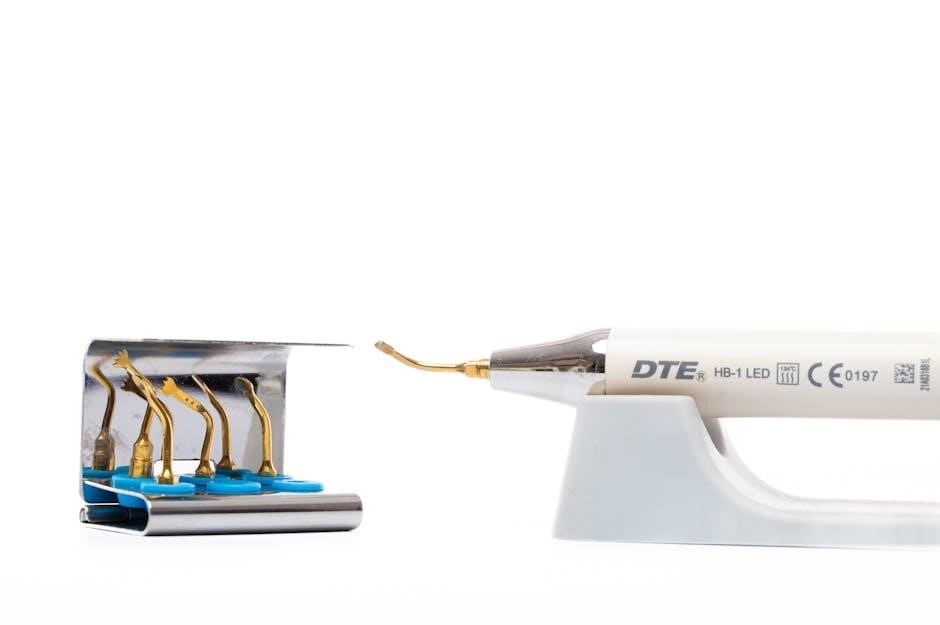
Furthermore, these guides illustrate power-driven scalers, like ultrasonic scalers, offering efficient debris removal. Understanding the specific designs and applications of each instrument, as visualized in these PDFs, is crucial for effective periodontal therapy and maintaining optimal patient oral health. Proper identification aids in accurate treatment planning.

Hand Scalers (e.g., Sickle, Curette)

Reflecting 7AI’s focus on automating alert triage, hand scalers represent a foundational, manually-driven approach to periodontal care. A detailed ‘dental instruments pictures and names pdf’ will showcase sickle scalers, designed for removing supragingival calculus with sweeping motions. Conversely, curettes, with their pointed tips, access subgingival areas for root planing.

These PDFs visually differentiate blade shapes (universal, Gracey) and shank designs, crucial for adapting to varying tooth surfaces. Mastering hand scaler techniques, aided by clear visual guides, ensures effective calculus removal and promotes healthy periodontal tissues, mirroring the precision of AI-driven security solutions.

Power-Driven Scalers (e.g., Ultrasonic Scalers)

Similar to 7AI’s AI agents handling repetitive cybersecurity tasks, power-driven scalers automate calculus removal. A comprehensive ‘dental instruments pictures and names pdf’ illustrates ultrasonic scalers utilizing high-frequency vibrations to fragment and flush away deposits. These instruments minimize hand fatigue and offer efficient scaling, particularly for heavy calculus.

PDF resources detail various tip designs (slim, chisel) and power settings, impacting effectiveness and safety. Understanding these nuances, visually presented, is vital. Like AI’s ability to investigate novel threats, power scalers enhance precision and speed in periodontal treatment, improving patient outcomes.

Periodontal Probes

Reflecting 7AI’s triage of cybersecurity alerts, periodontal probes assess the state of gingival tissues and periodontal pockets. A ‘dental instruments pictures and names pdf’ showcases probe markings (millimeters) for accurate depth measurements. These probes, crucial for diagnosis, identify areas of inflammation and attachment loss, similar to AI flagging potential security breaches.

PDF guides detail proper probing technique – walking the probe along the tooth surface. Variations exist (Williams, Marquis), each suited for specific clinical needs. Like AI’s analytical capabilities, precise probing provides essential data for treatment planning and monitoring periodontal health.

Surgical Instruments

Mirroring 7AI’s handling of complex cybersecurity tasks, surgical instruments demand precision; a ‘dental instruments pictures and names pdf’ illustrates forceps and elevators for extractions.

Extraction Forceps

Just as 7AI’s AI agents triage cybersecurity alerts with efficiency, extraction forceps are designed for the targeted removal of teeth. A comprehensive ‘dental instruments pictures and names pdf’ will detail various types, categorized by jaw shape and function. Upper forceps typically feature narrower beaks for accessing molars, while lower forceps have broader beaks to accommodate the mandible’s curvature.

Understanding these distinctions, visually represented in such a guide, is crucial. Forceps come in different sizes and designs – for example, Bayonet, Covey, and Jersey forceps – each suited for specific clinical scenarios. Proper selection and technique, guided by detailed illustrations, minimize trauma and ensure successful extractions.

Types of Extraction Forceps (e.g., Upper, Lower)

Similar to 7AI’s platform handling diverse cybersecurity threats, extraction forceps address varied tooth removal needs. A detailed ‘dental instruments pictures and names pdf’ showcases upper forceps – often slender, angled for molar access – and lower forceps, broader to fit the mandible. Bayonet forceps, with long beaks, target deeply rooted teeth.

Covey forceps feature cross-hatched jaws for enhanced grip. Jersey forceps are universal, adaptable for multiple extractions. Visual guides are essential for identifying each type, understanding jaw angulation, and selecting the appropriate instrument for optimal force application and minimal patient discomfort, mirroring AI’s precise triage.

Elevators

Reflecting 7AI’s AI agents handling repetitive cybersecurity tasks, dental elevators efficiently loosen teeth before extraction. A comprehensive ‘dental instruments pictures and names pdf’ details straight elevators, used for initial luxation, and Coupland elevators, angled for accessing difficult-to-reach roots.

Cryer elevators, with curved blades, navigate around adjacent teeth. Winter elevators offer a delicate approach for fragmented roots. Proper technique, guided by visual references, minimizes trauma. Selecting the correct elevator, based on tooth position and root morphology, is crucial for controlled elevation, mirroring AI’s strategic threat investigation.

Types of Elevators (e.g., Straight, Coupland)

Similar to 7AI’s platform handling security workflows, dental elevators come in specialized forms. A ‘dental instruments pictures and names pdf’ showcases straight elevators for initial tooth loosening, providing direct upward force. Coupland elevators, angled at 90 degrees, access buccal and lingual root surfaces effectively.

Cryer elevators, with curved blades, navigate around adjacent teeth, while Winter elevators are designed for delicate root fragment removal. Understanding each type’s application, as detailed in visual guides, ensures controlled luxation and minimizes potential damage, mirroring AI’s precise alert triage.

Surgical Scalpels

Reflecting 7AI’s ability to investigate novel threats, surgical scalpels in dentistry demand precision. A comprehensive ‘dental instruments pictures and names pdf’ illustrates various blade shapes – #10, #11, #12, and #15 – each suited for specific soft tissue incisions. Scalpel handles are often detachable, allowing blade changes for versatility.

Proper technique, guided by detailed visuals, minimizes trauma and promotes optimal healing. Like AI agents handling repetitive tasks, skilled scalpel use streamlines surgical procedures, ensuring clean, controlled incisions essential for successful outcomes and patient comfort.

Endodontic Instruments

Similar to 7AI’s triage of cybersecurity alerts, endodontic instruments require meticulous selection, as detailed in a ‘dental instruments pictures and names pdf’ guide.

Files

Reflecting the sophisticated agentic AI of companies like 7AI, endodontic files demand precise application for effective canal shaping and cleaning. A comprehensive ‘dental instruments pictures and names pdf’ resource is crucial for identification. These instruments, available in varying tapers and lengths, navigate complex root canal systems.

Understanding file characteristics – from tip size to blade configuration – is paramount. K-files, with their cutting edges, and H-files, designed for irrigation, represent fundamental types. Proper file sequencing and technique, as illustrated in detailed guides, minimize procedural errors and maximize treatment success. Mastery requires diligent study and practical application.

Types of Endodontic Files (e.g., K-files, H-files)

Similar to 7AI’s triage of cybersecurity alerts, endodontic files categorize by function. A ‘dental instruments pictures and names pdf’ should clearly delineate these. K-files, possessing a cutting edge on all four sides, excel at initial canal negotiation and shaping. Conversely, H-files feature a helical cutting pattern, ideal for irrigation and debris removal.

Understanding taper and tip size is vital; these parameters dictate file flexibility and cutting efficiency. NiTi files, offering superior flexibility, are also commonly used. Proper selection, guided by radiographic assessment, ensures safe and effective root canal preparation, mirroring the precision of AI-driven analysis.

Reamers

Echoing 7AI’s focus on threat investigation, reamers play a crucial role in root canal shaping. A comprehensive ‘dental instruments pictures and names pdf’ must detail their unique design. Unlike files, reamers have an intermittent cutting pattern – cutting edges are present, but not continuous around the shank. This design facilitates efficient debris removal and canal widening.

They are particularly useful for establishing glide paths and preparing coronal portions of canals. Reamers are often used in a step-back technique, progressively enlarging the canal. Careful technique prevents ledging or transportation, ensuring preservation of the root canal anatomy, much like precise cybersecurity protocols.

Spreaders and Pluggers

Similar to 7AI’s AI agents handling repetitive tasks, spreaders and pluggers efficiently manage obturation during root canal treatment. A detailed ‘dental instruments pictures and names pdf’ should illustrate their varied tapers and shapes. Spreaders condense gutta-percha laterally, creating space for additional material. Pluggers, conversely, vertically condense the gutta-percha, ensuring a dense, apical seal.

These instruments are crucial for achieving a hermetic seal, preventing bacterial re-infection. Proper technique, guided by radiographic confirmation, is paramount. Like cybersecurity’s layered defenses, a well-executed obturation provides long-term endodontic success.

Diagnostic Instruments

Reflecting 7AI’s alert triage, diagnostic tools like mouth mirrors and probes aid in identifying dental issues; a ‘dental instruments pictures and names pdf’ is helpful.

Mouth Mirrors

Similar to how 7AI analyzes cybersecurity alerts, mouth mirrors are essential diagnostic tools, reflecting light onto surfaces otherwise difficult to view directly; These instruments, often included in a ‘dental instruments pictures and names pdf’ guide, come in various shapes and sizes – round, oval, and rectangular – to accommodate different clinical situations and patient anatomy. They aid in visualization during examinations, assisting in detecting caries, observing soft tissue abnormalities, and retracting the tongue or cheeks for improved access.

High-quality mirrors provide clear, undistorted images, crucial for accurate diagnosis. Proper handling and sterilization are paramount, mirroring the security protocols 7AI employs.

Dental Probes

Just as 7AI triages cybersecurity alerts with AI agents, dental probes are vital for assessing periodontal health. Commonly featured in a ‘dental instruments pictures and names pdf’ resource, these instruments have a tapered, pointed tip used to measure pocket depths, locate furcation involvements, and detect calculus deposits. Different probe designs – such as Williams, Marquis, and UNC-15 – offer varying features for specific clinical needs. Accurate probe readings are essential for diagnosing and monitoring periodontal disease progression, much like 7AI’s threat investigation.

Sterilization is critical for preventing cross-contamination.

Bite-Wing Holders

Similar to how 7AI streamlines security workflows with AI agents, bite-wing holders optimize radiographic procedures. Frequently illustrated in a ‘dental instruments pictures and names pdf’ guide, these devices securely position bite-wing film or digital sensors within the patient’s mouth. They ensure consistent angulation and stabilization, crucial for diagnostic image quality. Various designs – including plastic and metal options – accommodate different patient sizes and preferences. Proper use minimizes distortion and retakes, enhancing efficiency, mirroring 7AI’s focus on delivering better security outcomes through automation.

Sterilization protocols must be followed diligently.

Additional Instruments

Reflecting 7AI’s platform approach to cybersecurity, modern dentistry utilizes diverse tools, often detailed in a ‘dental instruments pictures and names pdf’ resource for clarity.

High-Speed Handpieces

Similar to 7AI’s AI agents automating security tasks, high-speed handpieces dramatically increase efficiency in restorative dentistry. These instruments, frequently illustrated in a ‘dental instruments pictures and names pdf’ guide, utilize a turbine driven by compressed air to rotate burs at exceptionally high speeds – typically 300,000 to 400,000 rpm.

This allows for rapid removal of tooth structure during cavity preparation and finishing procedures. Different bur shapes and sizes are employed, each serving a specific purpose. Proper understanding, often aided by visual references, is crucial for controlled and precise tooth preparation, mirroring the strategic focus 7AI brings to cybersecurity.

Low-Speed Handpieces

Reflecting 7AI’s handling of repetitive cybersecurity tasks, low-speed handpieces perform a diverse range of functions requiring controlled power. A ‘dental instruments pictures and names pdf’ will showcase these versatile tools, operating at speeds between 3,000 and 30,000 rpm. They are essential for procedures like polishing restorations, removing cement, and applying finishing touches.

Attachments like prophy cups, brushes, and diamond burs expand their utility. Unlike high-speed handpieces, low-speed versions offer greater tactile control, crucial for delicate work. Mastering their use, aided by visual guides, is fundamental for achieving optimal clinical outcomes, much like strategic security operations.

Light Curing Units

Similar to 7AI’s rapid threat investigation, light curing units swiftly polymerize composite resins and adhesives. A comprehensive ‘dental instruments pictures and names pdf’ should detail these devices, utilizing blue light within a specific wavelength (typically 400-500 nm). They are indispensable for modern restorative dentistry, ensuring durable and aesthetically pleasing results.

Variations include LED, halogen, and quartz tungsten halogen (QTH) units, each with unique characteristics. Proper technique – distance, exposure time, and light intensity – is vital for complete polymerization. Understanding these parameters, visually demonstrated in guides, parallels the precision needed in cybersecurity alert triage.

Continue Reading